















































Ministry of Agriculture without a clear plan: who will defend farmers?

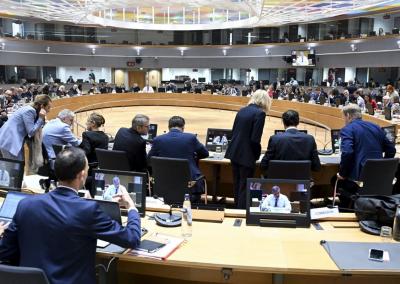
Farmers across the European Union will meet on 18 December. Farmers will hold a major protest in Brussels on December 18th to call on their governments to ensure fair funding for agriculture after 2027 and to oppose the trade agreement with the South American bloc MERCOSUR (Argentina, Brazil, Paraguay and Uruguay). This agreement would flood Europe with cheap grain and meat. Lithuania seems to be swimming downstream because it has no clear position.
Farmers have already waved red flags
In Brussels, the influential farmers' organisation Copa-Cogeca is organising the protest, saying that over the past year, most of the farmers' expectations regarding reforms to the financing of the Common Agricultural Policy (CAP) have gone unheard.
According to the European Commission, the CAP will be reformed after 2027. The CAP funding for all EU Member States will amount to around €300 billion by 202020, of which around €293.7 billion will be dedicated to income support for farmers and €6.3 billion to the Crisis Reserve. In addition, Member States will be able to make additional investments in rural development through a new common fund, but this grace will depend on each country.
Lithuania has not yet taken a clear position on this reform. However, EU farmers are also worried about the EU's planned trade agreement with the Mercosur bloc. They believe that cheaper agricultural imports will ruin tens of thousands, if not hundreds of thousands of farms.
Will Lithuania go downstream?
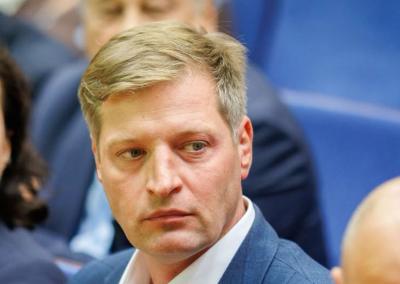
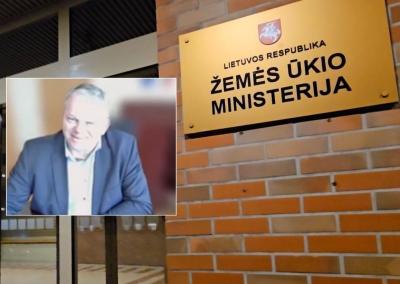
It seems that the Ministry of Agriculture (MAA), headed by Andrius Palionis, still does not have a clear position not only on the CAP after 2027, but also does not have an unambiguous, clearly formulated position on MERCOSUR.
The MAFF has only presented general principles in support of EU initiatives, but at the same time questions their sufficiency. There is also no clear view on whether it is "for" or "against" Mercosur.
„The MAFF has consistently supported open, rules-based international trade, but has consistently stressed that agricultural and food imports from third countries must meet the same quality, food safety, animal welfare and environmental requirements as those applied to EU producers. Only uniform standards can ensure fair competition (...)“ – said the MAFF in a reply to „Agrobitei“.
In an attempt to crystallise the position of the MAF, „Agrobite“ repeatedly asked the Ministry for clarification, but the MAF replied that „in Lithuania, the coordination of international agreements, including the negotiation and ratification processes, falls within the competence of the Ministry of Foreign Affairs“.Are the risks sufficiently assessed for a 7-year period?
At the moment, the European Commission's draft regulation of 8 October 2025 on the implementation of the bilateral safeguard clause also seems to be more declarative than capable of protecting the EU market from shocks, although the MAFF supports the regulation. „(...) A step in the right direction. The proposal provides for enhanced monitoring of trade flows (...), the possibility for Member States to initiate their own investigations (...) Provisional safeguard measures could be applied within 21 days if a damaging import flow is detected. The regulation also singles out sensitive products – beef, poultry, rice, honey, eggs, garlic, ethanol and sugar for special provisions“, – lists the MAFF, but expresses doubts that the €6.3 billion agricultural reserve for crisis response foreseen in the post-2027 Multiannual Financial Framework (MFF) is sufficient. It should be noted that this plan for EU agriculture, including Lithuania, will be valid for 7 years until 2034. This is why EU farmers are very worried – the timeframe is long, and the management of risks must be left to bureaucrats. Based on common principles The MAFF's replies emphasise general principles but do not identify specific measures to respond to potential market disruptions. „Following consultations with the social partners, the MAF proposes that the Lithuanian authorities approach the EC with a proposal to consider obliging the sectors that will benefit most economically from the implementation of the MERCOSUR Agreement to make an additional contribution to the financing of an agricultural reserve, which would compensate for the losses suffered by the agriculture and food industry“, the MAF said.
For their part, the MAF's "social partners" recently met with representatives of the Democratic Union "In the name of Lithuania", the Homeland Union-Lithuanian Christian Democrats (TS-LKD) and the Lithuanian Peasant Popular Union (SPLM) and expressed their concerns about MERCOSUR to them.
Some of the „social partners“ have announced that they will also participate in the farmers' protest in Brussels.

Similar articles



Video