







































CBAM threatens farmers with an additional €100 million burden

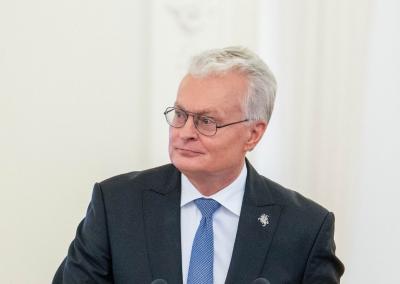
As of 1 January this year, the so-called Carbon Border Adjustment Mechanism (CBAM) was introduced for nitrogen fertiliser imports. This decision has already been criticised by some Lithuanian farmers and politicians. Valius Ąžuolas, a member of the Seimas, claims that the new regime could mean an additional financial burden of around €100 million for the country's farmers.
Prices could almost double
Until now, one tonne of saltpeter delivered to the Lithuanian border has cost around €220, Mr Oak said. With the entry into force of additional customs duties, CBAM, anti-dumping and other taxes, this amount will be increased by a further €170 to €180.
„In reality, the price almost doubles from €220 to almost €400 per tonne“, – says the MP.
Fertilisers are a significant cost component on crop farms – on intensive cereal, oilseed rape or maize farms, they can account for 30–40 % of the total variable cost of production. Even an increase of €20–40 per tonne would mean thousands of additional costs for the farm, while an increase of a few hundred euros becomes a very significant factor in the cost price.
V. Ąžuolas, referring to the calculations of the Lithuanian Grain Growers Association (LGAA), points out that such a near doubling of prices could mean an additional cost of around EUR 100 million per season.„Lithuanian farmers buy, if I remember correctly, around 600–700 thousand tonnes of nitrogen fertiliser. Let's add EUR 150 to 600 000 and see who has to overpay. We can already see that nitrogen fertilisers will cost farmers around 50% more. This is an inadequate price increase," says the MP.
Is Europe pushing itself into a deficit hole?The MEP also points to EU statistics – Europe only produces about half of the nitrogen fertiliser it needs, the rest is imported.
„If imports fall, and the foreign press has already written about an 80% drop after 1 January, we could face a deficit,– says Mr Oak, adding that the spring season is approaching, so if imports fall, farmers could face a shortage of fertiliser.
„Europe is forced to import fertilisers whether it wants to or not, because there is nowhere else to get them from,– says the MEP.
The situation is different in the US, he said: „Last year the US abolished all taxes on fertilisers. This means that all fertilisers bought by American farmers are free of additional taxes. EU farmers have to compete with the same Americans on world markets and international exchanges to sell their produce. This puts US farmers in a better position than Europe. Europeans' costs are rising, while the price of buying grain remains the same for everyone.
A decision in favour of EU fertiliser producers?
„How come the EU has been so good for the lobbyists?“ – rhetorically asks V. Oak. He points out that ammonia, which is the main raw material for nitrate, is not subject to the additional tax.
„This puts fertiliser producers and farmers in different situations. A fertiliser producer, such as our „Achema“, can import ammonia without additional taxes and sell its products at a higher price. It seems that duties have been imposed, but the impression is that an exception has been made at the request of the producers," the MEP said.
He estimates that for EU fertiliser producers, this situation could mean €50 million to €80 million in additional revenue.
However, it is stressed that the objective of CBAM is not protectionism but the levelling of the price of emissions. EU producers already pay for CO₂ under the Emissions Trading Scheme (ETS), so the mechanism for imports seeks to avoid the so-called "carbon leakage", where production is shifted to less regulated countries.
Long-term consequences
CBAM comes into force at a time when grain prices are well off their 2022 peak and financing costs remain high. This means that farmers do not have the financial cushion to absorb cost increases.
European farmers are competing on global markets with producers in the US, Brazil or Ukraine who are not subject to similar climate mechanisms. If EU farmers' costs increase while farm gate prices remain at world levels, their profit margins are reduced.
More expensive fertilisers may lead to lower fertiliser application rates. In the short term, this would reduce costs, but in the long term it could affect yields and soil productivity. Lower yields would mean lower incomes and greater financial pressure on farms.
V. Ąžuolas says that the Seimas Committee on Rural Affairs is currently looking for solutions: „Hope remains for the Ministry of Economy and Innovation, which is the lead institution, as well as for the Ministry of Agriculture and the Committee on Rural Affairs, which could speak out against the European Commission and defend the interests of farmers.“
Latvia and Estonia have already expressed their opposition to this mechanism, the MEP said.
„The EU is now at a crossroads – whether to weaken the competitiveness of its farmers or to find solutions to reduce the tax burden on them“, – says V. Oak.

Similar articles
Video