


























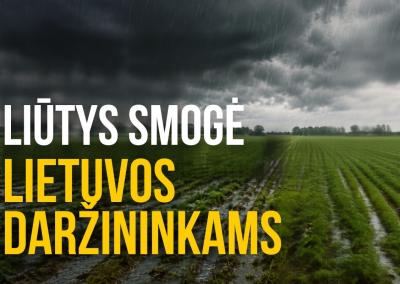



















The invisible land reclamation empire on which the country's agriculture depends
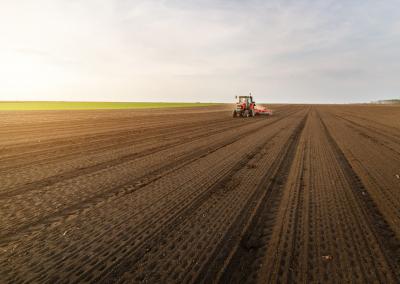
Remediation is one of Lithuania's most important agricultural infrastructure systems, enabling the efficient use of waterlogged or excessively wet land. Over more than a century, Lithuania has developed one of the densest drainage systems in Europe. It is estimated that nearly 3 million hectares of land are drained by drainage systems in the country, which represents about 47% of Lithuania's territory and as much as 86% of its agricultural land. This scale shows that drainage is an essential prerequisite for many farms to operate and to ensure stable harvests.
In Lithuania, drainage systems began to be introduced intensively in the mid-20th century, with the aim of draining marshy or waterlogged areas and making them suitable for agriculture. Historical data show that by 1970 about 1 million hectares of wetlands had been drained, and by 1978 about 2 million hectares. Subsequently, reclamation works have expanded further, bringing the area drained to close to 3 million hectares by 1990.
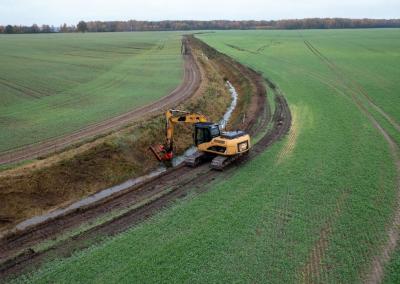
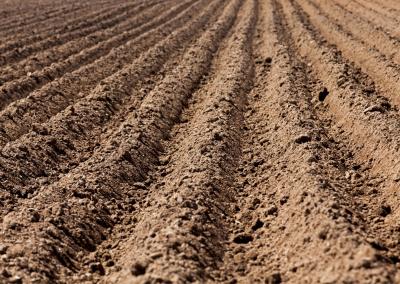
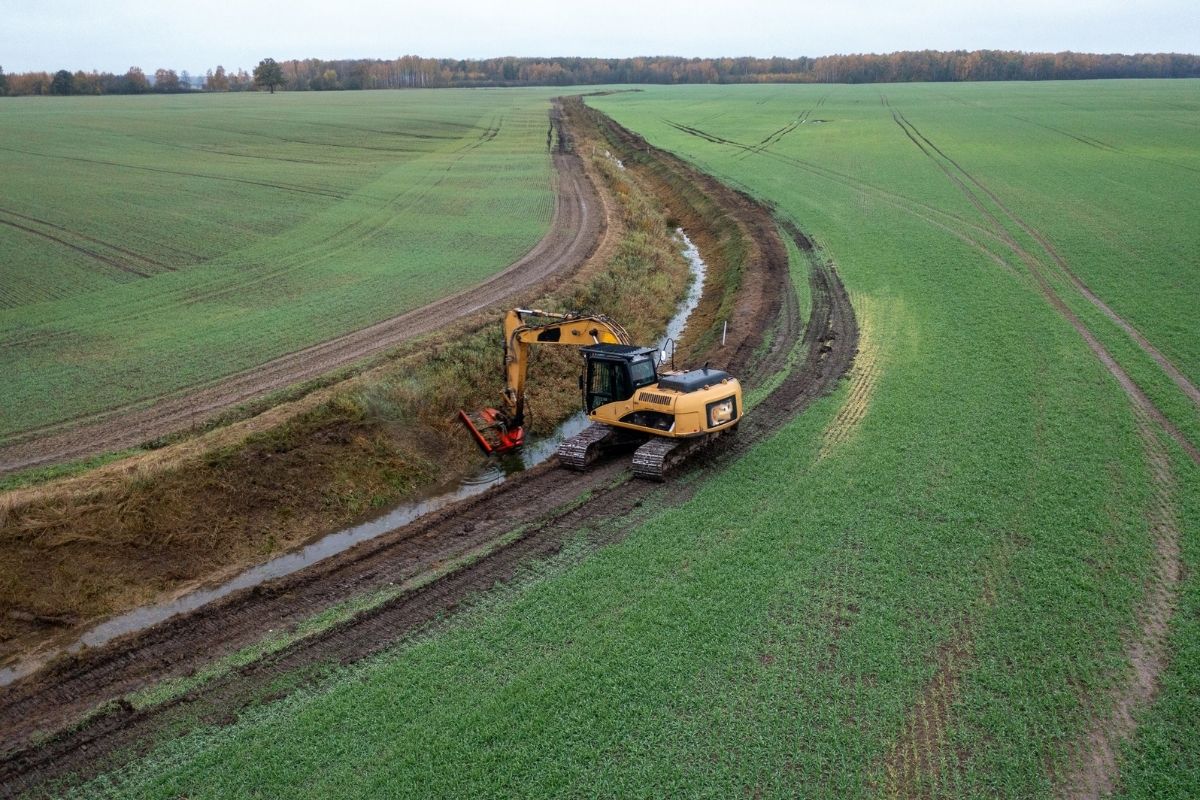
Today, the reclamation infrastructure is vast and includes a wide range of hydraulic structures. A closed drainage network of pipes, collectors and drains, totalling almost 1.6 million kilometres, runs under fields. In addition, more than 62,000 kilometres of open ditches have been dug in Lithuania to collect and divert excess water from the soil into streams or other water bodies.
The drainage system is important not only for farmers but also for the economy of the country as a whole. With around 6.5 million hectares of land in Lithuania, including more than 3.3 million hectares of agricultural land, its efficient use is directly linked to food production and regional economies. Drainage can improve soil aeration, reduce the impact of excess moisture on plants and increase yields.However, this system faces serious challenges. Many drainage facilities were built decades ago and are now in a poor state of repair. Studies show that the depreciation of drainage networks in Lithuania is around 88% and that of hydraulic structures around 80%, so much of the infrastructure requires reconstruction or major repairs. In addition, about 173,000 hectares of reclaimed land are assessed as being in poor condition, where drainage systems are no longer functioning efficiently.
Data on land reclamation in Lithuania are continuously updated and collected in dedicated information systems. One of the most important is the Mel_DR2LT spatial database of reclaimed land and reclamation structures, which records reclamation projects, drainage systems, ditches, polders, embankments and other hydraulic engineering structures. Such data allows accurate planning of drainage works, assessment of the state of infrastructure and more efficient management of the water regime in agriculture.
Despite the enormous benefits of land reclamation, the system also has environmental consequences. Draining wetlands and bogs alters natural ecosystem processes, reduces biodiversity and, in some areas, can increase greenhouse gas emissions. For this reason, there is a growing call for sustainable water management – not only upgrading drainage systems, but also restoring wetlands and using land more sustainably.
In summary, land reclamation in Lithuania is a huge and complex infrastructure system, without which modern agriculture would be hard to imagine. Almost half of the country's territory is connected to drainage networks, which allow efficient use of land and ensure a stable level of food production. However, ageing infrastructure and high maintenance costs require significant investment in upgrading drainage systems in the future so that this invisible but vital infrastructure can continue to provide reliable service for many decades to come.