























Who really gave the green light to the EU-Mercosur Treaty: why didn't the MAF object?
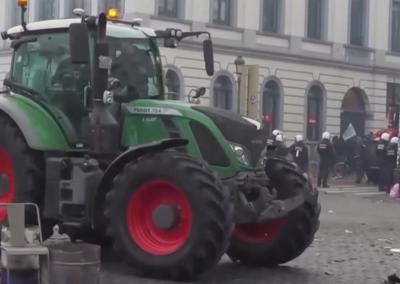
With the EU's endorsement of the Mercosur trade agreement and its approval in Asunción, Paraguay, on 17 January, there is no shortage of debate about why politicians have decided to sacrifice agriculture. The agreement was accompanied by protests by farmers across Europe, and representatives of the agricultural sector also warned of possible threats to local production. So what finally gave the green light to this controversial treaty in our country? Politicians and representatives of farmers' organisations interviewed by "Agrobite" agree on one thing: the final position has been approved by the Government. Although the role of the European Affairs Committee and the Ministry of Agriculture (MAF) in the decision-making chain is also mentioned.
Political maturity of the Government
Kęstutis Mažeika, a member of the European Parliament, is critical of the approval of the Treaty and says that it is a cause of serious concern to the farming community. According to the MEP, the Seimas Committee on Rural Affairs discussed the issue twice and clearly opposed the agreement, citing the arguments and the possible threats to farmers. The fact that the Committee's arguments have not been taken into account, he said, shows a certain "political maturity" on the part of the Government.
„The government did not take into account and took a unilateral decision. Political decisions are taken without competent authorities who have a deep understanding of the situation and are experts in the field, and in this case the disregard of their opinion shows that decisions are taken politically, without taking into account the possible consequences. This is saddening," says the MP.
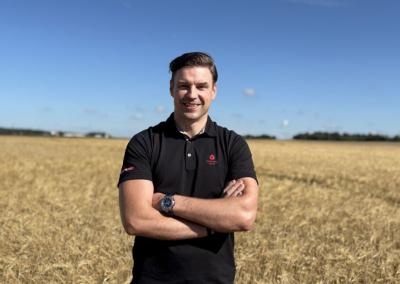
„Government. It has taken the last decision“, – echoes his colleague, MP Kazys Starkevičius. However, he points out that there was no unanimous position within the farming community itself. The dairy sector supports the agreement, but the meat sector does not," he says.
Aušrys Macijauskas, former head of the Lithuanian Grain Growers' Association (LGAA), also believes that the ultimate responsibility lies primarily with the government.
„I have not looked into the decision-making chain in detail, but I think that the final decision was still taken by the Government, because it is its competence. It is unlikely that the MAF alone would have the final say, but apparently there was no objection from its side either," says Macijauskas.
Did the MAF give the final blessing to the agreement?
When asked whether the MA itself did not give the last „blessing“ to the agreement, K. Mažeika replies that the decision was taken by the Government, but the Ministry is also part of it.
„The decision was taken by the Government, but of course the Ministry is part of the Government. However, in the initial discussions and from the Minister's communications, the message was that this treaty was a threat. But the Government did not take this into account“, – says the MP and adds that although the details could be clarified – who voted or did not vote at the meeting – the fundamental problem remains the same: the Government's position was the opposite of the assessment of the Seimas Committee on Rural Affairs and of the majority of the farming community.
Member of the Seimas K. Starkevičius also gave a short answer to a question about the role of the MAF: "The responsibility lies with the Government".Influence of the European Affairs Committee
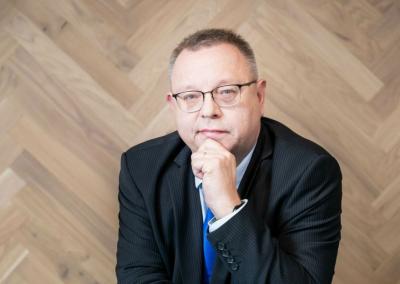
„The green light was given by the European Affairs Committee, which gave instructions to the Minister of Agriculture and he supported the agreement“, – says Bronis Ropė, Member of the Seimas, chairman of the Committee on Rural Affairs.
However, he claims that the situation has changed compared to the initial discussions – there are stronger protection mechanisms and compensatory instruments.
„A safeguard mechanism has been established and strengthened. In the event of falling prices, safeguard mechanisms will be triggered and an additional EUR 4.6 billion has been allocated for compensation," Ropė said.
Some sectors, such as industry, may benefit from the agreement, but the most sensitive agricultural sectors, such as beef or beekeeping, may suffer losses and compensation solutions must be in place, he said.
„Farmers will certainly suffer. Only some areas will suffer more and others less“, – concludes B. Ropė.
Price pressures and unclear safeguards
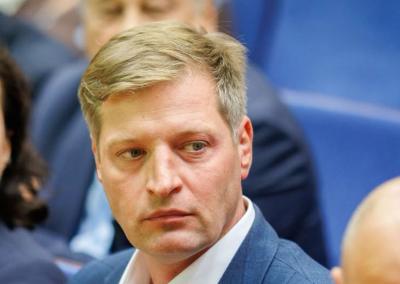
„In this case it is a government decision. Agriculture is only one of the components. It includes more sectors, say the Ministry of Foreign Affairs, which may have been assessing the geopolitical situation. All of this could have had an impact," says Audrius Vanagas, head of the LGAA, adding that the agricultural sector will face price pressures: "With the signing of the EU's Mercosur agreement, agriculture will be under extreme pressure from imports from South America. This is a region with less purchasing power than the EU. The EU itself is promising to introduce additional "green" taxes. The cost of production on the old continent can therefore only rise, and the pressure will only increase with the arrival of possibly cheaper South American production on the market.
Although safeguard mechanisms are in place, Vanagos said, it is not yet clear whether they will actually work, and if the price of production falls but does not reach the compensatory threshold, profits will still be lost year on year.
„There are unanswered questions, so the concerns are justified. We can see that agriculture is not fully protected“, – concludes the head of the LGAA.
„Agrobite“ recalls that in November 2025, the Ministry of Agriculture, headed by Andrius Palionis, did not oppose the EU-Mercosur agreement, and therefore submitted a favourable note on it to the European Affairs Committee. A little earlier, the Ministry of Foreign Affairs of the Republic of Lithuania confirmed to Agrobitei“ that the EU-Mercosur agreement is supported in principle by Lithuania.
Later, the vast majority of Lithuanian farmers' organisations confirmed that the Ministry of Agriculture had not given its approval to the EU-Mercosur agreement. It was allegedly reached without the consent of farmers, although the Ministry of Agriculture assured them that „the position of the Ministry of Agriculture on the EU Mercosur has been shaped in close cooperation with the social partners“.

Similar articles
Video