





















Ukraine commends the Baltic states’ efforts to have the EU ban the transit of Russian grain
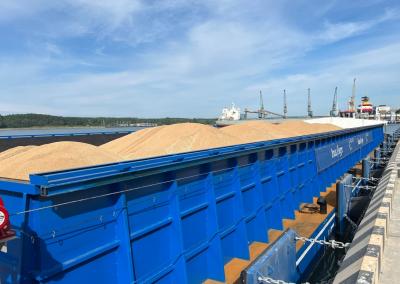
On Sunday, Taras Vysockis, Ukraine’s Minister of Agriculture, thanked the leaders of Lithuania, Latvia and Estonia on Sunday for their initiative within the European Union (EU) to seek a ban on Russia transporting its grain in transit through the Union’s territory.
“It is important to see that this initiative is now being raised at EU level,” wrote T. Vysockis on the social media platform “X”.
“Thank you to our partners in the Baltic states for their consistent and strong support for Ukraine,” he said.
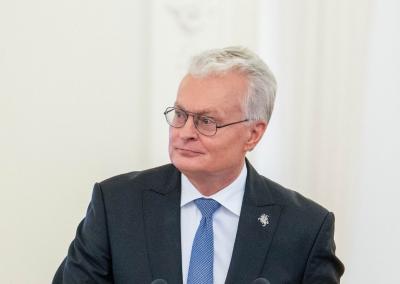
Gitanas Nausėda, Andris Kulbergs and Kristen Michal sent a joint letter on Friday to the President of the European Council, António Costa, and the President of the European Commission, Ursula von der Leyen .
“Russia is bombing Ukrainian ports and preventing Ukrainian grain from reaching the global market, yet at the same time it wants to profit by transporting its own grain through the European Union. Our infrastructure must not be used to help Russia finance the war. We must increase pressure on the aggressor and help Ukraine deliver its goods to the global market“,” said Estonian Prime Minister Kristen Michal in a statement.
He intends to raise this issue at next week’s European Council meeting.
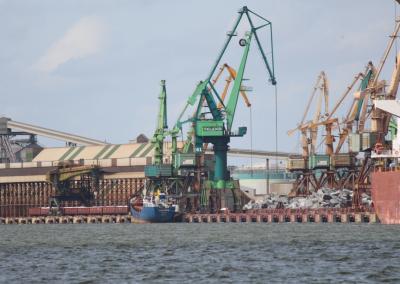
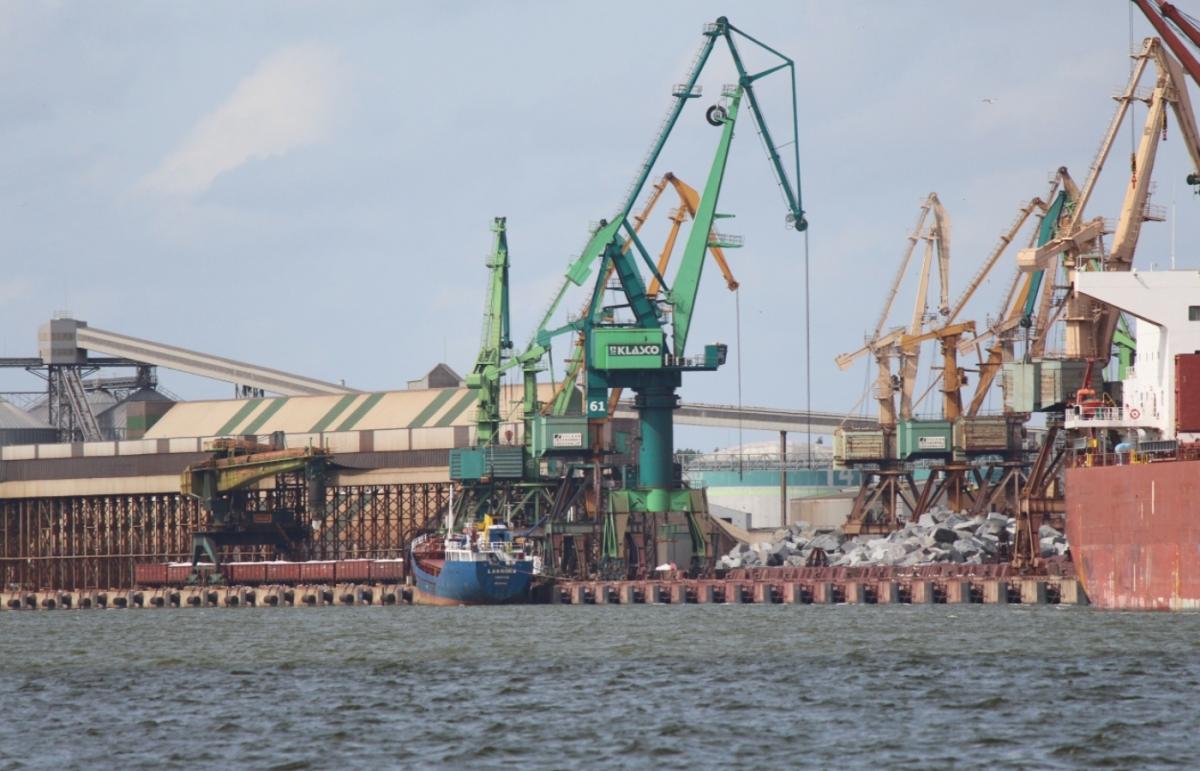
As reported by BNS, in their letter the leaders of the three countries emphasise that by attacking Ukrainian cargo ships, railways and other key trade routes, Russia is seeking to weaken Ukraine’s economy. Meanwhile, Russia is seeking new routes for its grain exports, including via the Baltic Sea.
According to the leaders of the three Baltic states, the EU must not allow Russia to offset the economic consequences it has caused. They also stress that the export of grain stolen from the occupied territories of Ukraine via the EU must be prevented.
In an effort to support Ukrainian trade, the leaders of the Baltic states are calling for the strengthening of the EU–Ukraine solidarity corridors – transport links created to help Ukrainian goods reach the global market.
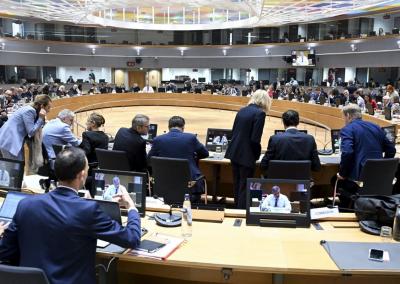
It is not yet clear when such a ban might be agreed upon or when it might be implemented, but a meeting of EU leaders is due to take place in Brussels on 14 October, at which Ukrainian President Volodymyr Zelenskyy is also expected to attend.
Lithuanian Prime Minister Mindaugas Sinkevičius announced this week that he would also propose that the EU ban the transit of Russian food grains through the Union’s territory and impose sanctions on certain Russian agricultural oligarchs.
As reported by BNS, since the beginning of September, the origin of food grain transiting through Lithuania from Russia and Belarus has been subject to checks.
The State Food and Veterinary Service (VMVT) has so far taken five samples from two consignments of grain of unknown origin; their origin is being tested in foreign laboratories, however, as the service informed BNS, the test results have not yet been finalised, and no further samples have been taken.
In 2024, the EU imposed tariffs on grain products from Russia and Belarus to halt their import into the EU. However, these tariffs do not completely prevent the transit of grain through the EU to third countries.

Similar articles

Video