























































Prime Minister: Discussions are under way with Latvia on a joint response to the transit of Russian grain

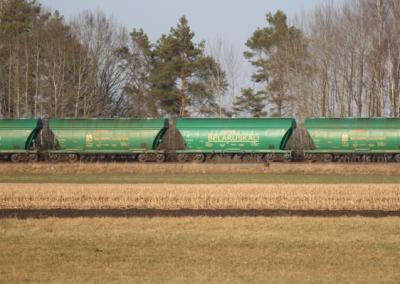
In an effort to prevent the transit of Russian and Belarusian grain through the Baltic states, Prime Minister Mindaugas Sinkevičius says that this is a common problem for the Baltic states, and discussions are therefore already underway with Latvia regarding a joint response.
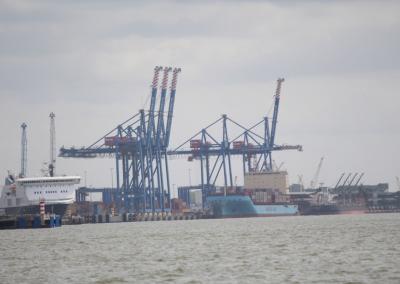
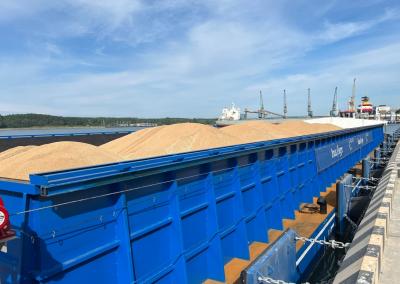
According to the Prime Minister, such shipments will not be allowed to pass through the Port of Klaipėda “unchecked”.
“This issue, I would say, concerns not only Lithuania as a state; in this case, we are talking about three states – Latvia, Estonia and Lithuania. Just yesterday, after work, I spoke with the Latvian Prime Minister, he also raised this issue and we discussed over the phone what the response might be to Russia’s desire to transport Russian grain, and potentially grain mixed with stolen Ukrainian grain”, – M. Sinkevičius told journalists on Tuesday in Klaipėda.
“The issue of grain transport – BNS – is so acute here that it seems the Baltic Sea ports, and us in particular, have been targeted deliberately, and we, naturally, will check, monitor and will not let that cargo pass unchecked
Following the publication of information regarding the possible transit of grain, allegedly stolen from the occupied territories of Ukraine, through the Baltic states and Lithuania, the Prime Minister says that the Government supports Ukraine and has no interest in the transhipment of Russian grain.
“We certainly won’t allow our port infrastructure and railways to be used in such a way that doubts might arise later, because our partners in Ukraine are watching how we behave,” – said M. Sinkevičius in Klaipėda.
As reported by BNS, on Monday, the Minister for Agriculture, Kęstutis Mažeika, instructed the State Food and Veterinary Service (VMVT) to immediately commence origin checks on all grain – not only feed grain but also food grain – to be carried out.
Last week, the VMVT took samples from one grain consignment at the port and will have their origin verified by a foreign laboratory. The Service confirmed to BNS on Monday that it had not taken any further samples.
„We will call upon the Food and Veterinary Service, and naturally we want to check and ensure that the cargo being transported – the quantities of which are not large on a Lithuanian scale, though they probably pose greater challenges for Latvia – to verify the origin of the grain through genetic testing,“ said M. Sinkevičius.
For his part, K. Mažeika reiterated that all the Baltic states must verify the origin of both feed and food-grade grain transported from Russia and Belarus.
“We are seeking to ensure that these shipments are inspected not at the Port of Klaipėda, but at the border (with the Kaliningrad region and Belarus – BNS), thereby freeing up the port for grain from Lithuanian farmers, so that as much of it as possible can be exported, as this is a priority; and questions regarding other grains of unclear origin must be addressed at the border, not at the Port of Klaipėda&nquot;, the minister stated.
According to him, consideration is being given to introducing such mandatory tests not only for imported grain, but for all food products, including oil.
“We will also discuss this, as oil is, after all, a food product (oil – BNS) and there is an exemption in the European Union for food products, both raw and processed, and our aim now is to seek a consensus so that these tests are also applied to them,“ – said K. Mažeika.
Meanwhile, Transport Minister Juras Taminskas stated that there would be no Russian grain at the Port of Klaipėda if stevedoring companies did not load it: “Grain is a sanctioned commodity, but that does not mean we can just sit back and do nothing.”
“Lithuanian Railways” cannot refuse to transport (Russian and Belarusian – BNS) grain, as the entire legal framework of the European Union, the requirements set by the World Trade Organisation do not permit the refusal to transport grain when it is not yet subject to sanctions“, said J. Taminskas.
The minister’s spokesperson, Viktoras Jakovlevas, later clarified to BNS that responsibility for the transit of Russian grain through Lithuania lies primarily with the businesses which exports the grain and commissions port handling and rail services.
As reported by BNS, the President’s senior adviser on foreign policy, Asta Skaisgirytė, called on Tuesday for a solution to be found to prevent Russia from exploiting the Baltic Sea ports of Lithuania and other EU countries for grain exports.
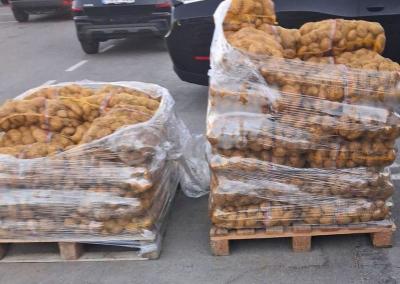
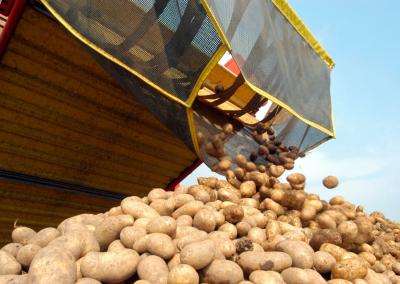
The issue arose after grain producers recently stated that Russian grain exported from the Kaliningrad region via the ports of the Baltic states is being offered at a significantly lower price than Lithuanian grain, with the result that the latter is piling up in warehouses, whilst farmers are calling on the authorities to halt the transit of Russian grain through Lithuania.

Similar articles




Video