

































Farmers: the Mercosur agreement will unbalance the EU market and make Lithuanian produce uncompetitive
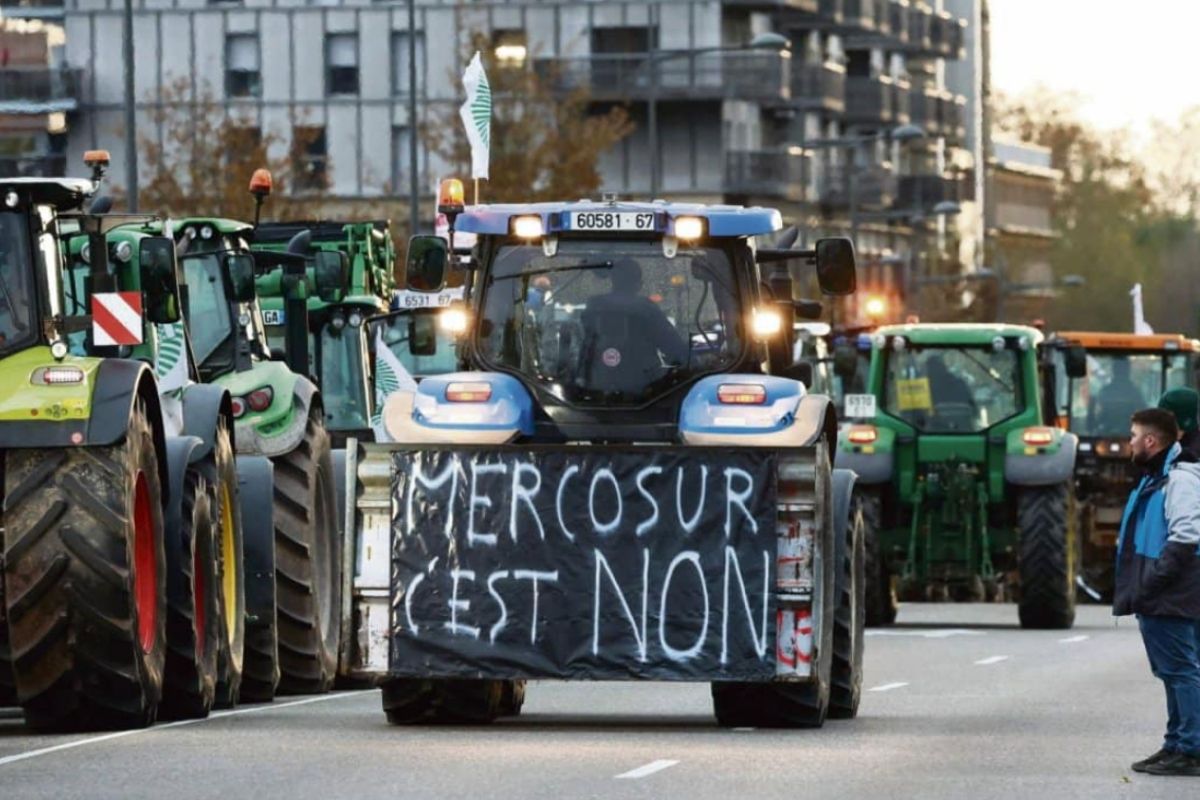
Lithuanian farmers argue that cheap imports from Latin America will unbalance the market and outcompete Lithuanian produce as the European Union seeks to sign a trade deal with the South American bloc Mercosur.
„We have a paradoxical situation where we in the EU countries are not allowed to grow cheap produce with cheap preparations and the use of unauthorised substances, while at the same time the EU wants to sign agreements with the South American countries so that produce grown in this way can reach the tables of our consumers and the shelves of our shops. Dainius Arlauskas, a board member of the Lithuanian Cereal Growers Association, said at a press conference on Monday.
„This will be a blow to everything that can be imported into the European Union and not necessarily to products grown in Latin America“, – added Dinius Arlauskas.
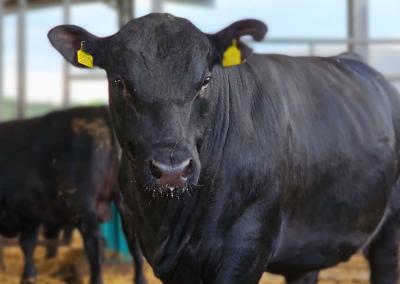
„Brazil alone produces twice as much beef as the EU consumes. Imagine how much resources they have and all that beef will try to make its way here to the EU," said Gedas Špakauskas, Vice-Chairman of the Lithuanian Farmers' Union.
He said the agreement will probably be signed, but farmers will press Brussels to be fair and compensate farmers if the market is distorted.
„We will not continue to support it (the agreement – BNS), but we will not support it, but we will be able to continue to point out all the time that there should be fairness in the way it is treated, that it is the quality of the food production that should be looked at, that it is the right way to compensate farmers if the market is distorted, and so on“, – he said.
„There is no clear indication of compensation mechanisms if there is market distortion for produce coming from Mercosur countries. It is not clear how (the EU – BNS) will ensure the safety of food (imported from South America – BNS), – he added.G. Špakauskas said that currently imported products are not sufficiently inspected and stressed that Lithuanian producers will not be able to compete.
„Now those products (from Latin America – BNS) are coming in, but there are higher customs duties. Now there is experience that the safety of that production is not fully verified. It is said that the cheapest Polish produce is the one that comes in, people want Lithuanian produce. There will come a time when people will want Polish produce and forget about Lithuanian produce altogether," he said.
„Farmers do not have the opportunity to produce cheaply in the EU because EU farmers are required to comply with a wide range of environmental, animal welfare and climate change measures. And all of this comes at a cost," Pranauskas told a press conference.
Farmers are also angry about EU plans to review agricultural subsidies and the Border Carbon Adjustment Mechanism (CBAM), which comes into force next year and will tax imports from third countries if they produce goods with high CO2 emissions.
„After the CBAM tax, we will certainly face significantly increased costs. It could be about 20-40% higher for us," said cereal growers' representative D. Arlauskas.
G. Špakauskas said the EU decisions will make it difficult for farmers to survive financially.
„If all these (decisions – BNS) will contribute, like Mercosur, CBAM, cuts in the budget of the new financial perspective, then we are thinking about the question of survival“, – said G. Špakauskas.
„We (farmers – BNS) are criticising the European Union leaders because it is not the time to introduce new taxes and further increase the cost of production and then to corner us to ask for all kinds of mechanisms to cover our losses. We just want a fair cost of production and a fair selling price," he added.
According to BNS, the agreement would help the European Union to export more vehicles, machinery, wines and spirits to South America, while it would make it easier for South America to get its meat, sugar, rice, honey and soybeans onto the European market.
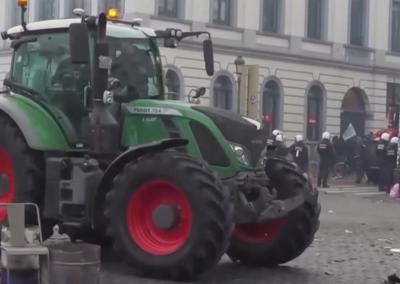
At least 7,000 farmers with around 1,000 tractors staged a protest in Brussels last Thursday to protest against the agreement.

Similar articles


Video