






















The Ministry of Agriculture is tightening the criteria for active farmers. The new requirements will affect over 18,000 head of livestock

The amendments to the Strategic Plan proposed by the Lithuanian Ministry of Agriculture (ŽŪM) have drawn sharp criticism from some farmers’ organisations. The proposals to tighten the criteria for ‘active farmers’, to give additional priority to the dairy sector and to change the farm succession support model have sparked the most debate.
Representatives of the Lithuanian Association of Organic Farms have publicly stated that the ministry is moving away from its promises to reduce the administrative burden, and that some of the proposals will hit small farms the hardest. “Agrobite.lt” contacted the Ministry of Agriculture asking it to explain the rationale behind the proposed changes.
The Ministry maintains that the aim of the changes is not to make farmers’ work more difficult, but at the same time admits that it has no data on how many so-called “armchair” farmers there are in Lithuania overall.
The new requirements would affect 18,000 farms
The proposal to lower the threshold for automatic recognition as an active farmer from €2,000 to €1,000 in direct payments has sparked the most debate. According to the Ministry’s calculations, this would affect around 18,000 applicants, or approximately 16 per cent of all those submitting claims. However, the Ministry of Agriculture insists that this should not result in any additional administrative burden.
“The proposal does not introduce new procedures for applicants who are actually farming; rather, it merely expands the scope of the existing ‘active farmer’ assessment and strengthens the targeted allocation of support,” – states the Ministry.
According to the Ministry, the criteria for active farmers are already verified using data from state registers, so no additional documents will be required.
How many “armchair” farmers are there? The Ministry has no answer
One of the main arguments for tightening the criteria for active farmers is the aim to distinguish more accurately between people who actually farm and so-called “armchair” farmers. However, when asked how many such farms there are in Lithuania today, the Ministry of Agriculture did not provide a specific answer.
“At present, there is no objective data allowing for an accurate assessment of the number of so-called ‘armchair’ farmers,” states the Ministry of Agriculture.
The Ministry has announced that it is only now planning to conduct a survey of local authorities, parish councils and farmers’ organisations, which is expected to help assess the scale of the problem.
At the same time, the Ministry emphasises that the size of a farm alone will not be considered grounds for classifying an applicant as inactive.
“The most important thing is to assess the actual carrying out of agricultural activities, rather than the size of the farm,” says the Ministry.
Why is priority given only to dairy farms?
Another topic of debate is the new measure “Cooperation on farm succession”.
Under this measure, additional selection points are provided only for dairy farms.
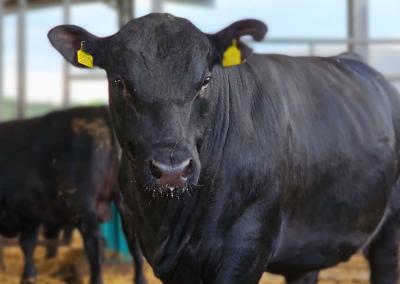
The Ministry explains that this decision was taken due to the exceptionally difficult situation in the dairy sector.
According to official data, between 2015 and 2024, the number of herds of dairy cows in Lithuania fell from 58,700 to 17,900, whilst the number of dairy farmers fell from 27,800 to 9,850.
According to the Ministry of Agriculture, these figures indicate a long-term decline in the sector, which is why it is essential to encourage the transfer of dairy farms to the younger generation. According to the Ministry, this is precisely why dairy farms are being given additional priority.
However, it emphasises that this is not a condition for receiving support: “The measure is intended for the takeover of livestock farms, so projects involving the takeover of farms in other livestock sectors will also be eligible for support.”
Generational change – not just the creation of new farms
Criticism has also been levelled at the fact that the new measure will be available not only to those starting out as farmers, but also to young farmers who are already in business. The Lithuanian Association of Organic Farms pointed out that “If support is granted to existing young farmers, then such support loses its meaning – after all, no new farmers or new farms will be created, there won’t be any more young farmers, and existing farms will simply grow larger and receive even more support.“
The Ministry disagrees with this assessment. According to the Ministry, the primary objective is not to establish as many new farms as possible.
“One of the main aims of the measure is to prevent a situation where, following the retirement of an older farmer, a viable farm is broken up, sold off in parts or ceases operations altogether,” – explains the Ministry, adding that the most important thing is to preserve the existing productive potential of farms and pass it on to the younger generation.
Why is additional support only for dairy farmers?
The Ministry has also received questions regarding the proposed compensation scheme worth almost 20 million euros. Under this scheme, additional support would be paid to farms keeping dairy cows, but no similar supplement is envisaged for farms in other livestock sectors.
The Ministry of Agriculture explains that owners of all livestock farms will receive support based on their declared land areas. The decision to provide an additional payment to dairy farms was made due to the fall in milk purchase prices.
“Milk purchase prices have been falling significantly since October 2025, so it was decided to allocate additional support to farms keeping dairy cows,” the Ministry states.
Ministry: the objectives are not mutually exclusive
Following public statements by farmers’ organisations that the proposed changes are difficult to reconcile with the Ministry’s stated aim of reducing the administrative burden, the Ministry of Agriculture rejects such criticism.
According to the Ministry, increasing farmers’ incomes, reducing the administrative burden and distributing support more effectively are not mutually exclusive.
“Given limited resources, support must be concentrated where the greatest need is identified and where it can have the greatest impact”, – the Ministry states in its response to „Agrobite“.
Whether these arguments from the Ministry will change the position of the critical farmers’ organisations will become clear as discussions on the amendments to the Strategic Plan continue.

Similar articles

Video