






















A clear message from farmers to the new Minister for Agriculture: fewer revolutions, more stability
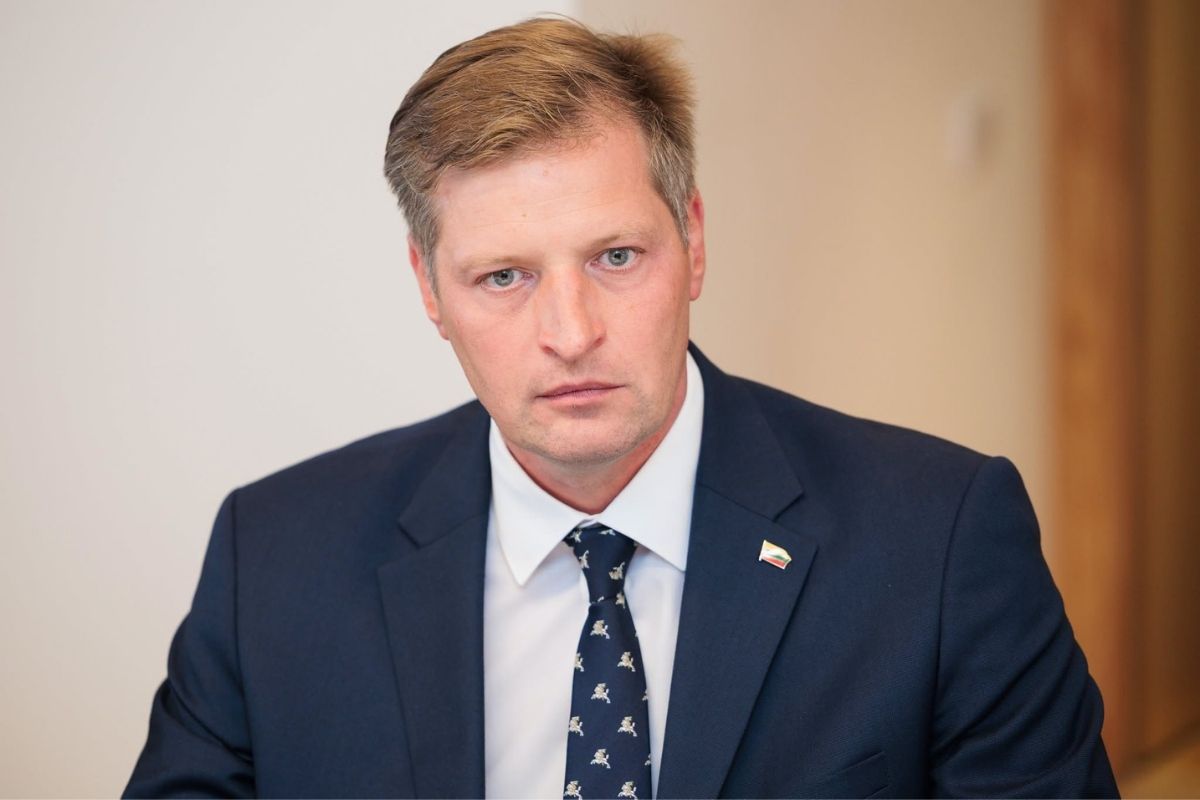
In less than four years, Lithuania has already had its third Minister of Agriculture. According to farmers’ organisations, such frequent changes in leadership are not beneficial to one of the country’s most important sectors – whilst each new minister brings new ideas, some of the previous minister’s work remains unfinished.
Although farmers expect dialogue and decisive decisions from the new Minister of Agriculture, Kęstutis Mažeika, the most frequently voiced expectation is – to ensure continuity of work and to stop forcing the sector to constantly adapt to changing regulations.
Frequent changes of ministers – not beneficial
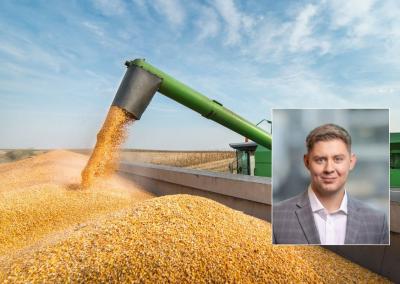
Audrius Vanagas, chairman of the Lithuanian Grain Growers’ Association (LGAA), makes no secret of the fact that frequent changes of ministers are a cause for concern.
“It is regrettable that the Minister for Agriculture changes so often. Especially when the agricultural sector is recognised as being of national importance. Frequent changes are not a good thing,” he says. According to Mr Vanagas, each new minister arrives with their own team and ideas, which means that some of the work already started remains unfinished.
“And every time, we have to start from scratch, set out our interests and positions, and explain why certain decisions are important. This hinders dialogue“, notes the association’s head. Nevertheless, the new minister’s first actions, he says, give cause for cautious optimism.
“We have seen decisive action on grain procurement – a referral has been made to the Competition Council. This decisiveness is impressive. Whether this will yield results and whether it will peter out remains to be seen,” concludes the LGAA chairman.
The most important thing is not promises, but dialogue
Gedas Špakauskas, Chairman of the Lithuanian Farmers’ Union (LŪS), believes that with approximately two years remaining in his term, the minister should not undertake grandiose reforms.
“Perhaps the minister shouldn’t overreach or make too many promises. He should simply get on with the day-to-day work, listen to the issues raised by farmers and tackle the problems that can be resolved at ministerial level“, he says.
According to G. Špakauskas, closer cooperation with other ministries is no less important.
“It would be very good if a connection could be established with the Ministries of Finance and the Environment. It is often from there that the problems faced by farmers arise – let us recall the issues with the National Land Service and the ILTĖ funding measures,” says the head of the LŪS.
In his view, the greatest measure of the minister’s success will not be the abundance of new initiatives, but whether he manages to reduce bureaucracy and maintain an ongoing dialogue with social partners.
“Farmers don’t need new rules”
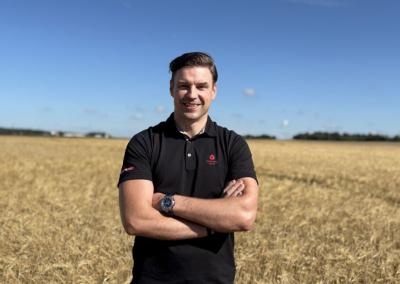
Vytautas Buivydas, Vice-Chairman of the Union of Young Farmers and Youth (JŪJS), shares a similar view. According to him, the constant turnover of ministers means that every time, everything has to start from scratch.
“The minister settles in, starts implementing measures, reaches an understanding with social partners, and then suddenly he’s gone. Then everything starts all over again“, he says.
According to V. Buivydas, what matters most to farmers today is not new initiatives, but stability.
“I would like to call for continuity in the work, for farmers not to be hindered, and for no additional rules or changes to be introduced. When new requirements are introduced for the same measure every year, farmers simply cannot keep up. This leads to an increase in errors, penalties and dissatisfaction,” he believes.
He adds that the new minister should focus more on a long-term vision.
“We would like to see a clear strategy – what sort of villages, regions and farms we want to see in the future. Regional disparities in Lithuania remain among the highest in the European Union, so we need to look for solutions to reduce them“, says the vice-chairman of JŪJS.
ŽŪR: the most important thing is a predictable policy
The leadership of the Chamber of Agriculture (ŽŪR) is sending a similar message. ŽŪR Vice-Chairman Algis Kulevičius emphasises that the most important thing for farmers today is to remain competitive.
“Farmers are not asking for special conditions, but for fair competition,” he notes.
According to him, it is essential to reduce the administrative burden, find solutions to rising energy and fuel costs, encourage investment in more efficient technologies and ensure a stable, predictable agricultural policy.
Algimanta Pabedinskienė, Chair of the Farmers’ Union, also emphasises a strategic approach to agriculture and the need to preserve the country’s food production potential, whilst Vice-Chairman Vytautas Grigas stresses that farmers must be able to plan their activities for a period of at least five to ten years.
“Ultimately, the most important indicator will not be the number of laws or new measures, but whether it has become easier for Lithuanian farms to remain economically viable”, – the leadership of the Lithuanian Farmers’ Union (ŽŪR) highlights this as the key criterion by which the new minister’s work will be assessed in a year’s time.

Similar articles

Video