











































Market gardeners are estimating losses running into hundreds of thousands of euros: ‘There’s nowhere to put the water’ (VIDEO)
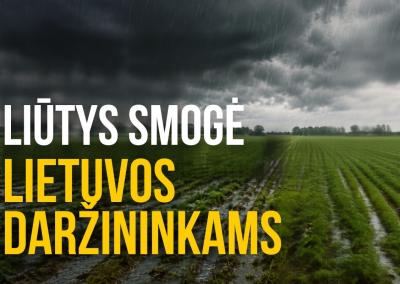
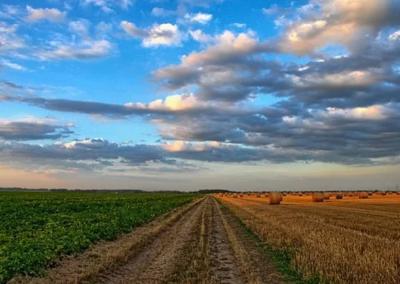
Following a storm and several days of unrelenting downpours, some vegetable growers in Lithuania found themselves in an extremely difficult situation. In some regions of the country, more than two months’ worth of rainfall fell in just a few days; the waterlogged fields have become impassable, and some farms are already estimating direct losses running into hundreds of thousands of euros.
On Wednesday, the Government declared a national state of emergency due to the aftermath of the storm. Farmers hope that this will at least partially alleviate their situation, but for now they acknowledge that the biggest problem remains the uncertainty over how much of the harvest can be saved.
Direct losses alone amount to a quarter of a million euros
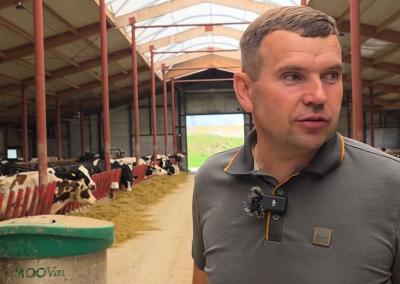
Algimantas Vaupšas, a vegetable grower in the Kelmė district, says that the true extent of the losses will only become clear once it is possible to drive into the fields.
“At the moment, we cannot estimate it with 100 per cent certainty, because the ground is very waterlogged, there is a lot of water, and it is impossible to drive into the fields. Once we can get in, that’s when we’ll start assessing the situation“, says the farmer. He has already submitted information on direct losses to the Ministry of Agriculture.
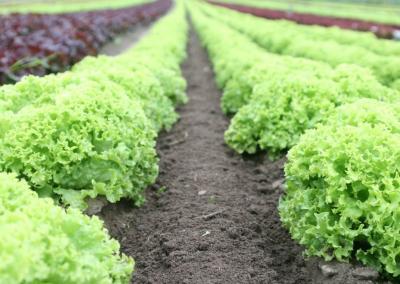
“The direct costs alone – sowing, planting, fertiliser, seedlings and seed – amount to around 250,000 euros. But that’s not all. It’s unclear what will survive, and more rain is forecast for next week,” says A. Vaupšas, adding: “The yield from a single hectare of cabbages can reach around 60 tonnes. Multiply that by the average market price – around 30 cents per kilogram. Then it becomes clear just how significant the loss of income could be on a 25-hectare plot. But it’s still too early to talk about the final losses today.”
There is no insurance against heavy rain damage to vegetables in Lithuania
The farmer says that insurance won’t help in this case.
“Nobody insures cabbages, beetroot or carrots against such risks. There is insurance against hail, but this isn’t hail – it’s prolonged rain. Whatever is insurable, everything on my farm is 100 per cent insured, but there is simply no insurance in Lithuania against waterlogging for these crops“, – says the interviewee.
When asked what he expects from the state today, A. Vaupšas makes no secret of his disappointment: “These rains have been recurring for two or three years now, but there has been no support whatsoever to date. The only response I ever heard was: ‘Write it off as a loss.’“
The problem raised by A. Vaupšas is also confirmed by Paulius Andriejavas, chairman of the board of the Lithuanian Vegetable Growers’ Association (LDAA).
“It’s a huge problem that there’s no insurance cover for vegetables against heavy rain or waterlogging. This is bad, and farmers have no way of protecting themselves,” he emphasises.
Losses – not just on A. Vaupša’s farm
P. Andriejavas says that A. Vaupša’s farm is just one of many: “We are receiving reports from onion and carrot growers. On some farms, the onions were affected not only by heavy rain but also by hail. The losses are certainly significant; we are currently trying to calculate them.“
According to him, the situation is most severe in the Šiauliai region: “It was there that almost two and a half months’ worth of rainfall fell in a single week. This is truly a catastrophic situation.”
The chairman of the LDAA board says that it is still too early to predict what impact this will have on this year’s vegetable harvest.
“The vegetables are still in the fields, so we do not want to speculate. However, it is already clear that waterlogging will increase the risk of disease, and the direct losses are already very high, & He points out that the losses are not limited to potential crop losses: “We have collapsed greenhouses, damaged storage buildings and sheds. The damage is varied, so we are currently calculating everything and will submit the figures to the ministry.”
A state of emergency could reduce the administrative burden
On Wednesday, the Government declared a national state of emergency due to the aftermath of the storm. According to P. Andriejavas, this is important not only because of potential future assistance: “For farmers, the lost harvest is one problem. Another is their obligations to banks, the National Paying Agency and other institutions. We hope that the declaration of a state of emergency will at least protect farmers from penalties for failing to meet their obligations.“
However, even with the declaration of a state of emergency, the uncertainty has not gone away.
“We don’t know what will happen next. We’ve had two strange years in a row now, and we don’t know what the future holds for us,“ says A. Vaupšas.
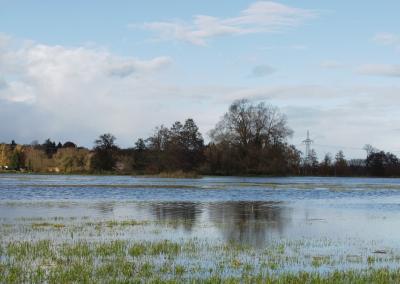
The farmer explains that not long ago he installed an irrigation system in his cabbage fields, yet for the third year running there has been no need for irrigation: “Everything is flooded. There’s nowhere to put the water. In my area, we’ve had 138 mm in three days, and two rivers – the Vente and the Žeberė – have burst their banks. The water burst its banks and flooded the fields. You can’t stop this process; we even thought about setting up pumps somewhere to drain the water, but there’s nowhere to put them because the rivers are level with the fields. The situation is out of control.“
Can we say that this week’s events are an exceptional case, or are they becoming the new reality for Lithuanian market gardening?
“There are always challenges – sometimes it’s a severe drought, now it’s torrential rain; is this becoming the norm? We couldn’t say that. But the fact that every year brings new challenges – that is certainly true,” says P. Andriejavas.

Similar articles

Video