














































‘Rimi’ – the shadow of pork adulteration: nearly 9 tonnes of meat withdrawn from sale
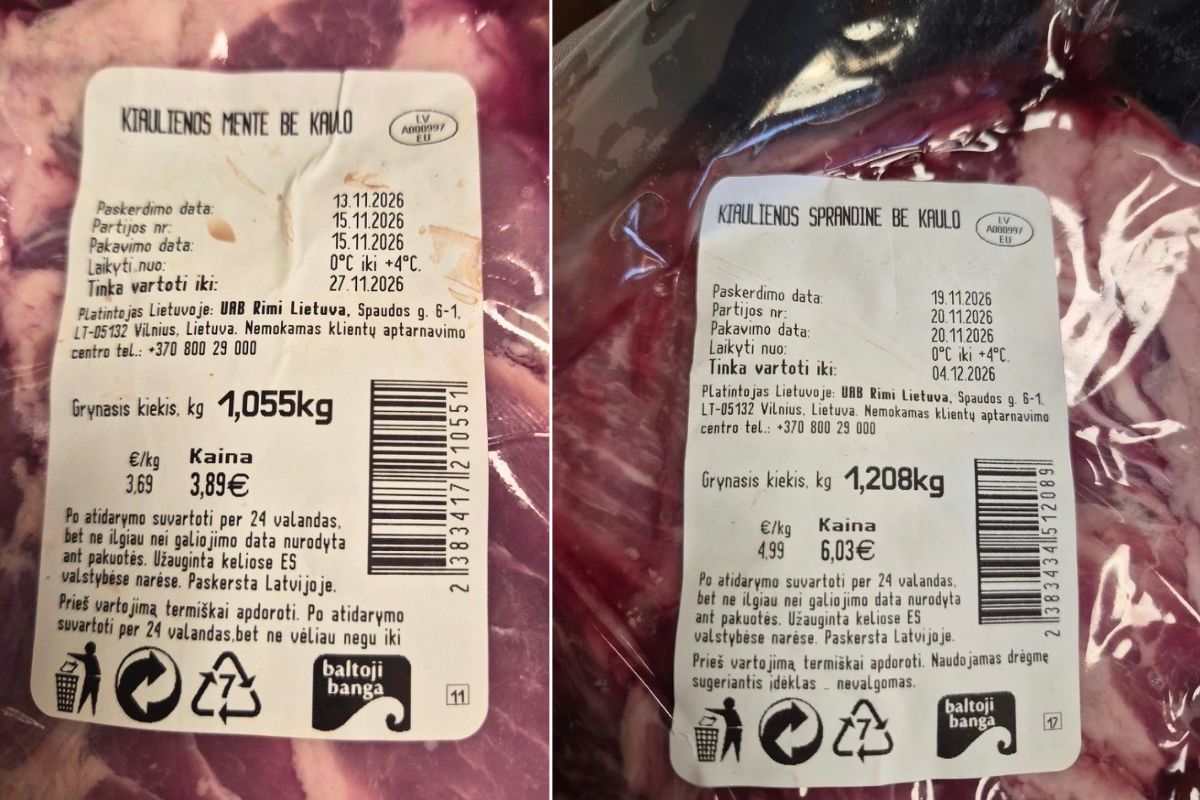
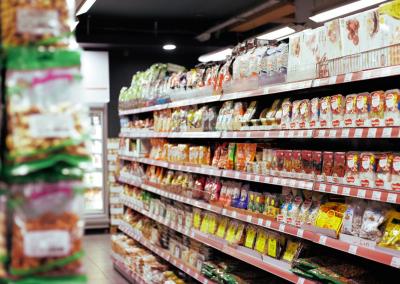
The “Rimi” retail chain has found itself at the centre of a potential meat fraud scandal. On 27 November, the State Food and Veterinary Service (VMVT) announced that it was recalling 8,684.36 kg of fresh pork from the market, which had been supplied to UAB “Rimi Lietuva” supplied by the Latvian company SIA “Kurzemes Galsaimnieks”. It is suspected that a water solution may have been injected into the pork, which was declared as fresh. The agency has launched a wider-ranging investigation.
Following laboratory tests, circular mechanical damage was detected on the surface of the meat, whilst an unusually large amount of liquid was found in the vacuum-sealed packaging. These signs give rise to the suspicion that the pork may have been processed using injection technology, whereby a solution of water, salt or other food additives is injected into the meat.
Under current regulations, meat processed in this way may no longer be sold as fresh pork. It must be sold as a semi-processed meat product, with the relevant information provided to the consumer on the product label. Otherwise, the purchaser may be misled regarding the product’s composition, quality and true value.
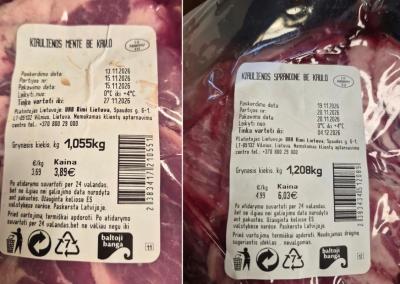
Two batches of pork from a Latvian supplier are being recalled from products distributed by “Rimi”: , two batches of pork from a Latvian supplier are being recalled: vacuum-packed boneless shoulder (batch no. 20.11.2026, use-by date – 4 December 2026) and vacuum-packed boneless shoulder (batch No. 15.11.2026, use-by date – 27 November 2026). The State Food and Veterinary Service (VMVT) urges consumers who have purchased these products not to consume them.
This case is of concern not only to consumers but also to the entire Lithuanian pig farming and meat processing sector. The possible undeclared addition of water to meat poses a risk of unfair competition, as artificially increasing the product’s weight may reduce its cost price, whilst consumers pay the price of meat for the water.
The incident also raises questions regarding the quality control measures carried out by major retail chains on foreign suppliers and imported products. So far, the State Food and Veterinary Service (VMVT) has not published the final conclusions of its investigation, and the agency’s statement does not set out Rimi Lietuva’s position.

Similar articles




Video