
















With BinDawood Holding exploring opportunities in the country’s dairy sector, the business community has mixed views on these plans

As the Saudi Arabian retail conglomerate “BinDawood Holding” is considering investing in the dairy sector in Lithuania – either by building a new factory or purchasing an existing one – and Lithuanian businesspeople have mixed views on the Arab firm’s plans.
Ramūnas Karbauskis, who built Europe’s largest dairy farm, believes this is an opportunity to become a global player in the dairy market, whilst Dainius Dundulis, owner of the “Norfa” retail chain, which operates a dairy, says there may be a shortage of raw milk.
Meanwhile, Dalius Trumpa, head of the company “Rokiškio sūris”, feels that the government is not paying enough attention to local producers.
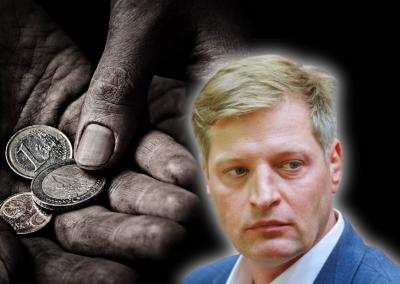
Eimantas Bičius, director of the Milk Producers’ Association, says that Lithuanian farmers are closing their farms because of low milk purchase prices, which often do not even cover production costs. According to him, dairy farmers are not pinning their hopes on the arrival of a potential major investor.
“At present, there is an increase in milk production in the European Union and demand is falling; and when demand falls, so does the price. Negotiations took place with China many years ago, as well as with other countries, to facilitate these milk exports. However, as there are no concrete actions or specific agreements in place as yet, it is hard to believe this“ – E. Bičius told LRT Radio.
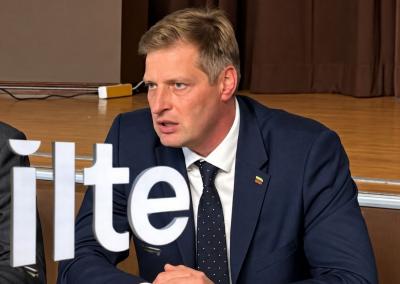
Dainius Dundulis, owner of “Norfos”, which operates a dairy, says that if new investors were to arrive, there would be a shortage of milk, which would lead to price rises. According to the businessman, more modern dairy farms need to be built in the country.
“It is clear that milk in Lithuania is being processed. There is no surplus milk. If another company were to emerge, there would be a shortage of milk. The price of raw milk would rise. For farmers, of course, this is very good, but let’s not forget the consumer – it would be worse for them. The situation would certainly worsen for existing companies too, as they would become less competitive in export markets. We need more modern farms, of course, and with them, more cows,” said D. Dundulis.
According to Dalius Trumpa, head of “Rokiškio sūrio”, the leading dairy company in the Baltic states, the government should pay more attention to local milk producers.
“Under Soviet technology, 3.4 million tonnes of milk were produced annually. Now – 1.4 million tonnes. If there were sensible policies in place that supported not just any foreign investors, but instead the prime ministers were to but would turn their attention to the Lithuanian dairy industry and Lithuanian farmers who want to develop milk production, then we could produce 5 million tonnes of milk a year without ploughing up the land“,” – D. Trumpa told the radio station.
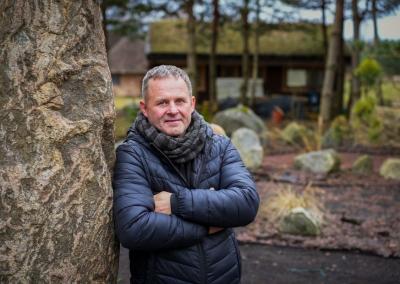
Ramūnas Karbauskis, owner of “Agrokoncernas” promises to expand and says that foreign investors offer Lithuania the chance to become a major player in the global dairy market, but he criticises the government’s efforts.
“The fact that attention is being paid to Lithuania, that someone from the Middle East is coming to Lithuania, is an opportunity to occupy a very strong niche and become a global player in the dairy market. The state simply needs to help businesses implement the plans that are already in place. The government must decide whether it wants Lithuania to earn money from something and become renowned for something. We have so many things where the whole world is watching with bated breath to see what we’re doing here, but so far there’s been zero effort,” said R. Karbauskis.
Investors from Saudi Arabia met with the Prime Minister this week, and later with the Minister for Agriculture, Kęstutis Mažeika.
BNS reported that Prime Minister Mindaugas Sinkevičius has promised to help “BinDawood Holding” find solutions to implement its plans.

Similar articles

Video