
























































Court decides whether a farmer is guilty of fatally injuring an elderly man with a bull
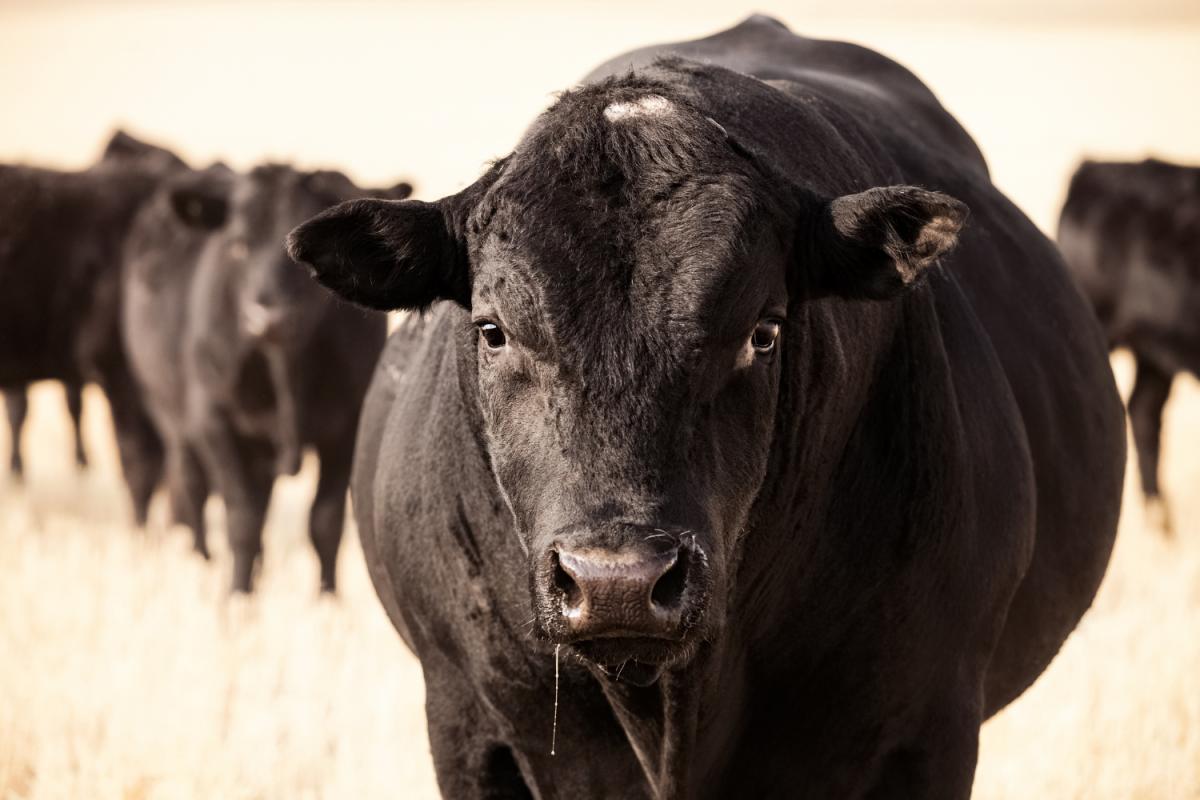
The Supreme Court of Lithuania (SCL) has heard a case concerning the fatal injury of an elderly man by a farmer's bull in the Klaipėda region.
The court of first instance found the farmer, Daiva Mikužytė, guilty and sentenced her, but the Klaipėda Regional Court, which reviewed the case, overturned the conviction and acquitted the farmer. The prosecutor's office and the relatives of the deceased disagreed with this verdict and appealed to the Supreme Court with cassation appeals.
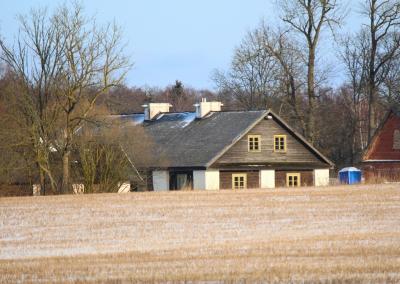
The tragic accident took place in November 2023 in the village of Rudgalviai, Klaipėda district. As the police reported at the time, during the day a bull escaped from a fenced-off area and injured a man, born in 1944, who was near his house, through a broken electric shepherd's crook.The victim was taken to hospital by ambulance, but the medics were unable to save his life.
Sergei Stulginsky, prosecutor of the Prosecutor General's Office, said at the hearing that special requirements apply to the activities of livestock farmers to ensure the safety of other people.
„Such activities entail a greater risk to others. Legislation imposes an obligation. Persons engaged in such activities must take adequate measures and ensure safe conditions for keeping animals. She did not take measures to ensure that her cattle did not pose a danger to others and did not leave the area," the prosecutor told the Supreme Court.
He also said that the evidence in the case shows that the bull went out because of inadequate and insufficient safety measures, and that the old man was injured immediately after a telephone conversation with his grandson.
The prosecutor also pointed out that before the tragic incident, the farmer had already been punished administratively for improper keeping of animals, when another person's property was damaged. According to the prosecutor, Mikužyte's conviction should be upheld.
The victims' lawyer supported the prosecutor's position
The victim and his lawyer, who filed the appeal with the Supreme Court, were present at the hearing, as was the prosecutor's office.
„We support the cassation appeal and urge that it be upheld. The legislation does not prescribe the size of the fence, it is up to each animal keeper to decide: it is one way for fallow deer, another for horses, and the type of fencing depends on the breed and the breed's behaviour. Daiva Mikužytė admitted that one bull had been aggressive and one person had already been injured by it. She herself told the officers at the scene that the animal was aggressive, which was recorded by the police body cameras. She did not prevent the consequences. The rules were broken and the consequences followed," said Ramūnas Girevičius, the victims' representative.
According to the lawyer, even before the incident, the farmer's electric shepherd was filmed in disarray and not switched on.
The victim Ignas Arbočius, the victim's grandson, was also present at the hearing. It was while he was talking to his grandfather on the phone that this tragic accident occurred.
„My grandparents farmed for maybe 30 years, I used to help them, I spent a lot of time in the countryside during my childhood and adolescence, and I know about animals. My grandfather was attacked during the interview, he only had time to open the gate. He was holding the phone with one hand and the gate with the other. I heard him calling for help, so I got in and went to him, –, – the man recalled the incident.
At the time, Mikužytė's lawyer believes that the Supreme Court should uphold the acquittal.
„It wasn't that a man was sitting on a bench and was attacked by an animal. The man was inside the house, saw a calf by the sheep, and, without speaking to his grandson, went out through the gate to drive it away. The man was killed, the actions of the deceased himself caused him to end up next to a strange animal," said lawyer Eligijus Karbauskas.
He does not believe that his client violated special rules of conduct.
„They were neighbours, they have telephones, they had to call to ask why they had to go to the animal. If he had not left the house, the incident would not have happened. There are no elements of a crime. The appellate court, having found no causal link, gave a correct verdict“, – says the farmer's lawyer.
He recalled that the calf had been mutilated, the circumstances of its mutilation were not entirely clear, and the calf had been slaughtered as a result of the mutilation.
The CJEU will deliver its final and non-appealable verdict on 17 February.
Farmer faces two verdicts
Exactly one year ago, in January 2025, the Klaipėda District Court found Mikužytė guilty of reckless deprivation of life. She was convicted of recklessly taking the life of another person in violation of special safety rules of behaviour laid down by law.
This court sentenced the woman to 4 years' imprisonment, suspended for a period of 2 years, with the obligation not to leave the city (district) of her residence during the period of suspension without the permission of the authority supervising the convict.
It was also decided to partially uphold the civil claims of the four victims and to award them EUR 53,000 for non-pecuniary damages and EUR 2,740 for pecuniary damages.
The court concluded that Mikužytė's guilt of the criminal offence charged against her was proven.
The defendant pleaded not guilty in court and stated that she had been farming for over 40 years and that she had provided adequate protection for her cattle. She claimed that she did not know who pulled out the electric shepherd. The farm itself, she said, does not belong to her, she only owns the land. According to the defendant, her livestock, 10 heifers and a bull, were loose because they could not be tethered.
The court ruled that the keeper of the livestock had a duty to ensure that the animals she kept did not pose a threat to human life, nor did they go outside the property where they were kept alone.
This court took into account the fact that on 8 August 2023, i.e. 3 months before the event in question, the defendant had been administratively sanctioned for failing to ensure that the cows belonging to her did not leave the area, which resulted in damage to other people's property when they did.
The court found that objectively the defendant's act, namely the disregard of the Law on the Welfare and Protection of Animals of the Republic of Lithuania and the Rules on the Keeping of Animals in the Residential Areas of the Municipal Territories of the Republic of Lithuania, was the cause of the man's death, which is a legally significant causal link between the act and the consequences, and that these consequences were the lawful result of the act.
However, the Klaipėda Regional Court, which reviewed the case, disagreed with these conclusions and acquitted the farmer.
After these opposite verdicts, the case went to the Supreme Court in Vilnius.

Similar articles


Video