





















Farmers' protests paralyse European cities

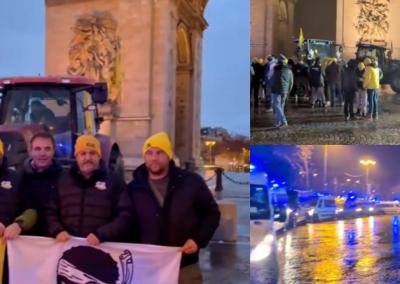
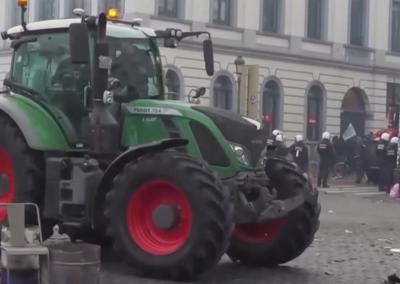
On 13 January, while Lithuania was celebrating Freedom Fighters' Day, some 350 tractors drove into the centre of Paris, taking the discontent of the rural population of the last few years to the heart of political power. The protests made it difficult to get through the National Assembly, the Champs-Elysees and the Arc de Triomphe, places that in France represent the stability of the state, but on that day they became the scene of farmers' anger.
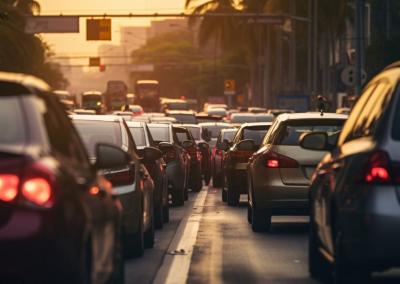
At a similar time in Belgium, farmers blocked major highways, logistics centres, ports and strategic junctions, including roads leading to the port of Antwerp, which handles more than 230 million tonnes of freight each year.
This is a continuation of the wave of protests in 2024–2025, when farmers' discontent became one of the most prominent social phenomena in the EU.
The main causes of discontent are the EU's Green Deal and farmers' economic realities. The European Commission aims to reduce the use of chemical pesticides by 50%, fertiliser consumption by 20% and convert at least 25% of farmland to organic farms by 2030. However, according to estimates by farmers' organisations themselves, implementation of these requirements could reduce yields by 10–30% in some sectors, particularly in crop and horticultural farms.
In France, agriculture accounts for around 1.7% of GDP, but its social importance is much greater: there are around 390 000 farms in the country, a large proportion of which are family farms. According to the National Farmers' Union, one in three French farmers earns less than the minimum wage per year, and the average farmer's income margin has fluctuated around 5-7% in recent years. In this context, any additional regulation that requires investment or reduces production becomes an existential challenge for farmers.
The situation is similar in Belgium. Although a small country, its agriculture is highly integrated into the EU market: around 70% of Belgian agricultural production is exported.
Farmers here are particularly sensitive to imports from third countries. In 2023–2025, the EU has seen a significant increase in agricultural imports from Ukraine, South America and North Africa. Cereal imports from Ukraine alone have exceeded 20 million tonnes in some years, which farmers say has put considerable pressure on domestic cereal prices.
At the same time, EU farmers are subject to stricter environmental, labour and animal welfare standards, the equivalent of which are not always met for imported produce.
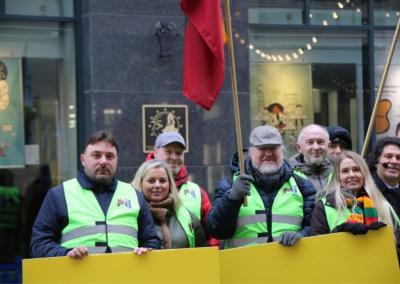
Protesters in Paris and Brussels highlighted a number of problems. In addition to the Green Deal, they also criticise the scale of bureaucracy: direct payment applications, controls, reports and checks cost hundreds of working hours every year, which could be used for direct work, according to farmers.
The European Court of Auditors estimates that the administration of the Common Agricultural Policy is costing farmers in some countries up to 10% of their potential income when time and additional costs are taken into account.
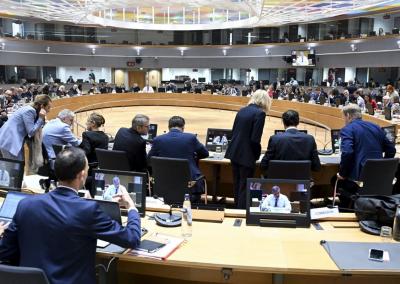
The European Commission is on record as saying that it has no intention of abandoning the Green Deal, but recognises the need for "flexibility". Concessions have already been made in recent months: some environmental requirements have been temporarily postponed and Member States have been allowed to adjust their National Strategic Plans more easily. However, farmers see these as cosmetic changes without changing the fundamental direction.
The images of 13 January in Paris and the blockades in Belgium were yet another signal that the conflict between political ambition and agricultural reality is deepening. Tractors on the streets of capital cities – are not only a form of protest, but also a warning: without a realistic economic basis, even the noblest environmental goals may face open opposition. Europe's quest to be green risks becoming a place where more and more farms can no longer survive without protest.

Similar articles
Video