




























France has become the epicentre of protests by European farmers. Winter calm in Lithuania (VIDEO)
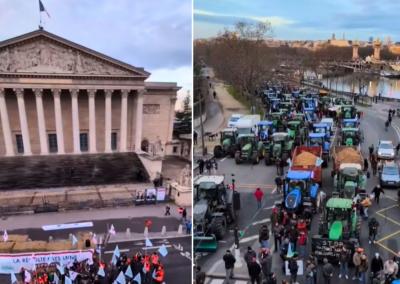
Farmers' protests, which began in the French regions at the turn of the year, have grown in a matter of weeks into a nationwide movement, culminating in a farmers' march on central Paris.
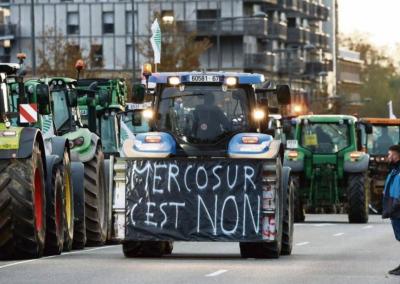
According to different estimates, more than 1,200 tractors from the North, Brittany, Normandy, central France and the southern regions moved towards Paris on 7–8 January. However, only a few dozen vehicles actually entered Paris – most of the convoys were stopped or diverted by the police.
According to the French Ministry of the Interior, around 6,000 police and gendarmerie officers were deployed on the outskirts of the capital. The main entrances to the A1, A4, A6 and A13 motorways were under control, with temporary checkpoints and physical checkpoints set up on some of them. The police strategy was clear: to prevent the mass flow of tractors into the city centre, but at the same time to avoid open confrontations. As a result, some farmers reached the capital in small groups in the early morning of 8 January, when controls were less intense. Other farmers stayed outside Paris, creating congestion for several kilometres.
The main reason for the protests was the trade agreement between the European Union and the South American „Mercosur“ countries (Brazil, Argentina, Uruguay and Paraguay). Under the draft currently under discussion, the EU market could receive an additional 99,000 tonnes of beef per year, as well as significant quantities of poultry meat, sugar and ethanol.
France is the largest beef producer in the EU – it produces around 1.5 million tonnes of beef each year and employs more than 130,000 farmers directly in the sector. Farmers say that even relatively small import quotas could have a significant impact on prices, as the beef market is sensitive and profit margins are already as low as a few percent on many farms.
Another important argument – differences in production standards. French farmers have to comply with more than 300 different environmental, animal welfare and phytosanitary requirements. For example, the EU bans more than 150 active pesticide ingredients which are still used in some „Mercosur“ countries. Farmers' organisations estimate that compliance with these requirements alone increases the cost of production on French farms by 10-20% compared to South American competitors.
Internal politics is also important in the protests. In 2025–2026, France experienced several outbreaks of contagious diseases in cattle, leading to the destruction of thousands of animals. In some regions, 5–10% of herds were culled in a matter of months. Farmers criticise the government for delays in compensation and for proposing solutions that are too centralised and do not take into account local situations. These problems have added to the general discontent and have been an additional catalyst for protests.
The economic background is also unfavourable. Over the last two years, the prices of diesel, fertiliser and animal feed in France have fluctuated, but remained higher than before the pandemic. The average farm cost structure shows that energy and fertilisers account for up to 30–35% of total costs in some sectors. At the same time, farm gate prices have not always risen proportionately, so that farmers' real incomes have fallen in many sectors.
In response to the protests, the government has announced additional measures such as stricter import checks, faster payment of refunds and temporary tax breaks for farmers. However, the protesters themselves stress that these are only short-term solutions. Their aim is structural change: clear safeguards in trade agreements, real convergence of import standards and a greater voice for farmers in agricultural policy.The events of January in Paris showed that the French farmers' movement remains one of the most organised and politically influential in Europe. Tractors on the streets of the capital have become a symbol of protest, but also a reminder that it is difficult to take major economic and political decisions in France without rural support. Even if this time some farmers were blocked by police barricades on their way to Paris, the protest itself has clearly achieved its goal of making the government and Brussels calculate not only the benefits of trade, but also its costs for farmers.
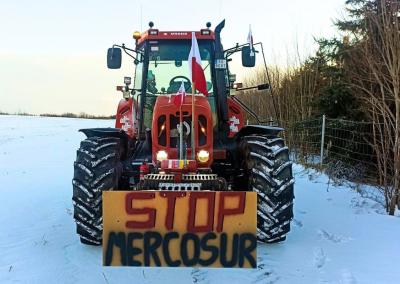
Polish farmers also stood in solidarity with the French farmers by launching the "Stop Mercosur" action. A major farmers' protest is planned in Warsaw on 9 January. The Polish government supports the farmers and does not intend to approve the EU-Mercosur agreement.
In Lithuania, on the other hand, things are relatively calm. Although farmers' organisations have expressed their opposition to the new free trade agreement, there are no protests in Lithuania.
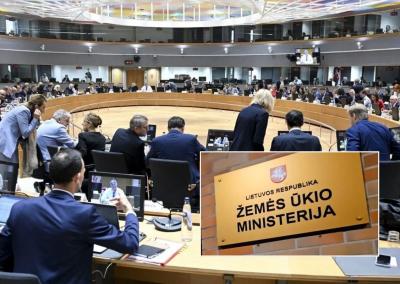
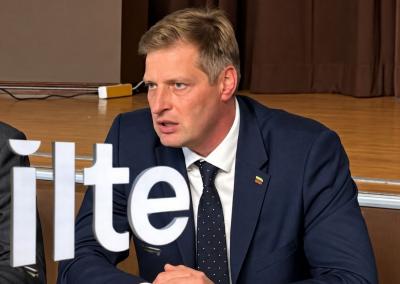
Among other things, the Ministry of Agriculture of the Republic of Lithuania, headed by Andrius Palionis, has not opposed the EU-Mercosur agreement and has submitted a favourable report to the Committee on European Affairs on it. A little earlier, the Ministry of Foreign Affairs of the Republic of Lithuania confirmed to "Agrobitei“" that the EU-Mercosur agreement is supported in principle by Lithuania.