







































Tractors in Warsaw are not a protest, but a diagnosis for Lithuania. Why are Poles no longer happy? (VIDEO)
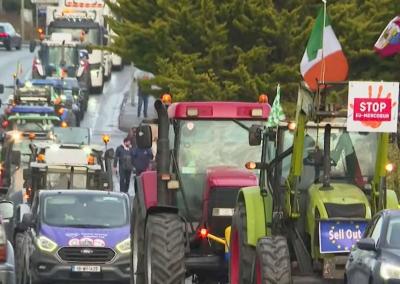
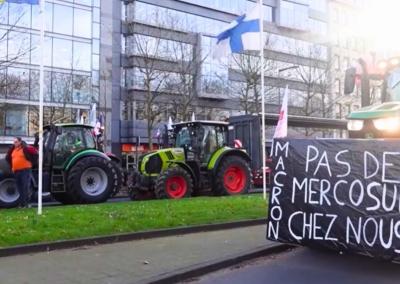
On Thursday evening, tractor convoys of Polish farmers moved into Warsaw, and on Friday, a huge "Stop Mercosur" protest is planned in the capital. This is not an isolated protest or an emotional outburst, but a clear diagnosis of the deepening structural problems not only in Polish agriculture, but in agriculture in Central and Eastern Europe as a whole. These processes have direct implications for Lithuania, whose agricultural sector operates in the same market and faces very similar challenges.
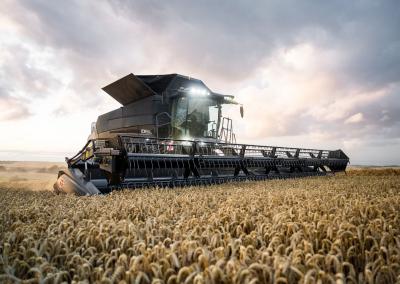
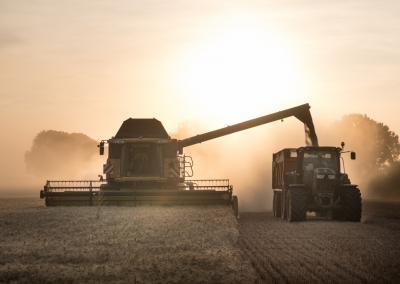
Dozens, and by some estimates even hundreds, of tractors from Opole, Olesnica and other regions have started their engines and moved towards the capital. According to the farmers themselves, the business numbers no longer add up: incomes are shrinking while costs remain high, and a fundamental change is needed. According to the organisers, several thousand farmers may join the protest in Warsaw, and the movement is in addition to the massive road blockades of 2024, in which more than 150,000 farmers took part across the country.
On Friday morning, police began restricting the movement of tractor convoys on the approaches to the capital. Organisers of the road columns announced this, pointing out that temporary road signs have been erected at the entrances to Warsaw, banning heavy agricultural machinery from entering the city. However, the farmers themselves hope that at least some of them will be able to reach the capital and make their demands public.
The economic reasons for this discontent are clear and well-founded. According to data from the Polish Statistical Office (GUS), in 2023, grain purchase prices in Poland will have fallen by around 30–40 percent compared to the peak in 2022. The price of wheat has fallen in some months to around €185/tonne, while the real cost of production on many farms was €210/tonne. In other words, some farmers have been forced to sell their production below cost. This was exacerbated by the fact that costs remained high: fertiliser prices, although down from 2022 records, were still 40–60 per cent higher than before the pandemic, while the cost of fuel, electricity and labour had risen by an average of 25–35 per cent over the past five years.
2024–2025 has become even more challenging for farmers. Wheat prices on international exchanges remained under pressure from oversupply and weaker demand. At the end of 2024 and the beginning of 2025, wheat prices on the Polish domestic market often fluctuated in the range of €170–180 per tonne, with some transactions at even lower levels. This has meant that prices have moved further away from the real cost of production and the financial situation of farms has deteriorated even further. For many farmers, this has become a structural problem rather than a temporary hardship.
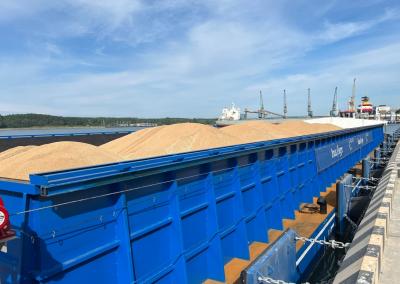
The sharp increase in imports from Ukraine has also contributed directly to the fall in prices. In 2023, more than 4 million tonnes of Ukrainian cereals were imported into Poland, compared to less than 1 million tonnes a year before the war. Such flows have not only depressed prices on the domestic market, but have also led to a storage crisis; according to estimates by farmers' organisations, in some regions up to 20–25 % of the harvest remains unsold even months after harvest. This is not only a problem in Poland – similar processes have been recorded in Lithuania, especially during periods when the regional grain market was facing a surplus effect.
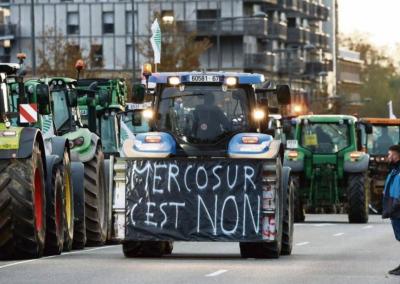
Another serious source of concern is the European Union's planned trade agreement with „Mercosur“ countries. According to the publicly discussed draft negotiations, the EU could admit up to 99,000 tonnes of beef per year with reduced tariffs, as well as significant quantities of poultry meat, sugar and ethanol. Polish farmers point out that in South America the cost of agricultural production is often 20-30% lower than in the EU, and environmental, pesticide and animal welfare standards are much more lenient. This situation, they argue, creates unequal competition in a market where Poland produces around 35 million tonnes of cereals annually and is one of the most important suppliers of food products to the EU's internal market. For Lithuania, whose agricultural sector is also heavily export-oriented, such changes could mean additional price pressure and even greater uncertainty.
There is also a clear social dimension to these developments. In Poland, around 1.3 million people work in agriculture and more than 40% of the country's population lives in rural areas. This means that farm economic problems inevitably spill over into regional employment, local businesses and demographic trends. A similar pattern is also true in Lithuania, where rural areas are already facing depopulation, lack of services and growing social exclusion.
Farmers warn that without stable, predictable and economically sound policies, small and medium-sized farms will be forced to withdraw from the market. In the long term, this will mean greater concentration of production, increasing import dependency and weakening regional viability.
The Polish tractor march to Warsaw is part of a wider European context – farmer protests have been recorded in at least 15 EU countries in 2024– 2025. This shows that the problem is not isolated or temporary. Tractors in Warsaw today – this is not just a noise, but a warning. The question remains open for Lithuania: will this signal be heard in time, or will similar columns move on our roads as well?
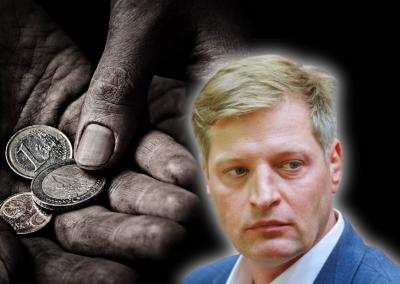
The Ministry of Foreign Affairs of the Republic of Lithuania has stated that the EU-Mercosur Treaty has been approved in principle. The Ministry of Agriculture, headed by Andrius Palionis, has also expressed no objection to the agreement and has submitted a statement to the European Affairs Committee.

Similar articles
Video