



























Polish farmers launch 'Stop Mercosur' campaign: machinery hits the roads again
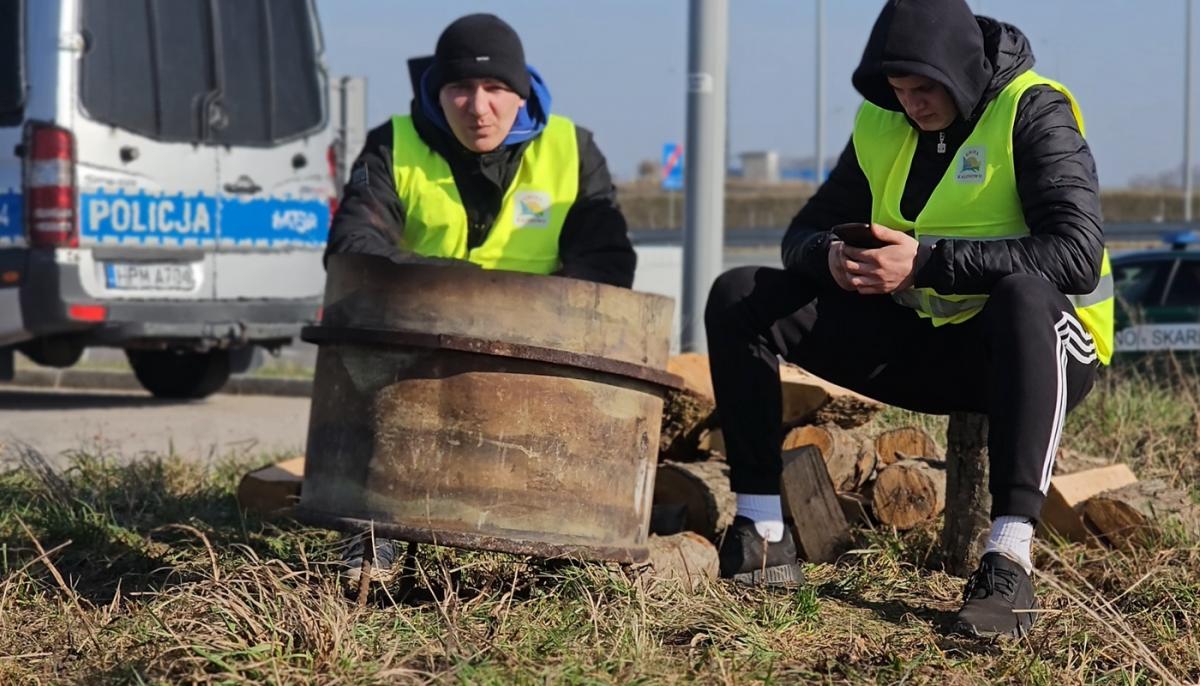
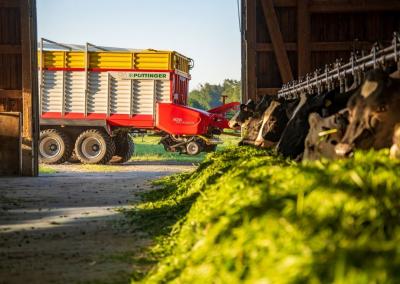
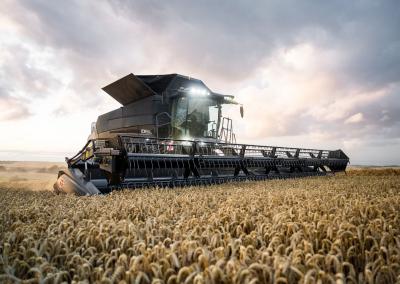
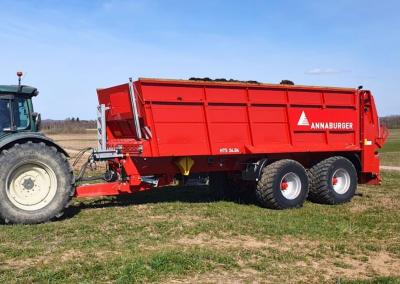
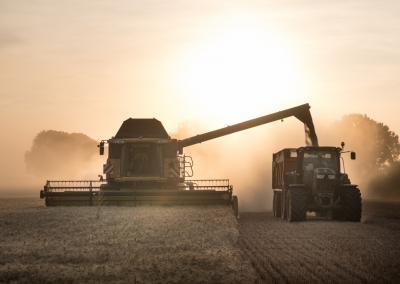
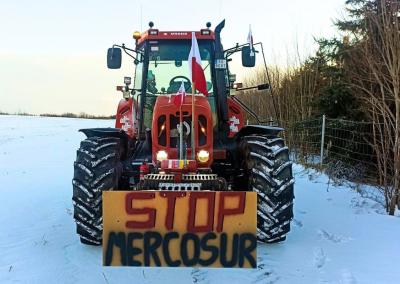
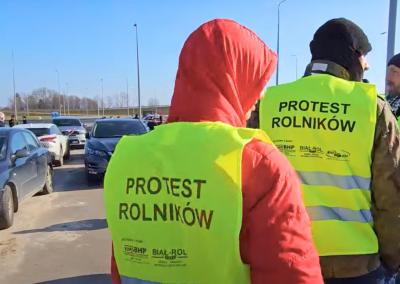
On Tuesday, a new mass farmers' protest called "Stop Mercosur" will start in Poland against the EU-Mercosur free trade agreement to be signed in January. Farmers will park tractors and other agricultural machinery on the country's roads, viaducts and main transport hubs. Although there are no plans to block traffic, the aim of the action is to publicly demonstrate unity and the growing dissatisfaction with a policy that protesters say threatens farmers in Poland and across Europe.
The action will take place from 10.00 am to 3.00 pm and is organised by „Oddolny Ogólnopolski Protest Rolników“, a movement mobilising farmers across the country. According to the organisers, more than 120 sites have already been registered where agricultural machinery decorated with protest symbols and slogans will be parked. Farmers stress that they are choosing a symbolic form of protest for the time being, in order to attract the attention of the authorities and the public, rather than to paralyse transport.This action is part of a wider European context. On 18 December. Around 10,000 farmers from different EU Member States stood united against the EU's Mercosur agreement in Brussels on 18 April. The protests took place at a time when European Commission President Ursula von der Leyen was discussing the possibility of signing the agreement on 30 December. The plans were postponed.
Brazil is adding political pressure on the European Union. The country's President, Luiz Inácio Lula da Silva, has publicly called on EU leaders to "show political courage" and conclude more than two decades of negotiations on a free trade agreement.
Farmers in Poland and other EU countries are categorically opposed to a long-term trade agreement with the Mercosur bloc (Brazil, Argentina, Paraguay, Uruguay). They argue that the agreement would open the European market to cheaper agricultural products produced under less stringent sanitary, environmental and animal welfare standards. Protesters fear that this will reduce the competitiveness of local producers, depressing prices and putting European food safety at risk.
Similar articles


Video