

























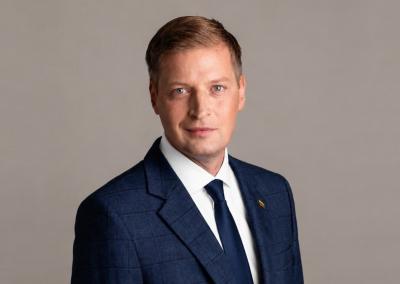
K. Mažeika promises to seek solutions if fertiliser prices remain high
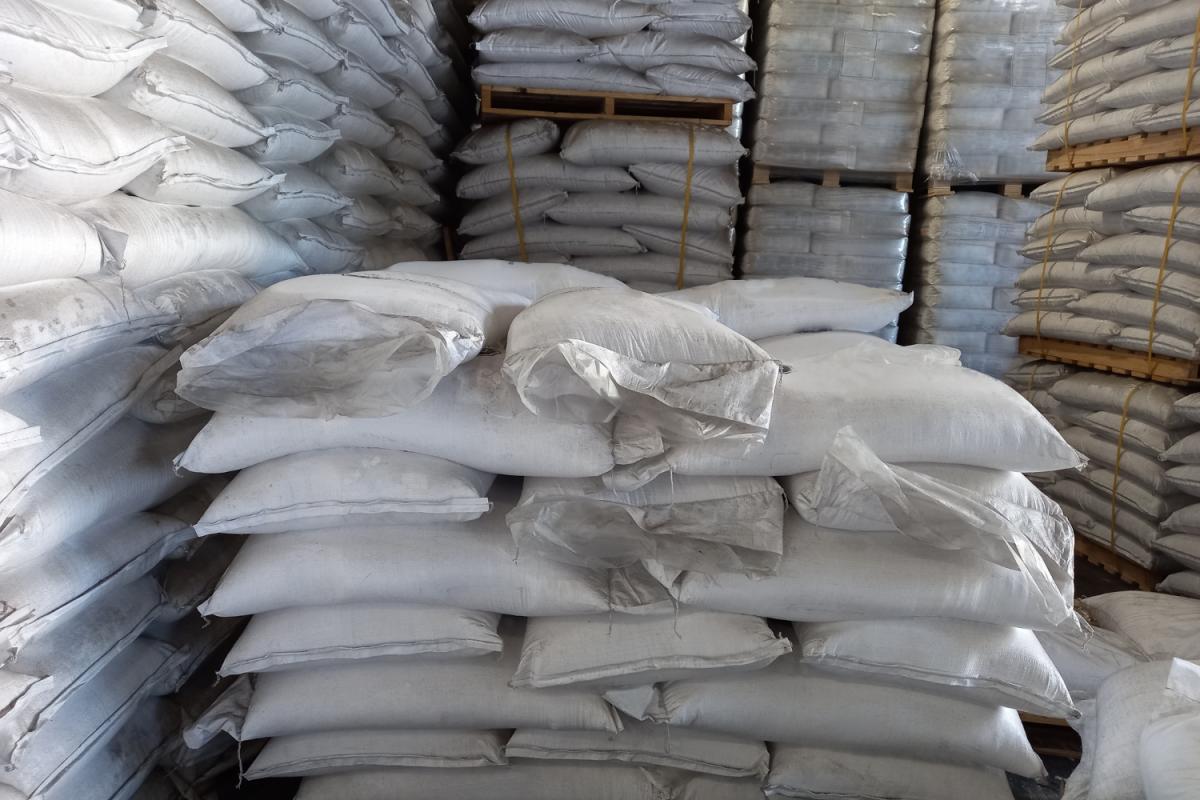
The Minister for Agriculture says that environmental taxes and high energy prices are causing local fertiliser producers to lose their competitive edge, whilst high fertiliser prices are being passed on to farmers, so solutions will be sought to reduce farmers’ costs, including the possibility of importing more cheaper fertilisers from third countries.
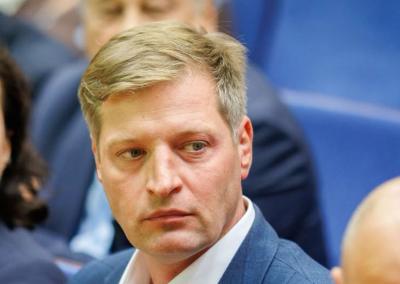
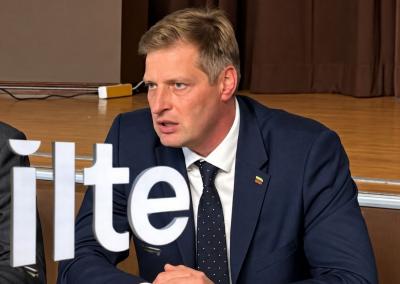
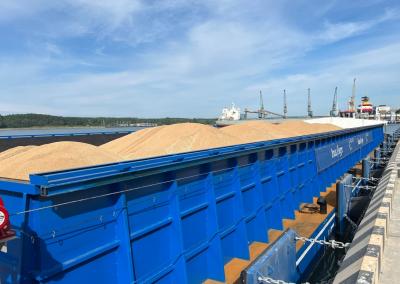
On Friday in Jonava, Kęstutis Mažeika met with representatives of the nitrogen fertiliser manufacturer „Achema“ and the grain storage and trading company „Jonavos grūdai“.
“Based on its production capacity, ‘Achema’ could certainly produce as much fertiliser as our Lithuanian farmers need. However, the main issues are high energy costs and environmental taxes, the bulk of which falls on the farmers’ shoulders“ – the minister told BNS after the meeting with representatives of “Achema“.
“There are now indications that this additional levy (the ‘carbon levy’ on fertiliser imports, known as the Carbon Border Adjustment Mechanism, CBAM – BNS) will still be reflected in the final price, because (fertiliser – BNS) importers, faced with higher prices (...), will offer a price that is a few per cent lower – which is what we are currently seeing in the market – and this bears no relation whatsoever to the price of grain, which is why the purchase of fertiliser has simply come to a standstill”, he added.
K. Mažeika emphasised that grain prices are currently low and long-term forecasts indicate that they are likely to remain so.
According to the minister, solutions will be sought to reduce fertiliser prices for end-users.
“We plan to hold discussions with the Ministries of Energy, the Environment, the Economy and Innovation, and to seek solutions in that context. It is important for our consumers and farmers to find a solution that is beneficial to all, (...) so that the situation can at least stabilise“, he explained.
“We will assess (the measures – BNS) probably after all the meetings. It is probably still too early to say (what specific measures – BNS), but we understand that without additional fertiliser, it will be difficult to expect even an average harvest“, the minister added.
He mentioned that the possibility of importing larger quantities of fertiliser from third countries would be discussed.
Jolita Macelytė, head of communications at “Achema”, told BNS on Thursday that fertiliser prices on the European market are most heavily influenced by natural gas prices, fluctuations in energy markets, the cost of emissions trading allowances (ETAs) and the overall situation in the global fertiliser market.
Due to challenges in the natural gas and fertiliser markets, as well as the growing burden of ETS costs, “Achema” has not been operating at full capacity since autumn 2021.

Similar articles

Video