


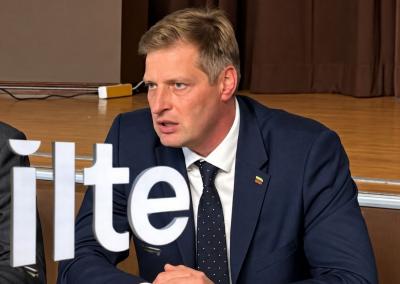













K. Mažeika promises to look for ways to standardise direct payments to farmers
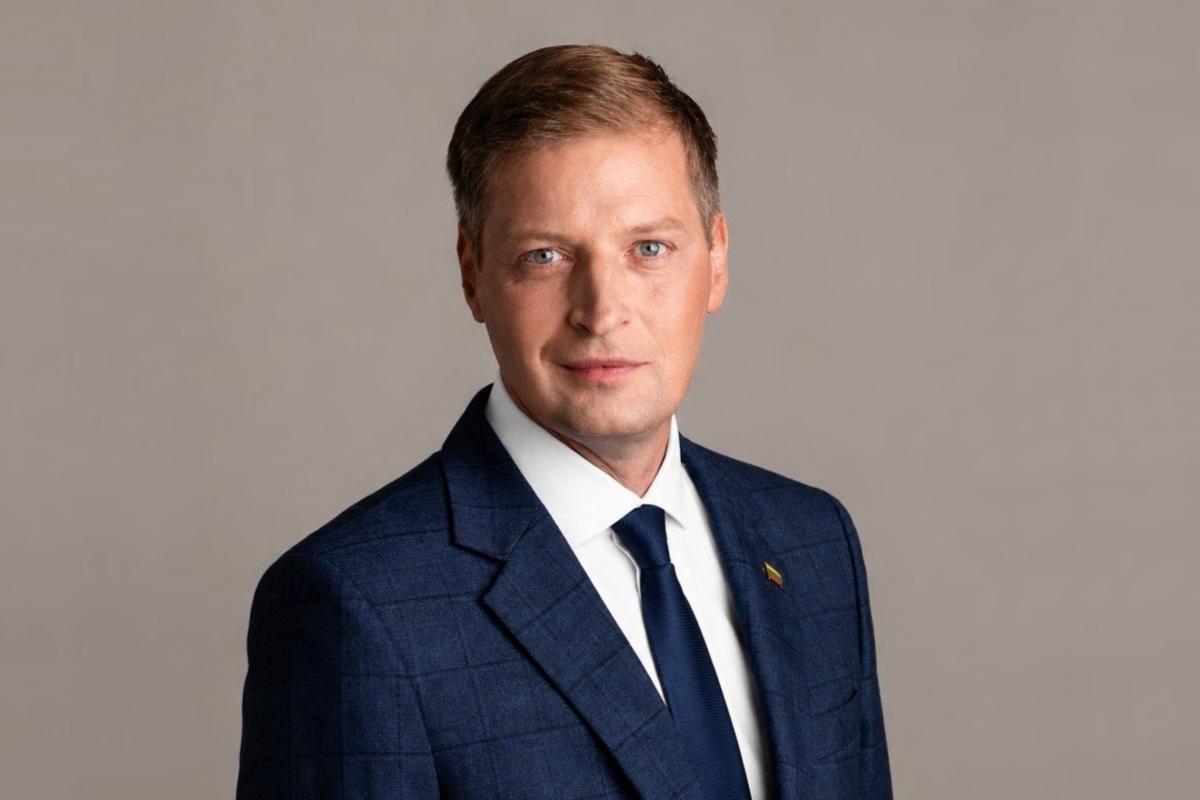
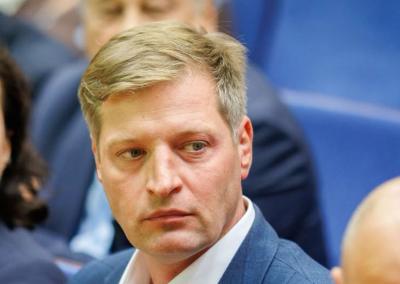
With the European Commission proposing a one-fifth reduction in funding for farmers, the new Minister for Agriculture, Kęstutis Mažeika, has pledged to seek ways to ensure adequate support for them and to bring direct payments closer to the EU average.
In an interview with BNS, he said he hoped that recognising agriculture as a strategically important sector for the country would guarantee adequate funding, but he did not predict whether the state would contribute national funds.
“We hope that this step towards recognising agriculture as a strategic sector will ensure that funding is adequate. But to simply assume that any reduction in the overall budget will be offset by cuts from other sectors – where we understand that everyone has expectations… The fact is that the budget will not only not be reduced, but will actually increase. This is likely to spark a really big debate,” K. Mažeika said in an interview with BNS.
According to him, the state’s contribution to farmers’ payments is “a matter for discussion”.
“This will probably again involve the Ministry of Finance and the Government… Of course, it could be postponed until next year, given the tight budget, but we will try to make our case. “We hope that, given the actual circumstances and the financial situation of farmers, this should be done, particularly for small and family-run farms, as they are going through a particularly difficult period,” – said K. Mažeika.
He also promises to review the current payment methodology to ensure that payments are made only to those who generate added value from their declared land.
* Restrictions on nurseries, schools and hospitals purchasing food from foreign suppliers.
– You yourself have mentioned on several occasions that you are the fifth minister in three years. You have emphasised the stability you wish to maintain, and have invited former ministers and a deputy minister to join your team. As we know, Andrius Palionis declined to join your team; are you aware of any other decisions?
– I am still awaiting other decisions. Yes, stability in agriculture is important; farmers value this highly, and of course, everyone probably values stability. It is in this regard, and perhaps thanks to the groundwork that has been laid, that we can see that some (the former ministry leadership – BNS) could contribute in some way to this joint effort. (...). I myself drafted the programme for the 19th Government; I did not contribute to the 20th – some points had simply been removed, but now we have reinstated them. It is probably logical that both the team and the vision were of that nature. That was probably the step that was taken. Of course, over that time, people have probably seen and assessed the situation, and are now evaluating their own abilities to continue the work and the opportunities available. We respect their decision, and there are people we’re still in talks with; we’ll be putting that team together and presenting it as early as next week.
– Do you already know the decisions made by Ignas Hofmanas and Rolandas Taraškevičius?
– An agreement has already been reached with Taraškevičius.
– Will he be Deputy Minister?
– Yes, he will be, because the EU presidency, the budget, negotiations and consistency in this area are once again on the agenda, and his experience is particularly significant – something we emphasised both within the Government and in our discussion with the President. This is certainly one of the key priorities for the coming year.
– And what about Ignas Hofmanas?
– He will not be part of the team of deputy ministers, but I certainly hope he will serve as an adviser, at the very least in a public capacity.
– And what about the other deputy ministers?
– There are candidates; they are being vetted, we are awaiting a response from the relevant departments, and we will present them next week.
– How do you intend to maintain stability – does this mean we won’t see any major reforms in agriculture, and that you’ll simply try to see out your term in office quietly?
– The word ‘reform’ frightens many people; we certainly do not intend to do that. The key thing we are promising is the reduction of bureaucracy. Whilst I was working on the Seimas Committee on Rural Affairs, we saw that most of the challenges lie in the process itself. After all, the process we’re evaluating is very costly for the state. And one of our key challenges – and this probably won’t be the case with the deputy ministers – is that, well, everyone won’t just have their own little patch to tend to, but we’ll all take a horizontal view, assessing things from the service user’s perspective – whether it is a farmer, a processor or a businessperson in that sector – how they receive that service, certificate, permit or whatever else, or support ultimately; how many steps need to be taken, and what procedures need to be followed.
Given that there is a great deal of overlap between institutions, with data often being duplicated, the same information has to be collated and transferred… In the 21st century, this is truly hard to fathom, and one could perhaps compare it to the growth of a tree, with more branches sprouting every year. It seems that, over that time, the same thing has happened here: the bureaucracy has not diminished, it has simply grown like that tree.
– Virginijus Sinkevičius, leader of the Democratic Union “For the Sake of Lithuania” which nominated you, has said that future Democratic ministers will carry out audits of subordinate institutions. What do you intend to check? Will you also review decisions made by the previous ministry leadership?
– Yes, we are planning to do so; a plan is currently being drawn up. We are drawing up the plan, assessing resources and capabilities, including the capacity of the ministry’s internal audit service and whatever external resources we can secure. This will also relate not only to finances and other resources, but also to process audits. (...) And as for the suggestion that some institutions might cease to exist or that functions might be redistributed, the most realistic decisions on this will probably be made following the completion of these process audits.
– What specifically do you intend to audit? Within the Ministry itself, or specific agencies?
– We’re talking about subordinate agencies as well; we’ll also review the internal structure to some extent – our future Chancellor is a specialist in this field. So I think we’ll be able to assess this through a joint effort.
Some matters are mandatory, such as hygiene certificate requirements, water testing or metrological checks, where we see today that people have to travel several dozen kilometres to collect a sterile test tube, then return, take a water sample and deliver it back to the laboratory... This applies not only to businesses but also to all public institutions, schools and nurseries – they must complete this by 1 September. And the logic is that perhaps it would be better to take the children into town twice, to see a play or something like that, rather than getting bogged down in technicalities, simply transporting samples and thus going through the motions. (...) Without these tests, operations simply cannot continue – there are huge penalties, and everyone is diligently complying, but should it really be like this? I certainly don’t think so.
– Which institutions might be subject to an audit?
– We’ll probably review the processes of all institutions, and that’s no secret.
– You also mentioned the Chancellor – who will be the Chancellor?
– Dorita Visalgienė.
– You mentioned that some institutions might cease to exist; were you referring to the Plant Production Service? When do you plan to reorganise it?
– We need to assess the situation, as certain processes are mandatory; we have to report to the European Commission and other international organisations. Things like grain testing, the laboratory – a non-accredited laboratory – really shouldn’t be a separate function when we have the National Food and Veterinary Risk Assessment Institute. I have no doubt that they can carry out this function jointly, thereby reducing costs whilst ensuring quality.
Other functions can equally well be carried out by other agencies. However, in this case, it will not involve some sort of mechanical abolition or redistribution of functions, or their transfer to others; rather, it is also important to assess the risk of corruption, the consequences of which we are now seeing. It is important to ensure that the ongoing process is more transparent, more effective and does not give rise to any similar risks in the future, as was the case quite recently.
– When do you plan to undertake this reorganisation of the service?
– I believe that by autumn we will have a plan setting out the steps to be taken, and we may even begin some of the work as early as this autumn.
– One of the more important tasks awaiting you during your term of office is the negotiations on the new EU budget, which will take place whilst Lithuania holds the Presidency of the Council of the EU. You have set the goal of aligning direct payments with those in the EU. How will you manage to achieve this, given that funding for Lithuanian farmers is set to fall by around 20 per cent after 2027?
– The very principle of funding is changing; there will no longer be a separate agricultural budget for farming, but rather a general one. The state’s attitude towards agriculture, whatever that may be, will probably also be a key factor. We hope that this step towards recognising agriculture as a strategic sector will ensure that funding is adequate. But to simply assume that any reduction in the overall pot will be offset by cuts from other sectors – where we understand that everyone has their own expectations… The fact is that the budget will not only not be reduced, but will actually increase. This is likely to spark a really big debate.
But we also see another possibility – to review the existing payment methodology, as we’ve heard from farmers or simply people who merely declare but do not actually work the land. This means moving towards a system where payments are made only to those who create added value from the land they declare. Because there is still widespread abuse, with city dwellers declaring land, receiving subsidised diesel, but in reality not working that land, the land is actually worked by a farmer, and sometimes they even have to top up those payments with a certain amount in cash. And so a grey area is created around safeguards and other matters, which places an additional burden on certain farmers.
– Have you calculated how much extra money you could collect by changing the methodology?
– We haven’t calculated it yet, but I think those calculations will be done in the near future. (...) It is important to create an environment in which farmers who are actually working the land can report this, as it is their responsibility and their right. And if they see that such an opportunity exists, or even a message to those so-called ‘armchair farmers’, perhaps we could encourage them simply to draw up those contracts and properly legalise that land, rather than engaging in fictitious activities that they do not actually carry out.
– The European Commission allows the state to contribute as well, so that co-financing is not reduced. Do you see any possibilities for this?
– That is probably a matter for discussion. As of today, we’ve probably already received – it should be here tomorrow or the day after (Thursday–Friday – BNS) that Lithuania will receive around 10 million in compensation for fertiliser and energy costs – that is, the rise in fuel prices for farmers – and the state may also contribute up to 200 per cent. This will probably serve as a litmus test of our resolve: whether to contribute significantly, as France has done, for the full 200 per cent.
This will probably again involve the Ministry of Finance and the Government… Of course, this could be postponed until next year, given the tight budget, but we will try to make our case. We hope that, given the actual circumstances and the financial situation of farmers, this should be done, particularly with regard to small and family-run farms, as they are going through a particularly difficult period.
– Still on the subject of European affairs, the EU–Mercosur agreement – do you see more opportunities or risks for Lithuanian farmers?
– I spoke out in the Seimas committee and was one of the initiators of the move to prevent this agreement from being signed, as I do not see any benefit, particularly for our agriculture, because the industry that would gain greater opportunities is unlikely to outweigh them. This will also require some clarification as to the extent to which it is linked to the recent increase in cases of salmonella and substandard, contaminated food, or whether these are cases related to imports from „Mercosur“ countries.
But in principle, regardless of the „Mercosur“ agreement, we must also monitor food and animal feed from neighbouring countries, because those isolated cases that used to occur are now becoming a trend, and I do not believe that all of them have been identified.
– Environmentalists are criticising you for not giving sufficient weight to the importance of climate change when shaping agricultural policy. How will you reconcile the interests of environmentalists and farmers?
– I will certainly reconcile them, and I probably have more experience than some of those who have complained about this, as I have no personal interest in the matter. This is probably down to old „affinities“ again, but what is important is that our programme also emphasises the strengthening of small and medium-sized farms, and the strengthening of short food supply chains, which are probably fundamental environmental objectives, because the same applies to „Mercosur“: long transport routes result in a significant carbon footprint. The production process itself is highly questionable in those countries, with the use of pesticides, various meat additives, hormones, genetically modified crops and so on…There are many unknowns, whereas here in Lithuania, the process is strictly controlled. It is important to focus on and encourage the use of public funds to purchase produce from our farmers – from hospitals, nurseries and schools right through to catering for the armed forces; this is a priority.
– Young farmers are also voicing concerns that the interests of small farms are not being protected, whilst your priority is large grain farms. Will you change your stance on this issue?
– My stance has never been that; this is probably just a misunderstanding, as I myself was a young farmer not so long ago, I know the challenges – I’ve been through them myself – so I support those organisations that have separate groups of young farmers amongst their members and are raising these issues. This is certainly a priority and probably the future of agriculture, given the average age of farmers.
– For many years now, there has been a problem in that the restriction on farmers owning no more than 500 hectares of land is practically ineffective; it can be circumvented. Do you plan to review the regulations so that the restriction actually works?
– It is the Seimas’s job to amend the laws.
– But you can take the initiative.
– Yes, we support that initiative; for our part, within the Ministry’s remit, we can introduce a certain percentage reduction in those same payments for land exceeding 500 hectares, if it is, for example, a crop-farming holding. These farms are already struggling as it is, whilst mixed farms – farms that create greater added value – should be encouraged; this is probably one of the possible mechanisms.
– You have mentioned that you are sceptical about the Food Council; you do not see its value. Will it be abolished?
– There is not a single practical result to show for that council’s work; that is a fact. And I believe we will return to the traditional model – that is, what existed much earlier and was more effective – namely, an advisory council to the minister, where representatives from certain fields of science, business, and farmers would discuss various issues, sector-specific matters, and possibly even more specific issues, on a proportional basis.
We are seeking efficiency, not some kind of message. The price monitoring promised by the Food Council – which is, in fact, the job of the Competition Council – has yielded absolutely no results.
– That was a government initiative; are you suggesting it should be discontinued?
– Yes.
– You said that the Competition Council and the promotion of competition should be strengthened. Can it expect to be given any additional functions?
– They have enough functions; it is just important that they make use of them, and the tools at their disposal. So, I think, we’ll be addressing this, as the recently adopted Milk Act, which covers retailers’ price-setting and production costs, probably presents an area of opportunity for them and perhaps even a tool to assist them. (...)
– What role could retailers play here?
– It is important that the final price reflects the return for each party. According to current calculations, it is the retailers who take the lion’s share of the milk price, even though in reality it is the milk producer who bears the greatest costs. This ratio – the split between the milk purchase price and the final price – should be clearly understood by everyone, and that price should not be based on the principle of ‘first come, first served’ or ‘whoever is cleverest’.
– Speaking of milk, the crisis has been going on for several years now; support and preferential loans for dairy farmers were announced in February, but the challenges remain. What else can be done?
– There are loans, but the crisis, now in its third year, shows that small and medium-sized farms are struggling. And the Milk Act certainly won’t have any miraculous effect today, but for those with a long-term vision and their farms, (...) it is a positive sign.
And those preferential loans could serve as a form of support. Furthermore, the short-supply-chain initiative – let’s call it a proposal – for farms to cooperate or, as there are already good examples of, to produce finished products – such as curd, cheese, yoghurt, or something else that could be used in schools, nurseries, hospitals and whatever else is in that local authority – so that purchases are made from these small farms as close to home as possible, using the same public funds.
– We have been hearing about the promotion of both short supply chains and cooperation for many years now, but in reality there has been no progress.
– Initial discussions with ministers have already taken place, and the Minister for Health is determined that this will be our first joint initiative: to ensure that people in hospitals eat organic, Lithuanian produce grown in Lithuania. We understand that this involves public funds, and we have the right to ensure that hospitals, schools, nurseries and barracks purchase the healthiest produce grown as close to home as possible. This is achievable.
Perhaps that mechanism did not work because there was too much freedom in this area – the freedom to buy everything from a single supplier, which made the matter too easy to resolve. We are not promising that freedom now; what we are promising is that if a particular product is not available in Lithuania, or if farmers are unable to supply certain vegetables, fruit or dairy products, perhaps eggs or something else, then this is the only way to purchase them from other suppliers, and that is the priority here. We believe this will be a good start.
– Finally, you mentioned that you were a young farmer not long ago; are you still farming?
– I handed the farm over to my relatives ten years ago; I’m just a helper on the farm now.
– And do you still go hunting?
– Yes. And I’ll continue to do so.
– Thank you for the interview.

Similar articles

Video