

































The labour shortage in agriculture is also being offset by foreign workers
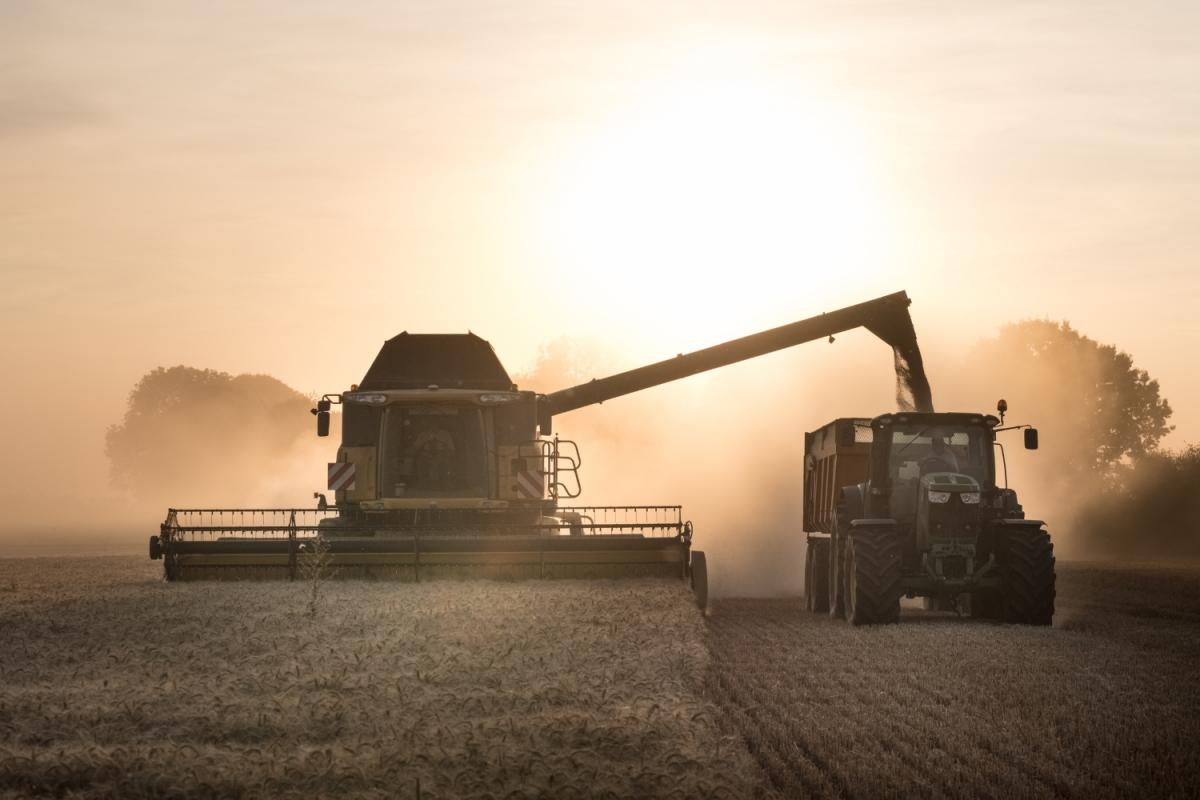
As the demand for labour in agriculture and forestry grows, the number of foreign nationals taking up employment in this sector is increasing, according to the Employment Service. Farmers’ representatives say that hiring them on a temporary basis is saving farms from collapse; however, a representative of small-scale farms notes that it is more difficult for them to recruit foreign workers.
The Employment Service estimates that on 1 July, 5,400 foreign nationals were working in the agricultural sector – 4,600 third-country nationals and 774 Europeans.
The Labour Inspectorate told BNS that no cases of illegal employment of foreign nationals in agriculture were detected either in the first quarter of this year or last year.
Farmers: foreign workers are less accessible to small farms
Paulius Andriejavas, Chairman of the Board of the Lithuanian Vegetable Growers’ Association, told BNS that it is difficult for vegetable growers to find seasonal workers, as people in the regions are increasingly reluctant to work: “They want to receive benefits, but not to work.”
Therefore, he says, the temporary employment of foreign workers or the hiring of such workers is saving farms from collapse.
Mr Andriejavas says that as the demand for labour grows, the number of hired workers is increasing. According to him, staff hire services are provided by both Lithuanian companies and those from other countries.
“We do receive such offers. It is easier to hire a worker because the bureaucratic process is very cumbersome and, in many cases, farmers do not even know where to start. So, it’s definitely easier for them to hire a worker,” he said.
According to P. Andriejavas, on some farms 10–15 per cent of workers are foreign nationals, who are hired for unskilled work: harvesting, preparing produce for sale, tending the fields and weeding.
“On some farms, the work is short-term – for one to three months. Elsewhere, workers come to work for a whole year. It depends on the type of visa they hold – work, study or temporary residence,” he said.
According to him, workers from Pakistan, Vietnam, the Philippines and Ukraine are most commonly found on horticultural farms.
“Whether it’s the minimum wage or slightly more than the minimum monthly wage, it’s a decent salary for them and they’re prepared to work for that,” said P. Andriejavas.
“They often speak English. So perhaps the language barrier is a problem. In most cases, their knowledge of Lithuanian is minimal,” he added.
Meanwhile, Vytautas Buivydas, Vice-Chairman of the Young Farmers’ and Youth Union, maintains that foreign workers are less accessible to small and medium-sized or family-run farms.
“We need to know how these workers are distributed – how many companies they work for. I can see that it is the larger farms that make the most use of this system. This distorts the labour market – dozens, hundreds or even more workers are being employed in one or several related companies,“ said the farmer.
“If the aim is simply to use cheap labour, this distorts our competitive environment – as family farms, we are no longer able to operate at the rates paid to migrant workers,” – he asserted.
According to him, the Employment Service’s data relates to legal employment, whilst it is unclear how many foreign workers are employed illegally in the sector.
According to Audrius Vanagas, chairman of the Lithuanian Grain Growers’ Association, grain farmers are looking for foreign workers who know how to operate modern machinery, but only a small proportion of foreign workers are actually employed.
“Agricultural machinery is becoming more modern every year, so we need workers with higher levels of expertise. If a farmer or a company approaches a recruitment agency and it finds a specialist who has the necessary skills and is competent to operate that machinery, then the farmer will hire them. This is not a widespread phenomenon, but we do see isolated cases on farms,” said A. Vanagas.
According to him, farms in Ukraine are larger, with more and more modern machinery, which is why workers arriving from there are finding jobs in Lithuania.
The Service: newcomers are doing the jobs that locals shun
Jurgita Zemblytė, head of the agency’s Monitoring and Analysis Department, states that migrants most often fill those jobs which employers in the country find most difficult to fill with the local workforce.
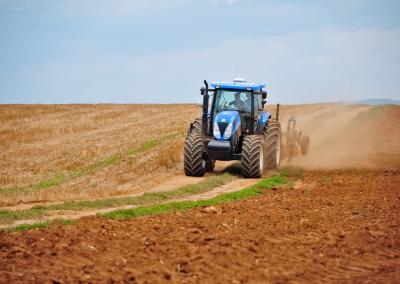
According to her, the agricultural sector has been changing in recent years, with a growing demand for skilled workers capable of operating automated machinery, working with GPS systems, digital solutions and precision farming technologies.
“The supply of workers with such skills remains limited. Consequently, the proportion of traditional manual labour in the sector is steadily decreasing,” – stated J. Zemblytė in the report.
According to her, much of the agricultural work is still carried out by older people, whilst young people lack motivation: “Career choices here are influenced by stereotypes that these jobs are hard, physically gruelling and poorly paid.”
The agency representative maintains that seasonal employment is not appealing to everyone, as people are looking for long-term and more stable work.
According to J. Zemblytė, competition from other sectors also affects the attractiveness of agriculture, as construction and transport companies usually offer workers with similar qualifications competitive pay, clearer career prospects or better working conditions.
The majority of foreign workers in agriculture come from Ukraine (2,200) and Belarus (743), with around 200 each from India, Uzbekistan, the Philippines, Azerbaijan and Tajikistan, as well as from Vietnam, Russia, Kyrgyzstan, Pakistan and Kazakhstan. There are around 240 Poles, and roughly 200 each from Romania and Latvia.
More than half a thousand foreign nationals are employed in highly skilled roles within the agricultural sector; of these, 146 are managers, whilst the rest are specialists and technicians. Almost 3,800 foreign nationals carry out medium-skilled work – they are plant and machinery operators, skilled labourers, service staff, sales assistants and clerks.
Ukrainians, Belarusians and Uzbeks most commonly work as agricultural machinery mechanics and repair specialists, whilst Poles and Romanians work in forestry and timber harvesting as loggers. There are nearly 1,200 unskilled foreign workers in this sector, or 20 per cent.
The Employment Service has calculated that during the first half of this year, 658 employers in agriculture and forestry advertised 2,800 job vacancies – with the majority of job offers registered in the districts of Vilnius, Radviliškis, Pakruojis, Panevėžys, Šalčininkai, Kelmė and Raseiniai.
On 1 July, a total of 187,900 foreign nationals were employed under employment contracts in Lithuania, of whom 168,700 were from third countries.

Similar articles



Video