
























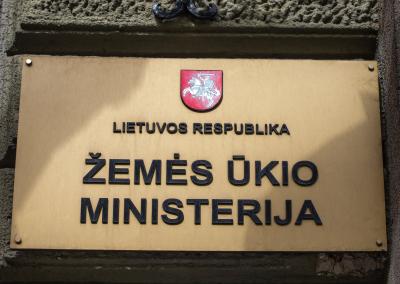
Minister for Agriculture: We must strive to make the most of the country’s fertiliser production capacity

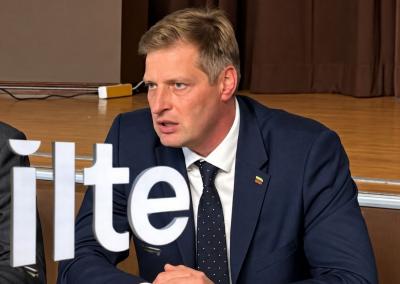
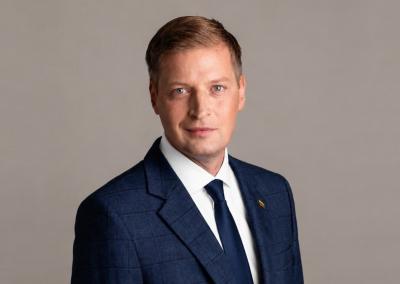
Following the European Union’s (EU) extension of sanctions against Belarus in February, Agriculture Minister Kęstutis Mažeika says that Lithuania, for its part, is looking for alternatives to Belarusian fertilisers. According to him, discussions are underway with Uzbekistan, whilst at the same time consideration is being given to increasing the capacity of local producers, with a view to ensuring affordable prices for farmers.
“Reaching an agreement is important to us and we have a specific plan. We had a virtual meeting with the Uzbek delegation, and we will now have a face-to-face meeting (– ELTA). There are alternatives. At this point, it is important to highlight Belarus’s position regarding the war in Ukraine and what their stance is on Russia – this is the key issue“,” – the minister told “Žinių radijas” on Thursday.
“Lithuania itself has significant fertiliser (production – ELTA) capacity. At present, they are operating at only half capacity, so another alternative for us is to discuss the maximum productivity of the operational capacity and what the cost price would be. Perhaps this could also reduce the cost price, and we would negotiate with the farming community on memoranda so that we could use Lithuanian fertilisers, thereby supporting Lithuanian producers whilst also ensuring a reasonable price for fertilisers“,” – he emphasised.
As reported by ELTA, in February the EU extended sanctions against Belarus for a further year.
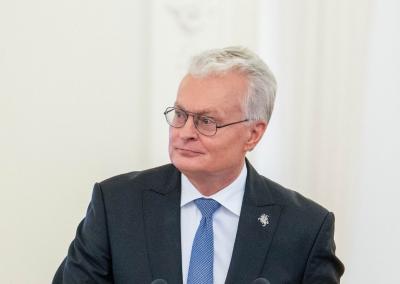
In March, the United States (US) lifted sanctions against two Belarusian banks and the Ministry of Finance, as well as against Belarusian potash fertiliser companies. At the time, President Gitanas Nausėda stated that Lithuania and the EU continued to adhere to their principled position. He also stated that the US decision should not be linked to the EU’s sanctions policy.
ELTA recalls that last December, the US Special Envoy noted that discussions on sanctions against Belarusian fertilisers would continue.
The administration of former US President Joe Biden imposed sanctions on Belarusian potash fertilisers in 2021 – a year after the Belarusian presidential election, which was unlawfully won by Alexander Lukashenko.
In 2022, the European Union also imposed sanctions on Belarusian fertilisers.
At that time, the Lithuanian state-owned company “Lietuvos geležinkeliai” terminated the agreement on fertiliser transit in accordance with a government decision adopted in 2022, which stated that “Belaruskalij” posed a threat to national security. Until then, transit was due to continue until the end of 2023.

Similar articles



Video