






































French supermarket chains prepare for a boycott of Mercosur products. Will Lithuanian traders be left behind?
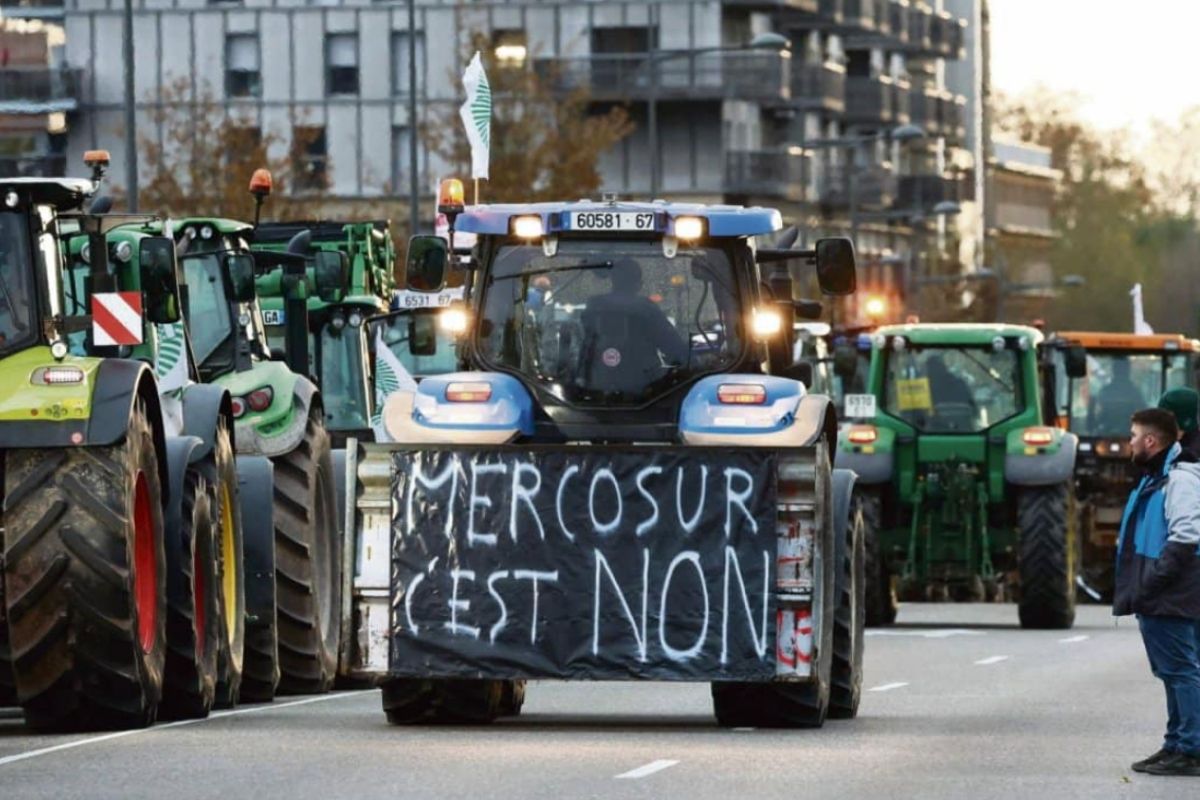
There are no signs of a coordinated and united European Union-wide boycott of the Mercosur agreement by retail chains. However, individual statements by large chains in France give hope that at least part of the market may take on restrictions on specific product groups from South America. What position will Lithuanian retail chains take? Will they stand in solidarity with their counterparts abroad, or at least with our own farmers?
Unfair competition argument
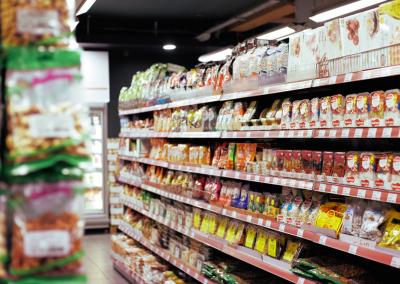
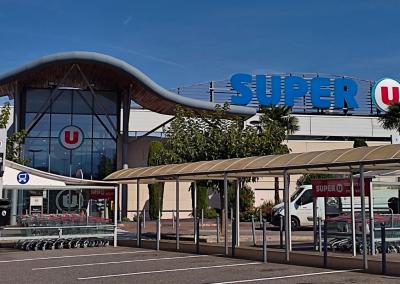
„Agrobite“ has already reported that France's fourth largest retailer „Système U (Coopérative U)“ has made a public statement: after the ratification of the EU–Mercosur agreement, the stores it operates will will not sell agricultural and food products from „Mercosur“ countries, provided that equivalent local alternatives exist.
The Network's Director General, Dominique Schelcher, has clearly identified the problem – European farmers are working under strict environmental, animal welfare and food safety standards, while imported products are often not subject to these standards. This situation, he said, creates unfair competition.
He even likened the EU-Mercosur agreement to the fast fashion platform "Shein", which represents cheaper but less regulated production.
In France, the EU-Mercosur agreement has already become a political and social symbol of the divide; it has been on the table for more than 25 years, but it has not yet been supported by the public. This is not surprising: France is the largest agricultural producer in Europe and the interests of local farmers carry a lot of political weight here.
Not the first precedent
This is not the first time that French retailers have sided with farmers.
Until 2024, the country's largest supermarket chain „Carrefour“ has announced that it will not sell meat from „Mercosur“ countries (Argentina, Brazil, Paraguay, and Uruguay) in its French stores.
This decision comes against a backdrop of protests by farmers and has sparked an international outcry, particularly in Brazil, where „Carrefour“ also has a large network and has faced calls for a boycott.
Although Alexandre Bompard, head of „Carrefour“, stressed that the decision only applied to the French market, the message was clear: supermarket chains can become active participants in political decisions, not just passive observers.
Lithuanian traders on standby
Lithuania's major retail chains are taking a much more cautious approach for now. Unlike in France, there have been no public statements about possible restrictions on „Mercosur“ products in our country.
Traders stress that the EU–Mercosur agreement has not yet been ratified, so it is too early to talk about practical solutions.
„Rimi“ representatives point out that the chain operates within the existing legislation and takes decisions individually. „Maxima“ stresses that it will comply with national and EU legal requirements, while „Norfa“ states that it has not yet formed a position.
The lack of response to queries on this topic from „Iki“ and „Lidl Lietuva“ suggests that the Lithuanian retail sector is avoiding taking a clear position for the time being, pending political decisions in Brussels.
Between politics and the market
The French example shows that the EU-Mercosur agreement is no longer just a technical trade document.
The agreement is becoming a question of value, where the principles of free trade, the interests of local farmers and the expectations of consumers collide.
Whether Lithuanian supermarket chains follow the French example or remain neutral – will depend not only on political decisions, but also on how active local farmers and consumers will be in raising their voices. For now, Lithuania is watching, but the question remains open: for how long?

Similar articles
Video