












































































Copa-Cogeca calls for the amendment to the EU-Morocco trade agreement to be rejected
Copa-Cogeca, which represents European farmers and agricultural cooperatives and whose members include the Chamber of Agriculture of the Republic of Lithuania, is calling on the European Parliament to reject the proposed amendment to the trade agreement between the European Union and Morocco. Farmers’ organisations warn that the proposed trade concessions for produce grown in Western Sahara could put even greater pressure on EU fruit and vegetable growers, distort competition and raise questions regarding the accurate labelling of product origin.
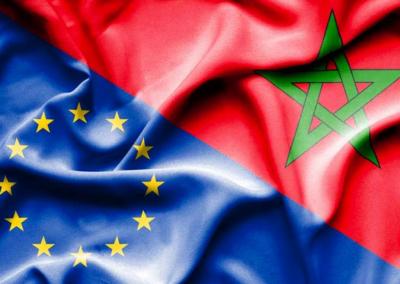
Discussions are continuing within the European Union on amendments to the protocols of the EU–Morocco Association Agreement concerning the trade conditions for products produced in Western Sahara.
The proposed amendments provide for the possibility of applying the same tariff concessions to products originating in Western Sahara as those applied to Moroccan products.
This raises serious concerns for European farmers’ organisations.
Copa-Cogeca, together with other organisations representing the European fruit and vegetable sector, warns that such a decision could further exacerbate the situation for EU producers and create an uneven playing field.
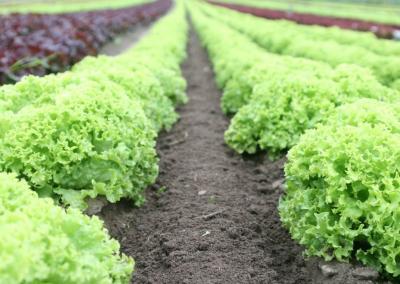
The greatest risk – for fruit and vegetable growers
One of the main problems highlighted by farmers’ organisations is the disparity in production standards and costs.
Farmers in the European Union are required to comply with strict environmental, plant protection, labour, food safety and other requirements. Compliance with these directly affects production costs.
Consequently, produce entering the EU market in large quantities, which has been produced under different conditions and at different costs, may exert additional pressure on the competitiveness of European farmers.
This is particularly relevant to the fruit and vegetable sector, where imported produce competes directly with that of European growers.
Copa-Cogeca and other producer organisations point out that European fruit and vegetable growers are already facing increasing pressure from imports. Therefore, in their view, additional trade concessions could further increase economic pressure on farms.
The EU Court of Justice treats Western Sahara separately from Morocco
The debate over the agreement is not purely economic.
On 4 October 2024, the Court of Justice of the European Union handed down significant rulings on the application of the EU-Morocco agreements to Western Sahara.
The Court ruled that, from the perspective of EU law, Western Sahara is a territory distinct from Morocco. The Court also noted that previous agreements, which had been extended to the territory of Western Sahara, violated the principles of international law, as the consent of the people of Western Sahara had not been properly obtained.
This legal aspect has become one of the most important arguments in assessing the proposed amendment to the agreement.
The labelling of the origin of produce also raises questions
An equally important issue is how the origin of produce grown in Western Sahara should be indicated to European consumers.
The Court of Justice of the European Union has clearly ruled that Morocco cannot be indicated as the country of origin for fruit and vegetables grown in Western Sahara.
In a case concerning tomatoes and melons grown in Western Sahara, the Court ruled that such produce must be labelled with its true origin – Western Sahara. In the Court’s view, any other labelling could mislead consumers.
Copa-Cogeca and other producer organisations therefore question whether the proposed new solutions regarding origin labelling sufficiently comply with the principles established by the Court of Justice.
Farmers’ representatives are also concerned that the issuance of conformity documents for Western Sahara produce would be linked to the Moroccan authorities.
Calls for a level playing field
Copa-Cogeca’s position is also linked to a broader demand from European farmers – agricultural products imported into the EU must be subject to requirements that do not place European producers at a competitive disadvantage.
European farmers have repeatedly called for the application of so-called ‘mirror conditions’ and strong safeguard mechanisms in trade agreements, as well as for transparent labelling of the origin of imported products.
In the view of farmers’ organisations, a situation must not arise where EU producers are subject to ever-higher environmental, social and production standards, whilst at the same time the European market is being increasingly opened up to products that are not subject to equivalent requirements.
Copa-Cogeca therefore urges Members of the European Parliament, when assessing the amendment to the EU–Morocco trade agreement, to take into account not only trade policy objectives but also its impact on the European agricultural sector.
In the organisation’s view, EU trade policy must ensure fair competition, transparent labelling of product origin, compliance with EU law and the rulings of the Court of Justice of the European Union, and effective protection for European farmers against market distortions.

Similar articles

Video