























Nature has not spared fruit and berry growers from trials and tribulations – in some places, this year’s harvest is particularly meagre
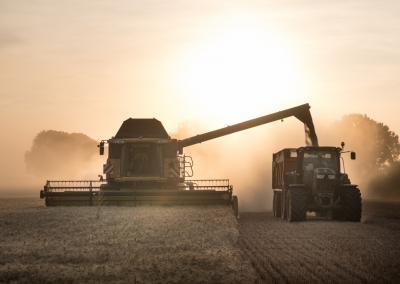
Last week, farmers began the harvest. Cereal farmers are so far quite satisfied with the condition of the grain and are not talking of a poor harvest, but fruit and berry growers, whose harvests have been severely affected by the winter, are in a very different frame of mind. The result – entire orchards have been frozen to death.
Blueberries are taking a break
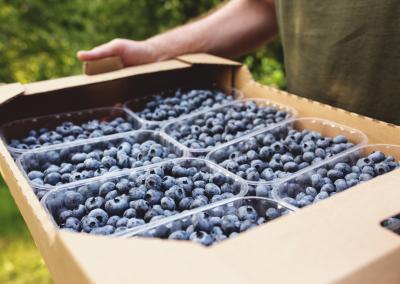
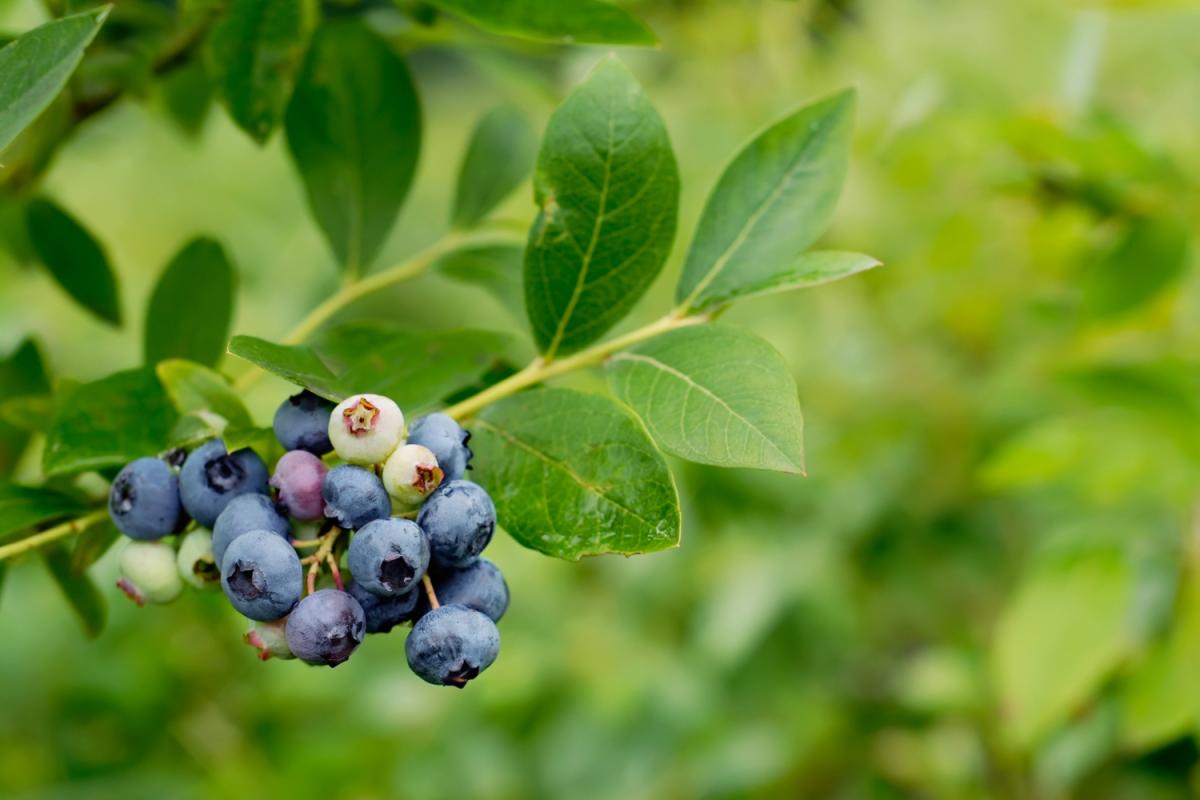
When asked about this year’s blueberry situation, Alė Kučinskienė, owner of one of the largest blueberry plantations in the Rokiškis district, responds with a single sentence – there will be no berries for sale: “The situation is this: whereas in previous years we used to harvest up to 4 tonnes of blueberries from the plantation, today we’re planning to harvest up to 100 kilograms from the same field.”
However, the berry grower does not stop at that single sentence and explains that, although there was a frost, the blueberry bushes in the fields survived: the lower branches of the bushes, which had been covered by snow, remained. The reason there are no berries is that the buds that had already formed were damaged by the frost in the spring.
“The bushes are now recovering – they’re putting out new shoots. I think they’re even glad about the frost, as it gives them a break from ripening the berries. It’s given us a break from picking them too,” laughed A. Kučinskienė, who’s never short of a sense of humour.
She made no secret of the fact that the huge blueberry plantation had been a financial boon over the past eight years. And not just for her, but also for the hired berry-pickers, who weren’t needed this summer.
One business ‘covers’ another
Nevertheless, the woman takes an optimistic view of the situation, recalling a piece of advice often repeated amongst farmers: one must have several businesses which, in difficult times, “cover” for one another. A. Kučinskienė joked that last year her livestock farm was “covered” by blueberries, whilst today the blueberry farm is “covered” by the dairy farm.
The berry farmer was quick to apologise to her customers, who bought berries from her every summer: “It’s not our fault that there are no berries this year. Regular customers are already phoning, asking, waiting and pleading, but all I can do is apologise, because there simply aren’t any berries. Whatever ripens will be for the family’s own use.”
She smiles and urges her customers not to give up, hoping to have a berry harvest again next year. According to A. Kučinskienė, who has 1,990 blueberry bushes, the blueberry patch is healthy; she has pruned it carefully and it is now growing new shoots. The most important thing is that next winter and spring are favourable for them.
This is not the first time she has faced such a challenge
A. Kučinskienė recalled that in the third year after planting the blueberry patch, it was subjected to a “baptism of spring frosts”. However, she smiled, not making a big deal of it at the time, as the berry harvest is never particularly abundant in the third year of a bush’s growth. Even so, there were a great many frost-damaged twigs that time, and once these were pruned away, the bushes flourished once more.
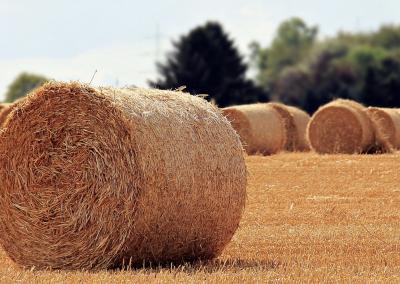
“It’s not easy for either gardeners or vegetable growers – we often suffer. And it’s not just in Rokiškis; the situation is similar throughout Lithuania: in some places there are no berries, in others the downpours have washed away the potatoes. You can’t fight nature. But there are some positives this year too: for example, we’ve harvested more fodder for our livestock this year than we’ve ever had before: around 2,000 hay bales,“ – the berry grower expressed her delight at the positive developments.
Cherries – facing various challenges
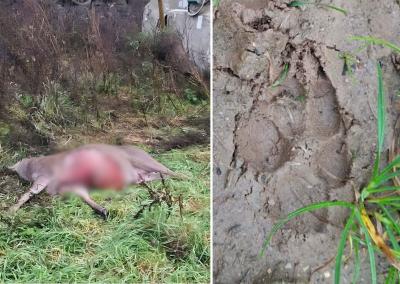
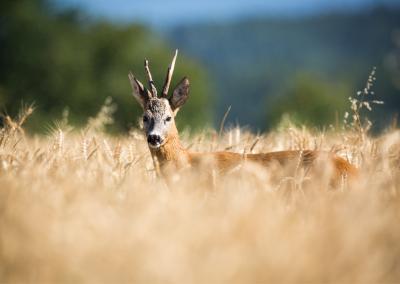
Eglė Mikalauskienė, who has been growing cherries for five years, had also hoped to “share” this year’s harvest with others, but once again, only her family will be eating the berries. According to her, what the winter didn’t freeze, the birds ate: “The trees froze very badly this winter – almost half of the 300 cherry trees in my garden were damaged. If not from the severe frosts, then from the roe deer that gnawed at them. In the spring, the damage caused by the frost wasn’t yet so obvious, as I prune the trees myself and inspected each one. It seemed that everything was fine and there would be berries, but it seems the spring frosts must have frozen the blossoms themselves, as half the buds didn’t even open.”
Last year, according to the interviewee, the situation with the harvest was similar: the frosts returned just as the early-ripening cherry varieties had started to blossom, and once the late-ripening varieties had opened their blossoms – the frost began to bite again. Last year’s winter was somewhat more favourable in terms of the condition of the trees, but this year, according to the woman, although the trees looked alive in spring, they had most likely already been weakened by the winter frosts, so over time they withered and she had to remove quite a few ‘dead’ branches. However, the new shoots emerging after grafting, according to E. Mikalauskienė, indicate that quite a few saplings are still alive; nevertheless, she has already come to terms with the idea that she will have to replant half the garden.
A feast for the birds
It wasn’t just the winter and the roe deer that caused the gardener trouble: as soon as the berries began to form on the healthy trees, the birds descended on them. She lamented that she’d only managed to cover a few cherry trees with special netting, and the birds were not fussy – they ate even the unripe, green berries.
“I’ve learnt my lesson: the nets are absolutely essential. Birds have eaten practically half the berries, and it doesn’t matter at all that they’re still green. But they’ve already been picked clean by jackdaws, sparrows and so on. I only managed to hide half the cherries from them. I was walking around the garden when everything was in bloom, when the berries had already started to form; I could see that there would be at least ten or twenty on each tree, but I didn’t manage to cover them all and now the berries are gone“,” – the woman complained about the thieves.
Once again this year, we won’t be able to enjoy the delicious cherries grown by E. Mikalauskienė in the Rokiškis area, but the gardener, battered by misfortune, says she has no intention of giving up this activity: “It’s really frustrating and sad, because for the past two years I’d been hoping to not only eat them myself but also sell some. But as far as I know, there are no other cherry growers in the Rokiškis district – we’re the only ones – so I’d like to offer the people of Rokiškis a wider range of berries, and I’m still holding on to these cherries. We grow strawberries, and we’re now going to start growing dessert grapes, so there are other options. It’s not just cherries.“
The biggest challenge currently facing E. Mikalauskienė is protecting the cherries from birds.
3 ha of loss
Only apple grower Marius Bulovas will be able to share his autumn harvest, although last winter was particularly harsh on his orchard – an apple orchard covering more than 3 hectares was damaged by frost, and the grower is now clearing it.
“This happened to many people in Lithuania after this winter. The cold spell lasted a very long time, so the varieties that are slightly more sensitive froze. It’s the wood that freezes, not the roots, so everything still looked quite good in the spring. Even when frost-damaged, apple trees usually still bud and only later begin to wither: turning yellow and drying out. The true extent of the damage became apparent in late June–July“, – the local resident shared this grim situation.
According to him, in all his years of gardening, he has never had to cut down such a large number of trees. The age of the apple trees being uprooted ranges from those that have been bearing fruit for 21 years to those planted just 3–4 years ago. The interviewee feels most sorry for the latter, as they hadn’t yet had a chance to bear fruit properly before being killed by the frost.
The priority is frost resistance
This is the second year running that winter has taken its toll on fruit growers: last year they suffered losses due to severe spring frosts, which killed the buds that had already formed, whilst this year – even worse – there is nothing left for the flowers to bloom on. So M. Bulovas, who is preparing to replant his orchard, said that when choosing new saplings, he will now pay greater attention to the variety’s frost resistance: “There are no problems with apple trees that have traditionally been grown in Lithuanian orchards, such as ‘Bogatyr’. However, varieties such as ‘Auksis’ or ‘Skaistis’, which produce sweeter and tastier fruit, are much more delicate and were almost 100 per cent destroyed by the frost. We mainly grow Czech varieties here. We’ll try to restore the orchard – that’s why we’re clearing away the frost-damaged trees and preparing the soil. It’s unclear how long this will take, as after such a severe frost it will probably be difficult to get saplings – demand for them will have risen sharply, and everyone will be after them. We don’t want to just take any old ones; we’ll still be looking for the most sought-after varieties. We’ll just be paying more attention to frost resistance now, so that we don’t have to replant again in a few years’ time.”
Regarding compensation for the losses incurred, M. Bulovas said he had submitted a letter to the Rokiškis District Municipality, but it is not yet clear whether he will receive financial support, as apple growers across the whole of Lithuania have suffered damage.
Poland will dictate the prices
When unfavourable circumstances arise, produce or raw materials always become more expensive; however, the interviewee has not yet ventured to forecast apple prices. According to him, the prices of Lithuanian apples are influenced by apples imported from Poland, and there have been no such widespread frost damage in the neighbouring country.
“There were frosts there too, but they’re further south, so perhaps only the buds were damaged and the harvest of some varieties will be smaller. But there are plenty of orchards and there will still be a harvest. It’s still difficult to predict prices – we’ll have to wait for the first harvest and see how much the Polish apples will sell for,“ – M. Bulovas is not talking about money just yet, saying that the apples he has left are definitely on those trees that were sturdy enough to withstand the frost.

Similar articles

Video