






















ILTĖ’s ‘Preferential Loans Detective’: support being revised just as it gets underway

No sooner has one support scheme come into effect than its terms are already being amended. Others are adjusted following the first applications, whilst others still are revised after several years when it becomes clear that nobody is making use of them. In recent months, the Ministry of Agriculture (ŽŪM) has initiated a number of changes – the terms of ILTĖ preferential loans are being adjusted, amendments to the Strategic Plan have been submitted to the European Commission, and the rules for certain intervention measures are being refined.
The Ministry maintains that this is a natural process, allowing the measures to be adapted to the sector’s actual needs. However, farmers’ organisations say that the need for adjustments in itself is not the problem. What is causing greater concern is that they are becoming an almost constant occurrence.
Ministry: practice reveals what cannot be foreseen in advance
The Ministry of Agriculture emphasises that, when preparing support measures, every effort is made to assess the sector’s needs as accurately as possible; however, it is only once these measures are implemented that it becomes clear how they work in practice.
“Adjusting certain conditions is not an exceptional occurrence – it is standard practice, ensuring that public funds are used as effectively as possible and that support better meets the sector’s actual needs“, says the Ministry.
It cites the preferential loans administered by ILTĖ as one example. According to the Ministry, once it became clear that the number of applications and contracts concluded was lower than planned, a further analysis was carried out and changes were proposed which should increase the accessibility and attractiveness of the measures.
The Ministry also emphasises that, when developing new measures, it consults with social partners and takes into account the experience gained from previous calls for proposals, the European Commission’s recommendations and practices in other countries. However, according to the Ministry of Agriculture, even with thorough preparation, it is not possible to foresee all practical aspects in advance.
Farmers: if the rules are being relaxed – that’s fine, but why weren’t we listened to earlier?
Gedas Špakauskas, chairman of the Lithuanian Farmers’ Union (LŪS), acknowledges that not all adjustments are bad.
“If the conditions are eased – that’s not a bad thing. But if they’re made more difficult – that’s undoubtedly viewed negatively. In any case, farmers want stability“, he says. According to him, the main problem is that some of the shortcomings were identified even before the measures came into effect.
“When we draw up the Strategic Plan, let’s do so by listening as closely as possible to the farmers and their comments. When we don’t listen, measures are launched, and then a great deal of dissatisfaction ensues and changes begin. We, as farmers’ leaders, say straight away – don’t impose this or that requirement, because it won’t work. “We’d like them to listen straight away and for there to be as few changes as possible,” says G. Špakauskas. He points out that a similar situation arose with the rules on crop declarations.
“We said a lot right from the start, but in the end, what we proposed was only changed after three years. The more changes there are, the harder it is for farmers to adapt and plan their activities,” – he says.
„Farming cannot be a constant experiment“
Vytenis Grigas, Vice-President of the Chamber of Agriculture (ŽŪR), takes a similar view.
“Farming cannot be a constant experiment”, – he emphasises. According to Mr Grigas, decisions in agriculture are not made for just one year – investments in machinery, buildings or land are planned for five, ten years or even longer.
“If we want generational renewal, we must ensure that young people can plan at least five to ten years ahead,” – says the Vice-Chairman of the Lithuanian Farmers’ Union. He is convinced that greater involvement of the farmers themselves in the planning of support measures would help reduce the need for constant adjustments.
“The best solutions emerge when they are developed together with those who will later put them into practice,” says V. Grigas.
The greatest risk lies not in the adjustments themselves
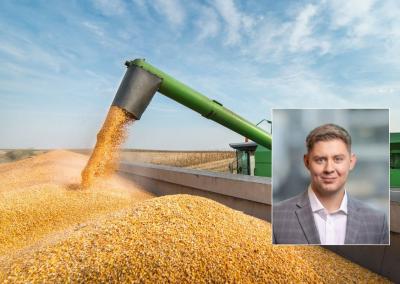
Andžej Kulevičius, Vice-Chairman of the Lithuanian Farmers’ Union (ŽŪR), views the situation through the prism of farm competitiveness. According to him, farmers are already facing rapidly rising production costs – fertilisers, plant protection products, fuel, machinery, transport and grain drying services are becoming more expensive, whilst produce prices are essentially stagnant. In such a situation, he argues, government policy should provide as much stability as possible.
“Farmers are not asking for special conditions, but for fair competition,” emphasises A. Kulevičius.
In his view, when constantly changing support rules are added to market fluctuations and climate risks, it becomes increasingly difficult for farms to plan investments and make long-term decisions.

Similar articles



Video