







































As protests in Brussels prepare, the EU-MERCOSUR treaty is being rushed through in South America

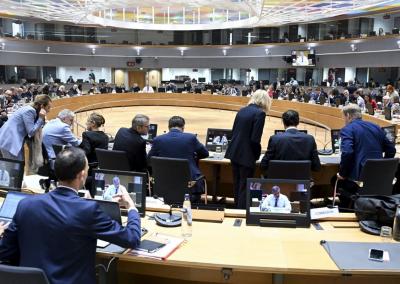
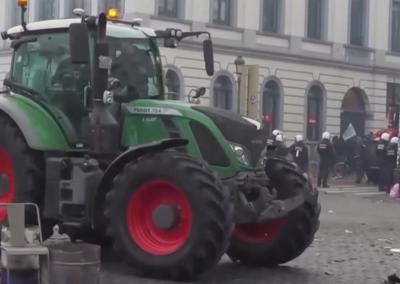
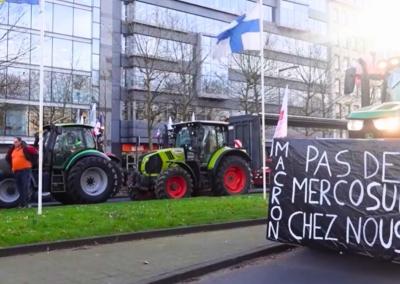
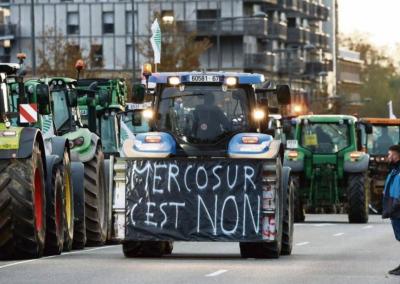
As European farmers prepare for a major protest in Brussels, reportedly involving around 10 000 farmers, South American farmers are pressing their governments to ratify as soon as possible the trade agreement between the European Union and the Mercosur bloc (Argentina, Brazil, Paraguay and Uruguay). Protesters in Brussels plan to speak out strongly against what they consider to be an overly liberal agreement that could put even more pressure on European farms.
On 5 September 2025, the Federación de Asociaciones Rurales del Mercosur (FARM), through its regional farmers' organisations, issued a press release calling explicitly for a faster ratification of the EU-Mercosur agreement. The FARM document describes the agreement as "historic" both for the region's agribusiness and the overall economy, as it would open up markets, reduce trade barriers and strengthen the competitiveness of the Mercosur countries, according to the organisation.
According to FARM, the agricultural and livestock sector remains one of the most important sources of rural employment and income in many MERCOSUR countries, and a stable and predictable trade regime is considered critical for long-term development. The organisation estimates that after the transition period, as much as 95% of the EU market for Mercosur exports would become duty free. This could lead to a significant increase in exports of meat, fruit, coffee, ethanol and other agricultural products to Europe.FARM stresses that some of the preferences would enter into force immediately after ratification, but that the full economic benefits of the agreement would only be realised after the end of the transition period and after the agreement has been ratified by all the parliaments of the EU Member States. South American farmers therefore call for a "coordinated and swift" response to avoid losing strategic opportunities and competitive advantages in the global marketplace.
At the same time, European farmers' organisations are taking the opposite position. Copa-Cogeca, which represents EU farmers and cooperatives, has repeatedly warned that the agreement could create unfair conditions of competition.
„We cannot accept a situation in which European farmers have to comply with the highest environmental and animal welfare standards, while products entering the EU would be produced to lower standards“," one of the organisation's statements reads.
National farmers' organisations are also taking a similar position. For example, French farmers' representatives have pointed out that "the EU must not sacrifice its farms to geopolitical ambitions" if this means additional pressure on incomes and continuity of production.
On 3 September 2025, the European Commission presented draft decisions on two parallel instruments: the Partnership Agreement and the Interim Trade Agreement. The latter could be applied on a temporary basis, pending ratification by national parliaments, and then replaced by a fully ratified Partnership Agreement. In the longer term, the EU–MERCOSUR agreement would provide for the elimination of customs duties on around 91% of goods.
Interestingly, even the MERCOSUR farmers' organisations themselves, although supportive of the agreement, have criticised some of its provisions – in particular the stricter environmental, pesticide and animal welfare requirements to which farmers in the region are not yet accustomed.
What does this mean for Lithuania and for EU farms?
For farmers in Lithuania and other EU countries, the EU–MERCOSUR agreement means, first and foremost, potentially increased competition in sensitive sectors, especially meat and sugar production. Although Lithuania does not compete directly with South America for tropical products, the increased flow of cheaper products into the EU single market may put indirect pressure on prices and support policies. On the other hand, the processing and logistics sectors could also see new opportunities if the agreement stimulates trade flows.
„Agrobite“ recalls that the Ministry of Agriculture of the Republic of Lithuania did not oppose the EU-Mercosur Treaty and has submitted its position to the Committee on European Affairs.
If the ratification process is delayed or faces political opposition within the EU, Mercosur countries risk losing out on some of the planned investment and export growth. At the same time, the discontent of EU farmers is unlikely to diminish – the protests in Brussels show that trade liberalisation without clear safeguards could become a serious political challenge. The fate of the EU's Mercosur agreement will therefore be a test of the EU's ability to reconcile open trade, farmers' interests and high standards in a single political decision.

Similar articles


Video