
































The dairy sector at a crossroads: can co-operation and new markets save the day?
Europe's dairy sector is facing a serious challenge today. The tariffs of more than 42% on cheese, cream, milk and other dairy products exported from the European Union to China, which came into force just before Christmas, have fundamentally changed the market balance. China has long been one of the main outlets for surplus European dairy production, so the closure of this market has been a major blow to the system as a whole.
Overproduction pushes prices down
European milk production has increased by around 12 million tonnes over the last decade, with a further increase of almost 1 million tonnes forecast annually. This means not growing demand, but ever-increasing oversupply. When part of the production that used to go to third countries stays within the EU, the consequences are inevitable: falling prices and pressure on the whole supply chain.
Lithuania – the weak link
Lithuania is in a particularly vulnerable position in this situation. Lithuania's dairy sector is clearly export-oriented and the domestic market is too small to absorb the surplus quantities. As a result, the European price slump is very quickly feeding through to farm gate milk prices in the country.
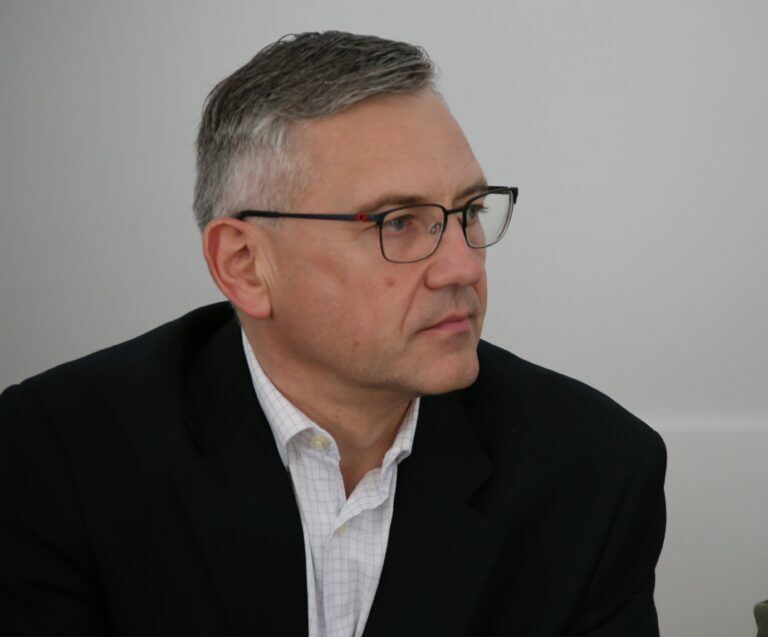
„For farmers, this does not mean abstract indicators, but daily decisions: whether to continue production at break-even, whether to reduce herds or whether to leave dairy farming altogether. Small and medium sized farms are the most vulnerable – they are the first to reach the bottom of prices“, – points out the Director of the Lithuanian Cattle Breeders Association (LGVA), Dr. Edvardas Gedgaudas. It is also important to note that the influence of genetics in this process becomes particularly relevant when you produce more with fewer cows, but cheaper. It is never too late to invest in more efficient animals – it is one of the cheapest solutions in today's context.
Co-operation – necessary but not sufficient
One of the most frequently cited solutions – co-operation between milk producers. It can give farmers more bargaining power, help stabilise prices, and enable investment in processing, logistics or higher value-added products. Experience from European countries shows that where co-operation is strong, dairy crises are less severe for farmers.
But co-operation is not a quick cure. It needs trust, a long-term strategy and clear public policies that encourage farmer togetherness rather than competition.
New markets – a long but inevitable road
Dr. Gedgaudas points out that with the closure of the Chinese market, it is clear that the dairy sector cannot be dependent on a few export destinations. The search for new markets in South-East Asia, the Middle East or Africa is necessary but difficult. It requires certification, political dialogue, investment and time. The farmer cannot go it alone – cooperation between the State, sectoral governments and business is essential. By pooling our experience and capabilities, we would help to strengthen our position. Lithuania must have the ambition to keep the dairy sector not only viable but also competitive, producing innovative and high quality products. There are always fluctuations in the markets and there are black swans, but as a dairy country it is important for us not to get lost and to continue the planned work on dairy farms and processing and to promote domestic consumption.
Not a temporary cycle but a structural crisis
It is important to recognise that the current situation is not a short-term price fluctuation. It is a structural crisis in the dairy sector, where overproduction, export dependency and the weak market position of producers intersect. If Europe continues to increase production without taking account of real demand, the price floor could become permanent. If the crisis leads to a fall in milk production, it will be very difficult to return to the previous level.
What to choose today?
„The future of the dairy sector will depend on taking a balanced path: strengthening cooperation, actively seeking new markets, developing new products, while ensuring stability of farmers' incomes and greater responsibility for surplus production. Otherwise, the dairy sector will continue to be the first to pay the price for global decisions and closing markets," says Dr. Gedgaudas, adding that "instability in agricultural policy does not contribute to the stability of the dairy sector, not only in Lithuania but also in the EU."
Today, the dairy sector is sending a very clear signal: without unity, strategy and political will, price troughs will become the norm rather than the exception.

Similar articles
Video