



































































Global markets show significant price increases for dairy products. What does this mean for Lithuania?
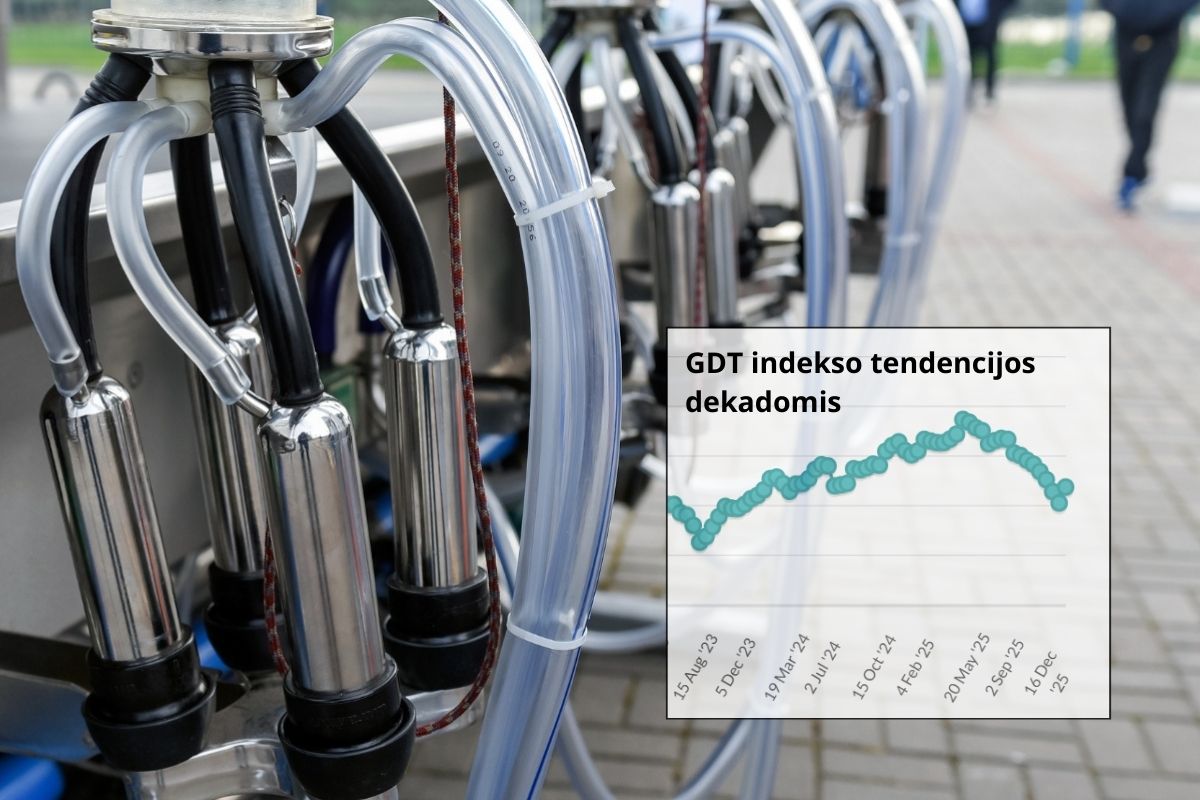
The last trading session of the dairy trading platform „Global Dairy Trade“ (GDT) on 6 January closed with a significant price increase – the overall GDT index rose by 6.3% to 1,072 points.
This is exceptional: only a few times in the last ten years has a similar rise been recorded. This indicates not only a short-term market impulse but also a possible shift in the supply and demand balance.
During this trading session, all dairy products on offer became more expensive. The price of skimmed milk flour rose by 5.4% and whole milk flour by 7.2%. Butter flour rose by 5.1% and butter by 3.8%. In the cheese segment, the price increase was more moderate, with the price of Cheddar cheese rising by 0.6%, Buttermilk increased by 7.4% and lactose was not traded during the session.
In the historical context, it is worth recalling that last May the GDT index was at its highest level in three years. Since then, the index has steadily declined until mid-December, losing 336 points overall. The last trading session allowed it to recover as much as 59 points, but one positive auction is not a sufficient signal to say that prices have bottomed out. More objective conclusions could be expected after another 3–4 trading sessions, taking into account the general direction of prices.
The GDT platform is operated by the New Zealand cooperative „Fonterra“, so price trends in the Oceania region usually reach Europe after 1.5–2 months. However, it must be borne in mind that global and regional markets do not always move in the same direction. Trends in the dairy markets in Western Europe, the Baltic States and Poland may diverge, especially in the short term.
Nevertheless, long-term changes in the global market tend to have an impact on regional farm gate milk prices. Therefore, the recent rise in the GDT index should be seen as a positive signal for milk producers.
This is particularly relevant in the Lithuanian context, given that since the beginning of this year, some milk buyers have reduced their raw milk purchase prices by 1.5–3 cents per kilogram for January. While the situation for farms remains challenging in the short term, a possible reversal of longer-term trends in global markets could lead to more favourable price levels in the future.

Similar articles



Video