

































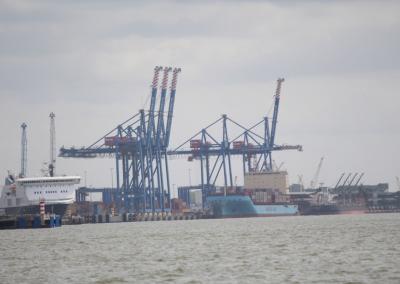
































































Grain markets remain under pressure from expectations regarding the war and peace in Ukraine: wheat prices in Europe have fallen

Wheat prices on the European exchange continued to fall last week, with maize following suit. The markets are under pressure from expectations of a possible peace agreement between Russia and Ukraine, although no real changes in the situation have yet been seen following the visits to Moscow and Kyiv by US representatives Steve Witkoff and Jared Kushner. At the same time, grain exports via the key Black Sea ports remain disrupted.
Wheat prices in Europe continue to fall
As noted by the German press, wheat prices fell once again on Friday. This was the second significant drop in a row following the sharp price slump recorded at the close of trading on Thursday.
The main market catalyst was Russian President Vladimir Putin’s statement regarding the possibility of reaching a peace agreement in Ukraine. This news halted the upward trend in wheat prices, which had been gaining momentum, and reversed it, despite the intense Russian and Ukrainian strikes on port infrastructure taking place at the same time.
On Friday, the December wheat contract on the Chicago Board of Trade fell by 20 cents to 734 cents per bushel. This fall also put pressure on the European market.
The price of the December wheat contract fell by 2.50 euros – to 246.25 euros per tonne. The March 2027 contract fell by 3.75 euros to 244.50 euros per tonne.
Export disruptions are altering global trade flows
Despite prevailing expectations of peace in the markets, the actual situation in the Black Sea region remains complex. Reduced grain exports from Russia and Ukraine are forcing buyers to seek alternative sources of supply.
Demand in Asian markets is increasingly shifting towards the Southern Hemisphere – particularly Argentina and Australia. Meanwhile, buyers in North Africa and the Middle East are increasingly turning to Western Europe.
This means that any changes in the Black Sea region could have a significant impact on global grain trade. If exports from Russian and Ukrainian ports were to resume on a larger scale, additional supply could enter the market, which would put pressure on prices.
Attention is also turning to the harvest in Argentina
Grain traders are also closely monitoring the situation in Argentina. According to the country’s grain exchange, the proportion of wheat crops in “good–excellent” condition for the upcoming harvest has fallen by 12 percentage points – to 62 per cent.
Compared with the same period last year, the difference is even greater: at that time, around 79 per cent of the wheat crop was rated as being in ‘good–excellent’ condition.
This could become an additional factor in the global wheat market, particularly if export disruptions in the Black Sea region persist. More attention is being paid to the European market and geopolitical signals from Russia and Ukraine.
Visits by US envoys failed to bring a breakthrough
The visits by US representatives Steve Witkoff and Jared Kushner attracted a great deal of attention. On Saturday, they visited Moscow and met with Vladimir Putin, and on Sunday, they met with Ukrainian President Volodymyr Zelenskyy in Kyiv.
However, there are as yet no clear signs that these meetings have fundamentally altered the situation on the ground or paved the way for a concrete agreement.
Consequently, considerable uncertainty persists in the grain markets. On the one hand, the prospect of a peace agreement is pushing down prices for wheat and other grains. On the other hand, actual export disruptions and the continuing risk of a blockade of Black Sea ports are limiting supply on the global market.
In the coming days, the direction of the grain markets will be determined mainly by two factors – new geopolitical signals regarding the war between Russia and Ukraine, and the actual situation regarding exports via Black Sea ports.

Similar articles





Video