








































The 2026 grain harvest: the biggest challenge – Russian grain passing through the Baltic ports
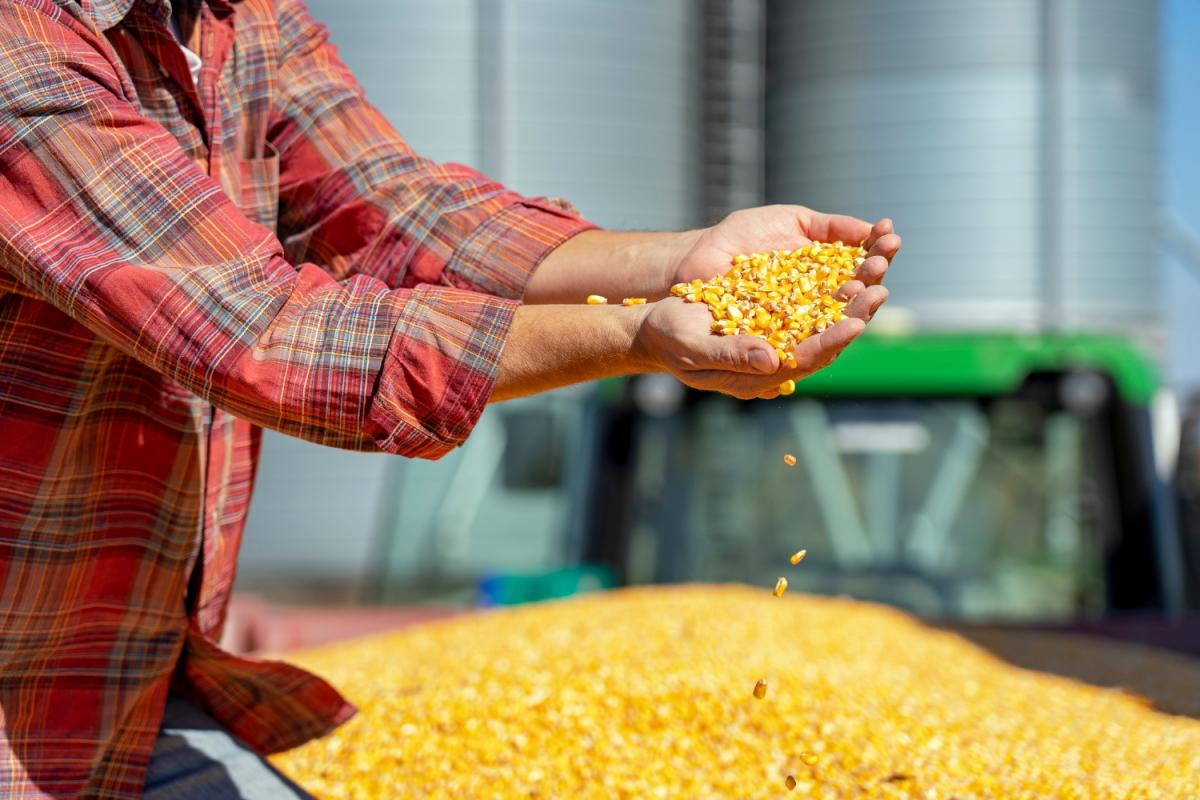
As the Lithuanian grain harvest draws to a close, the outlook for this year’s harvest remains mixed. According to initial forecasts, the yield of cereals, rapeseed and pulses grown in the country could have been higher than last year, but the situation was exacerbated by the severe storm that struck Lithuania on 22 August, the impact of which has been felt particularly acutely on farms in western Lithuania. Another blow has been the transit of Russian grain through the Baltic ports, particularly via Latvia.
According to the Lithuanian Grain Processors and Traders Association (LGPPA), this season has once again shown that the total number of tonnes harvested alone does not reveal the true value of the harvest. What matters is how much of the grain will meet food and export quality standards, and how much of it can be harvested on time and prepared for the market.
“This year, there is a particularly marked difference between the total yield and the portion suitable for the market. Some farms had to contend with fusarium, whilst storms in certain regions damaged crops that had not yet been harvested. Therefore, the final result of the season will be determined not only by tonnage, but also by quality, harvest losses and the proportion of grain that can be sold for food“ , says Karolis Šimas, President of the LGPPA.
According to preliminary estimates, the total harvest of cereals, rapeseed and pulses in Lithuania in 2026 was forecast to reach around 7.9 million tonnes, which is similar to last year’s figure. This forecast is based on the assumption that the remaining harvest in western Lithuania and the remaining peas will indeed be brought in; therefore, the final result may be lower.
Most of the wheat is of first and second class quality, but fusarium and DON are causing problems
The quality of the rapeseed already purchased this season is reasonably good. Its average oil content exceeds 47 per cent, and the problems with volunteer rapeseed that occurred last year have not been observed this year.
The quality of the wheat accepted would also be rated as very good were it not for the problems of fusarium and the mycotoxin deoxynivalenol (DON). Currently, first-class wheat accounts for 33 per cent, second-class for 43 per cent, third-class for 10 per cent, and fourth-class for 14 per cent of all wheat received. Thus, as much as 76 per cent of the wheat accepted is classified as first or second grade.
Recently, there has been a noticeable increase in the amount of fourth-grade wheat that no longer meets the falling number requirement. Such a change is normal during the later stages of the harvest, but it is still too early to say what proportion of the final harvest this wheat will account for.
The main issue affecting the quality of this year’s wheat is the higher prevalence of grains affected by fusarium head blight and increased DON levels. Most cases of fusarium have been observed in the Kupiškis, Biržai and Pasvalys regions. Studies show that visually detectable fusarium is not linked to DON concentration. There have been instances where the DON content in grains showing no external signs of fusarium head blight exceeded the permitted limits, and conversely – in grains affected by fusarium head blight, DON concentrations did not exceed the permissible limits. Therefore, a visual assessment of the grain alone does not indicate whether mycotoxins exceed the permissible limits; consequently, laboratory tests are carried out to assess quality.
„Lithuania exports a large proportion of its grain production, and international buyers impose strict requirements not only on protein content or specific weight, but also on food safety. This year, laboratory testing, the separation of batches of varying quality and the proper preparation of grain are particularly important“, emphasises K. Šimas.
Competition in export markets shows no sign of abating
Lithuania grows more grain than it consumes domestically, so exports are crucial to the sector’s performance. Lithuanian grain will continue to face its main competition from produce from Russia, Ukraine, Romania and Bulgaria. Other major grain-producing countries may also create additional supply on the global market.
Export opportunities will be determined not only by the size of the harvest, but also by competitors’ pricing, demand from importing countries, exchange rates, transport costs and geopolitical events. Markets in South and North Africa, the Middle East and other third countries will remain important for Lithuanian exporters.
During this harvest season, wheat and rapeseed prices on the European MATIF exchange were 20–30 per cent higher than at the same time last year, but their trend remained volatile. The market is being affected by the war in Ukraine, shipping risks in the Black Sea, energy prices and varying global harvest forecasts.
Higher exchange prices do not necessarily translate into a corresponding increase in growers’ income, as the final purchase price is determined by the quality of the specific batch, the delivery time and logistics costs.
“This season requires extremely flexible operations across the entire supply chain. We need not only to accept large quantities of grain, but also to sort the produce according to quality, find the most suitable markets for it and fulfil existing export commitments. The strength of the Lithuanian sector lies in its well-developed infrastructure of grain elevators and the Port of Klaipėda, as well as its accumulated experience in international trade, &
The biggest challenge – Russian grain transiting through the Baltic ports
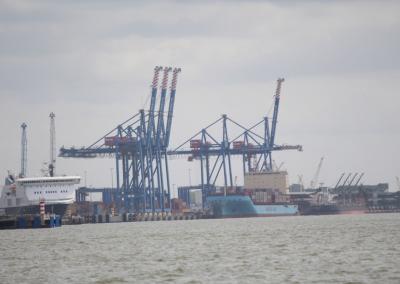
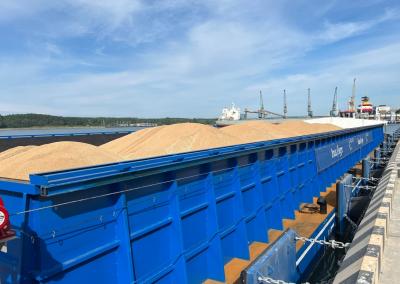
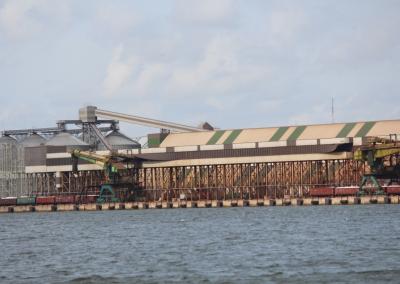
In recent days, Lithuanian grain exporters have faced yet another major challenge – the transit of Russian grain, specifically from Kaliningrad, through the ports of the Baltic states. With shipping in the Black Sea having become unsafe due to constant shelling of vessels, Russia is in no hurry to conclude export agreements with Ukraine, as it has found a way to reroute its grain exports from the Black Sea to the Baltic. The capacity of its own ports at Vysotsk and Ust-Luga is limited, so it is a great pity that the Baltic states are allowing Russian grain into their ports. The authorities in Lithuania and Latvia are taking a superficial view of this problem, as, according to the United Nations, grain is a non-sanctioned commodity; consequently, they are not implementing any serious measures to prevent these shipments. Grain continues to travel much more easily through the Baltic Sea ports; as it is exported from European Union countries, it is, as it were, legitimised here.
“I believe that each of the institutions regulating this area: the Ministry of Agriculture, Customs, the State Food and Veterinary Service, as well as „Lithuanian Railways“ and the ports – can draw on their creativity and find ways to make the transit of Russian grain through Lithuania and Latvia unattractive“, says the president of the LGPPA.
According to his information, one of the stevedoring companies in Klaipėda is currently still handling Russian grain. “I have spoken with companies and grain buyers operating in Latvia who are also taking steps to halt grain exports, as it is the Latvian ports that are the Baltic states’ greatest Achilles’ heel; and through them, it is theoretically possible to export around 7–8 million tonnes of grain per year, and in reality – around 5 million tonnes. These are enormous quantities, roughly equivalent to the total exports of all three Baltic states, – points out K. Šimas.
Russian grain is about 15 per cent cheaper, which reduces the competitiveness of Lithuanian and Latvian grain, and the consequences of these exports for farmers and exporters in these countries will be enormous. It is not just the price of grain that will be severely affected. Exporting grain from this region will also require more ships, and freight rates have risen by 7–8 euros per tonne of wheat in recent days due to the influx of Russian grain. Consequently, because of the desire of a few stevedoring companies to make a profit, the country’s farmers and exporters will suffer significant losses.
If the decision-making authorities do not take urgent measures, it will be not only the economies of Lithuania and Latvia that suffer, but their reputations as well. We claim to support Ukraine, but in reality we are helping to transport grain to Russia, the aggressor.

Similar articles
Video