
























































How to plant and care for geraniums on your balcony? A guide to creating a reliably blooming summer corner
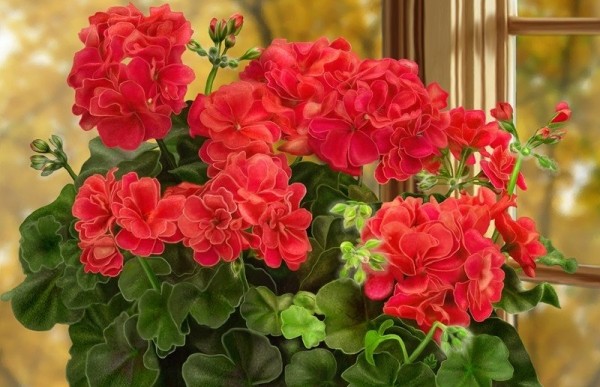
Geraniums have been one of the most popular balcony plants in Lithuania for many years, as they tolerate the heat well and have a long flowering period. However, to ensure they look lush, it is not enough simply to plant the seedlings in any old pot and water them; a few simple but consistent care details are important.
Choosing the right location, pot size, potting mix and fertilisation regime can determine whether your geraniums will delight you with dense clusters of flowers or wither and grow poorly. This guide will help you plan your balcony so that your plants stay healthy throughout the season.
Location on the balcony and amount of light
Geraniums love light and warmth, so the south, south-east or south-west-facing sides of the balcony are best. In direct sunlight during the hottest part of the day, particularly at midday, the flowers may get burnt, so it is a good idea to have the option of providing light shade or moving the pots further back onto the balcony.
On the north-facing side, geraniums often become leggy, form buds more slowly and flower less profusely because they lack light. In such cases, a spot that is as open as possible and light-coloured walls that reflect daylight are helpful.
Pot size and drainage
Geraniums need a fairly spacious pot, as their roots develop well and seek space to spread. A pot with a capacity of around 3–5 litres is usually suitable for a single large-flowered geranium, whilst for arrangements of long, trailing varieties in hanging baskets, it is not the width, but rather the depth and the drainage holes.
A drainage layer of expanded clay, coarse gravel or shingle is essential at the bottom of the pots to allow excess water to drain away freely. Without drainage, the soil becomes waterlogged, the roots start to rot and the geraniums can wither rapidly, especially during wetter summers.
Soil mix and planting
Geraniums thrive in loose, slightly lighter soil that drains well but also retains moisture. It is convenient to use ready-made potting mixes for flowering balcony plants and to improve them further with finely ground compost or a small amount of perlite to allow the roots to receive more air.
When planting seedlings in new pots, it is worth loosening the roots slightly if they have become tightly tangled into a clump. Leave a gap of a few centimetres between plants to allow moisture and heat to circulate freely in the air, thereby reducing the risk of fungal diseases.
Watering regime and common mistakes
Geraniums do not like constant dampness; they are better suited to a cycle where the soil surface has time to dry out between waterings. On warm days, watering every 1–2 days is often sufficient, whilst during cooler or rainy periods, the intervals may be extended to several days.
You should also avoid letting the soil dry out completely, when the soil pulls away from the edges of the pots and water simply runs down the sides without reaching the roots. In such cases, it is advisable to slowly soak the soil several times or briefly immerse the pot in a container of water until the compost has reabsorbed moisture.
Fertilising throughout the season
Geraniums that flower profusely require additional nutrients, as they quickly deplete the substrate in a single pot. When planting in spring, you can mix in slow-release fertiliser granules, which will gradually nourish the plant over several months.
During the summer, it is convenient to use liquid fertiliser for flowering plants, adding it to the water every 10–14 days, following the concentration indicated on the packaging. If over-fertilised, particularly with nitrogen, the plants will produce lush foliage but fewer buds, so it is best to follow the principle of moderation.
Removing faded flowers and pruning
By regularly removing faded flower heads, you help the geranium channel its energy into new buds. Cut back the entire flower stalk to a healthy stem, rather than just removing the faded petals, to reduce the risk of rot on damp days.
At the start of the season, it is worth shortening any shoots that have become too long to encourage the plant to branch out and become bushier. If a few stems are clearly dominant, they can be cut back by a third to encourage side shoots and a more even canopy throughout the pot.
Diseases, pests and protection from rain
Overcrowded planting, poor air circulation and constantly damp leaves create conditions conducive to fungal diseases. If you notice brown spots or a grey coating, first remove the affected leaves and check that the soil is not waterlogged; reduce the frequency of watering if necessary.
Geraniums are often infested with aphids, thrips or spider mites, which frequently hide on the undersides of the leaves. In mild cases, spraying the plants with water and wiping the leaves clean can help; in more serious situations, it is advisable to use registered garden products and follow the instructions on the label exactly.
Overwintering geraniums
If you wish to keep your balcony geraniums for the next season, you can move them to a cooler but well-lit room in the autumn before the first frosts. The best place is one where the temperature remains around 5–10 degrees, and watering is reduced to a minimum so that the soil is only slightly damp.
In spring, as the days get longer, it is a good idea to prune the plants slightly, repot them into fresh compost and gradually acclimatise them to outdoor conditions. Geraniums grown in this way often start to grow faster and produce strong, profusely flowering shoots for the whole new season.

Similar articles



Video