
































































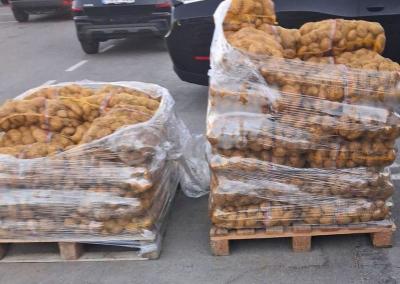


























A farmer who fraudulently received EU aid and promised to grow pumpkins is acquitted

The Šiauliai District Court has terminated a pre-trial investigation into a woman from Šiauliai accused of fraudulently obtaining EU and Lithuanian budget funds by means of a special purpose vehicle and falsifying documents, the Financial Crimes Investigation Service said on Friday.
The woman has been released from criminal liability on surety. The farmer has repaid the full amount of the €12,000 support paid to her.
The pre-trial investigation was launched after receiving information from the National Paying Agency (NPA) on the possible fraudulent acquisition of EU targeted support and Lithuanian budget funds under the measure "Support for small farms" of the Lithuanian Rural Development Programme 2014–2020.
A farmer who intended to grow pumpkins had submitted documents for a total of €15,000 in support. On the basis of these documents, the woman was paid part of the €12,000 support for the project.
An NMA check of the project promoter revealed that the woman may have provided false information about the planned project, which was to grow 12 tonnes of pumpkins and sell them for €6,000, and may have obtained the funding fraudulently.
The pre-trial investigation carried out by the FNTT officers revealed that the farmer, who had already obtained €12,000 in support, had falsified documents by faking the transactions of the project and the sale of the harvest, the use of a car and trailer purchased with the support for the purpose of achieving agricultural development goals, and other activities. On the basis of the documents submitted for the implementation of the project, the woman intended to obtain the remaining funds of the grant of €3,000.
The totality of the documents collected during the investigation showed that the woman did not grow pumpkins, did not sell them and did not receive any income from them, as stated in the documents.
Credit fraud, where a person fraudulently obtains a credit, a loan, a targeted support, a subsidy, a grant, etc., is punishable by a maximum of up to three years' imprisonment. Forgery of documents is punishable by a maximum of three years' imprisonment.

Similar articles





Video