












Presidency: Lithuania must seek similar EU direct payments for all farmers

With the European Commission planning to cut funding for agriculture from 2027, including a 20% cut in direct payments to Lithuania, the President's adviser says the Government must aim for a similar level of payments for all farmers in the Community.
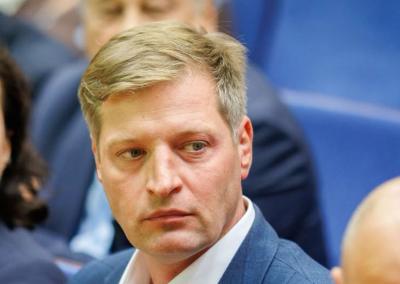
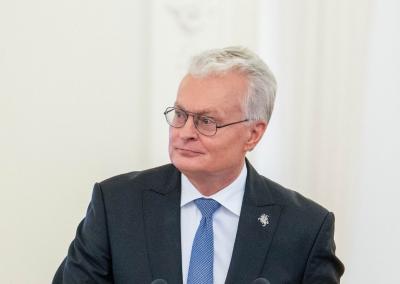
„The President stressed the aim of achieving that convergence (direct payments – BNS) of farmers, because in Lithuania the standard of living is rising, the prices are also rising and the difference between the so-called Western farmers and Lithuanian farmers is getting smaller and smaller and therefore the gap between the average should also be narrowing“, – Ramūnas Dilba, the President's Senior Adviser on Environment and Infrastructure, told journalists on Monday after a meeting between Gitanas Nausėda and representatives of farmers and the Minister.
„The target is very challenging and probably 100 percent of that so-called convergence of direct payments, maybe it would be very ambitious to expect that, but getting closer to that is exactly the main goal, – he added.
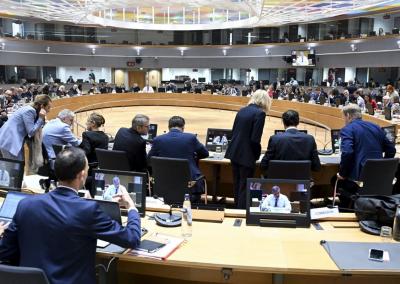
According to Dilba, the aim of the meeting was to hear the farmers' position – the President will be going to an informal meeting of the European Council this week, where, among other things, the next Multiannual Financial Perspective will be discussed.
While farmers' representatives are concerned about the shrinking basket of payments, the President's advisor is positive about Lithuania's aspirations: „The President has indeed defended the interests of farmers in 2020, ahead of the current Multiannual Financial Perspective, which has led to the increase of the basket of direct payments to Lithuanian farmers.“
For his part, Agriculture Minister Andrius Palionis says that the change in the funding model for agricultural payments will have to be fought in other areas and he hopes that the President will be able to hold the line in the negotiations in the European Council.
„If in 2027 we only reach 79 percent convergence, if we stay with that funding, we will have 76 percent for the new period (...). The whole agricultural sector is negatively affected by that proposal“, – Palionis told reporters.
„This is the biggest distortion of competition, if you look at it in the context of the European Union countries, because all the environmental commitments that farmers cannot do are paid for through direct payments, and in that sense our agricultural sector suffers," he explained.
A. Palionis says that a united position of surrounding countries is important in order to achieve similar EU direct payments for all farmers.
According to the Minister, with the adoption of agriculture as a strategic sector of the country's economy, the funding is particularly important, because „when day X comes, we will have to rely solely on our own potentials and our own production.“"
„This is also something that we discussed with the President today, and we were discussing where the State itself should perhaps allocate the funding – whether it is co-operation or whether it is increasing the potential of food processing. But this will require additional financial resources," Palionis said.
Farmers' representatives: funding cuts – wrong
Chairwoman of the Chamber of Agriculture Algimanta Pabedinskienė says that it is unfair that Lithuania's payments have not been equal to those of other EU countries for more than 20 years.
„We are in favour of maintaining those two pillars, a very clear separation between direct payments and the rest of the policy (Common Agricultural Policy – BNS), which is about the setting up of young farmers, the vitality of the countryside, etc., and the direct payments are really reflecting the interests that the farmer has," she told reporters after the meeting, "but they are not the same as the other policies, which are about the establishment of the young farmers and the vitality of the rural areas, and they are not the only ones that are necessary for the farmers," she said, adding. Pabedinskienė.
Jonas Vilionis, the Chairman of the Council of Agriculture, said that farmers are currently in a critical situation and are not ruling out the possibility of protesting.
„We are demanding that we are treated on the same footing as European Union farmers. Now the whole policy is distorted, with VAT this way, payments that way, co-financing that way (...). We will simply be left behind," said Mr Vilionis.
„The President is going (to the European Council – BNS), we will see what the repercussions will be, how to react further (...). Maybe we will bring and distribute that milk again, and in the autumn we will go out with maybe 10–12 thousand tractors&ldash;, – he added.
As BNS wrote, Palionis has previously said that Lithuania's position is that the external convergence of direct payments must be completed by 2034.Last autumn, farmers in Lithuania and other EU countries protested against the EC's intention to cut funding for farmers from 2027. Farmers from across Europe united against the proposed changes to the Common Agricultural Policy, budget cuts, unfair EU trade policies and bureaucracy.
BNS wrote that Lithuania is to receive €4.386 billion in 2028-2034, or 20% less than in the previous Financial Perspective (€5.485 billion).

Similar articles
Video