





















































































Is it unprofitable to have too many heifers? Insights on reproduction in the US and Europe
Mindaugas Eidukaitis, Director of UAB Agroinfo Director, Sales Consultant
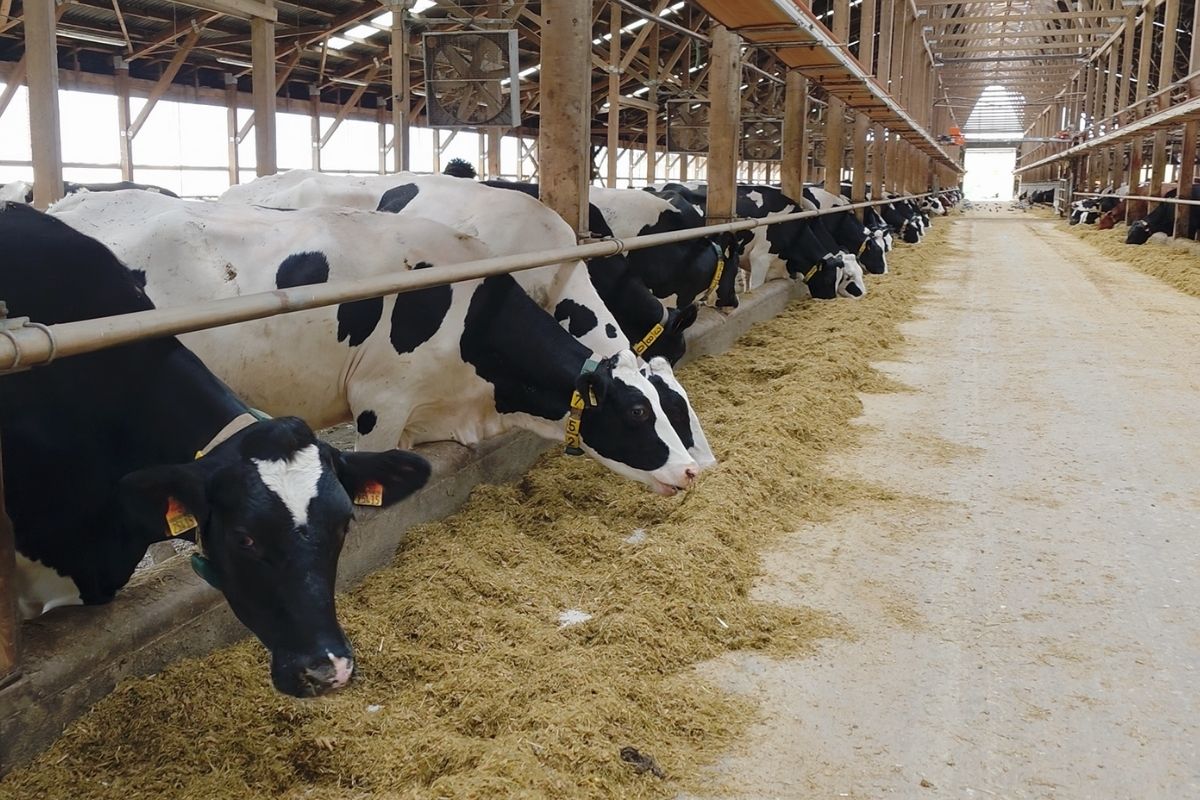
Many dairy farms in Lithuania still follow the old rule: "the more heifers the better". However, recent analytical insights from IFCN's global dairy sector analysis show that this logic is nowadays often making – losses. Global trends are clear: dairy farms in both the US and the EU are moving towards targeted heifer scheduling, and excessive numbers of heifers are becoming a financial burden that reduces farm profitability. In this article, we discuss why over-calving heifers is one of the most costly farm mistakes today and what strategies the IFCN recommends.
1. Farms are shrinking, herd productivity is rising & demand for heifers is falling
The IFCN presents a key trend: over the last 30 years, the number of dairy farms in the EU has fallen from 4.8 million to 0.8 million.
This means:
- fewer farms = less need for new heifers,
- farm sizes are increasing not because of the purchase of new animals, but because of productivity increases,
- herd structure stabilises & farms need only to keep natural replacement low .
If a dairy farm plans not to monitor, but simply to maintain the same number of cows, it only needs 25–30% of heifers per year.
Most farms in Lithuania are producing 40–60% — and this is costly.
2. Producing heifers is one of the most expensive processes on a farm
IFCN analysis has clearly shown that the cost of rearing heifers has risen by as much as 19% and 20% globally.
Reasons:
- more expensive feed,
- higher labour costs,
- increasing costs of buildings and infrastructure,
- long maintenance period before productivity.
In Lithuania, it costs €1,500 & €2,000 to raise a heifer to first lactation. If a farm has 20 „surplus“ heifers, keeping them = 30 000–40 000 € of frozen capital. This is a real, easily measurable financial burden.
3. The formula for US farm success: fewer heifers, more planning
IFCN delivers a clear message about the US: the expansion of the US dairy sector today is not due to more heifers — it is due to higher productivity and mixed calf incomes.
U.S. farms are successfully using:
- sexed semen – to produce just the right number of heifers,
- mixing – to ensure that the remaining cows produce high value mixed calves.
Result:
- the surplus of heifers has disappeared,
- band sizes are increasing as planned,
- revenues from crossbred calves compensate for milk price falls.
IFCN insight: income from crossbreeding has become a strategic element of economic stability for U.S. farms.
4. Too many heifers on EU farms = not enough room for productive cows
The situation is slightly different in Europe, but the logic is the same: farms often have too many heifers and therefore limit the number of productive cows.
Why is this bad?
- heifers don't produce milk, they just consume feed,
- they take up space in the barn that could be dedicated to dairy cows,
- investments in heifer buildings often do not pay off,
- when the milk price falls, heifers are expensive to keep.
IFCN estimates that heifers are one of the most expensive segments on a farm, and that an excess of heifers can reduce the profitability of an entire farm by 10-20%.
5. Excess heifers are mostly due to habit rather than need
IFCN stresses: on many farms, heifer numbers are planned by tradition rather than by need.
Common scenarios:
„I will raise all heifers because I may need them“
„more heifers = security“
„if it's cheap, I'll keep them all“
But in the modern market this logic no longer works.
For example:
- If a farm has 100 cows, it needs ~28 heifers per year,
- but if 50 heifers are born, 22 are surplus,
- the cost of maintaining them can be 30 – 40 thousand euros.
This is money that a farm „burns“ just because of inaccurate planning.
6. IFCN recommends a new philosophy for heifer planning
1. Calculate the exact heifer requirement according to herd objectives. If the herd is not expanding, only the natural replacement rate is needed. If the herd is shrinking, fewer heifers are needed. If expanding, plan for the exact target growth rate.
2. Use sexed semen for the best cows. This ensures that the farm has exactly the right number of heifers.
3. Inseminate the remaining cows with meat breeds. To produce mixed calves, which provide additional income.
4. Evaluate the efficiency of the use of barn space. Heifers are the most expensive square metre on a farm.
5. Calculate the economic value of each heifer. If she is not needed for the herd – she is an excess cost.
7. Conclusion: fewer heifers = more profit
IFCN's analysis is clear: surplus heifers are one of the biggest sources of loss for dairy farms today. A modern reproductive strategy must be based on:
- use of sexed semen,
- mixing,
- accurate herd planning,
- analysis of hides and skulls,
- optimal number of heifers rather than traditional habits.
This is the direction that the US and many EU farms have already taken – and it is changing the economics of dairy farming irreversibly.

Similar articles

Video