










































Farmers: crops need rain for a good winter, heat for early sowing

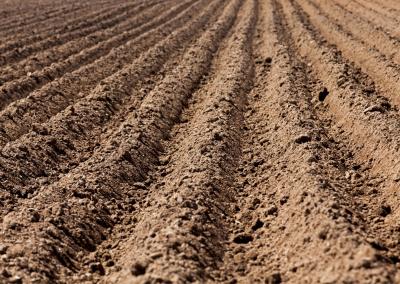
Farmers in the country say crop fields look beautiful after a snowy and cold winter, but some stress the lack of water, others say it is still dangerous for tractors to enter fields & they could get stuck.
Fruit and berry growers say the risk comes from overly warm weather – it stimulates vegetation and the spring frosts would freeze crops. However, warmth is needed to start sowing early vegetables.
Audrius Vanagas, Chairman of the Lithuanian Cereal Growers Association, said that in some places sowing in autumn was late and in soaked ground, so some crops are now weak. However, he said, both previously sown oilseed rape and winter crops, such as wheat, are fully developed in some fields.
„Last winter was as frightening as it was because of the big frosts, but we had a big enough snow cover which was a lifesaver,– said Mr Vanagh.
„I would have liked a better crop, but I'll settle for the way it is. The important thing is that it survived that extraordinary winter. The most important thing is that there is no need to reseed the fields with winter crops“, – claimed.
Winter has caused little damage to crops
Only in the southern part of Lithuania, where the snow cover was lower, farmers have seen more damage to crops – areas that have been trampled or frostbitten, said Vanagos.
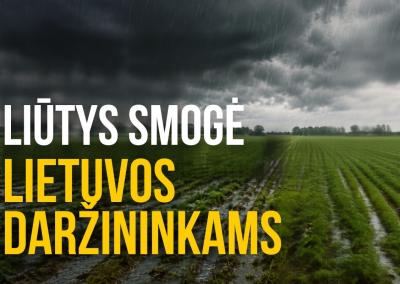
„There are isolated fields where the soil was wetter and the water did not have time to drain away – there is a lot of waterlogging in those crops and throughout Lithuania. But the situation is not yet dramatic," he said.
Around Pasvalys, Pakruojis and other northern Lithuanian towns, where the snow has lasted perhaps the longest, crops have not suffered too much, according to agronomists from the company „Linas Agro“.
They say that oilseed rape, wheat, as well as winter barley and triticale are looking good, especially those that were sown on time and overwintered successfully last autumn, while only individual farms have had their crops wiped out.
„Linas Agro“ agronomist Remigijus Laucius believes that the winter caused more damage to crops in Samogitia. He says that the frost here came only after the snowfall, so the wet, heavy snow was more damaging to the winter crops: some of them rotted and frostbitten, others were affected by fungal diseases. On the other hand, there are some fields where winter crops overwintered quite successfully, Laucius pointed out.
At the moment, some farms in Suvalkija may have to reseed their crops, according to „Linas Agro“.
„Some winter oilseed rape areas will have to be reseeded – practically like every year, as some of them either do not germinate or die. Winter wheat may not need to be reseeded at that time, but not all of it is sufficiently developed. Last year's early sown wheat had time to strengthen before winter, but now it is well established. However, those sown later are thinner – have only two –three leaves“, – said „Linas Agro“ in a statement.
Spring frosts fearedA. Vanagos said that the future state of the crop will be determined by the shape of the spring – it is rain that is needed, not frosts.
„It looks like there was a lot of snow in the winter, a lot of rainfall, and it should have watered the soil, but March is drier and the water drained quickly into the rivers. We are hoping for additional moisture soon – warm spring rains to saturate the crop fields“, – Vanag told BNS.
Freezes are now being feared, he said, because last year showed that late frosts can cause a lot of damage.„Plant growth is not yet rapid, so frosts are not that dangerous for now. It will be more dangerous when the vegetation is fully recovered – we will see both trees greener and grass greener, when crops are greener, when everything is moving towards flowering“, – said Vanag.
„In cereal farming, everything seems to be fine, with minimal exclusions. But gardeners see risks – it's very hot, the sun is shining. That heat is dangerous for the plants, which can start to spread. The buds are already going, life is emerging. If the plants sprout and the temperature is negative, it will damage the harvest," Buivydas told BNS.
No damage to strawberries, no damage to summer raspberries
Tautvydas Gurskas, head of the Lithuanian Association of Berry Growers, said spring frosts are frightening: for them, the most important thing is that the temperature does not drop below freezing in May.
„Winter is not as scary for us as May frosts“, – said T. Gurskas.
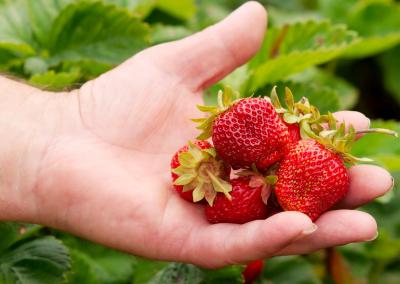
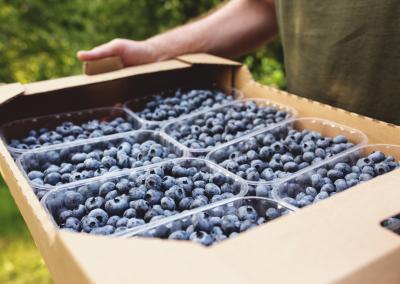
He said the snow has saved currants and strawberries: „They are fine. Strawberries overwintered better under the snow than in greenhouses or tunnels.“
Blackberries and raspberries froze a little: „The sapwood (the juicy film that separates the wood from the bark – BNS) is slightly browned, but we hope it will recover, as the sapwood changes quickly.“
„Summer raspberries are frost free – they are not cut. What is above the snow has frozen. Repair raspberries don't care about frost, they are cut. They overwinter very well under snow," he added.
It's still early to plant vegetables
V. Buivydas stresses that early vegetables should not be planted in the fields yet, as there is still too much moisture in the fields. Where the snow has melted, there are still wet spots, and in some places the water is still trickling.“
However, he expects farmers to start driving tractors into the fields soon – the first spring fertiliser applications will be made. Sowing of early vegetables is not delayed yet, the farmer said.
„The ground needs to warm up, if you plant a seed in cold ground it doesn't do anything,– said Buivydas.

Similar articles


Video