

















































Dairy sector on the brink: the law doesn't work, farmers talk of protests
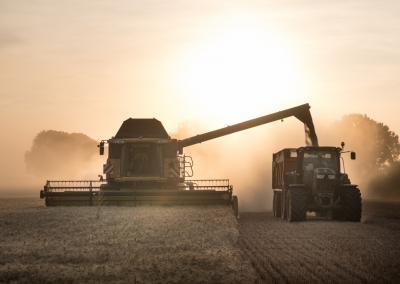
New tensions are brewing in the Lithuanian dairy sector. Farmers claim that the Law on the Prohibition of Unfair Trade Practices in the Agriculture and Food Supply Chain (PUPC) is completely inoperative, the authorities are silent and farm gate milk prices are sinking lower and lower. If the situation remains unchanged, tractor convoys could appear on the country's roads in the coming weeks.
Farmers' verdict – „completely broken“
Renata Vilimienė, chairwoman of the Lithuanian Association of Medium Dairy Farms (LVPŪA), says farmers have not felt the impact of the law.
„It does not work at all. It is a worthless law which, if I remember correctly, was not even able to protect small dairy producers," she said.
The problem goes deeper than that, says Vilimiene, who says some farmers are not even aware of the existence of such a law.
„I would guess that about 90% of farmers would not even know that such a law exists,– she says.
Farmers also question the selective application of the law.
„There is a law, but it does not apply to everyone. It applies to some and not to others. Equal of equals“, – says R. Vilimienė.
Criticism is also growing because no significant research has been carried out so far on large dairy processors or supermarket chains – this is where farmers say the main problems in the sector lie.
„5 processors, 5 traders – that's it“
Jonas Vilionis, head of the Lithuanian Milk Producers' Association (LPGA), has an even stricter view of the situation. He says that an oligopolistic structure has emerged in the dairy sector.
„5 processors, 5 traders – that's it“, – he says.
According to Mr Vilionis, the distribution of the milk price along the supply chain is clearly unbalanced.
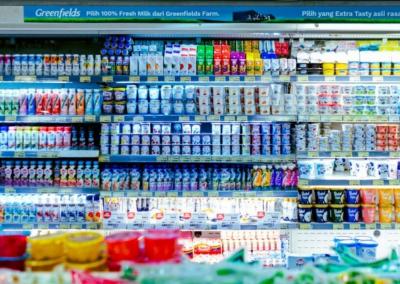
„The milk law needs to be reviewed and everyone needs to take their fair share. At the moment, processors take about 40 percent. One litre of milk costs around €1.76 in a shop, while a small farmer gets only around 10 cents," he says.
Farmers say these figures clearly show the imbalance in the sector.
Agency: prevention is key
The Agricultural Agency (AFA) has a different view of the situation. According to the authority, the aim of supervision is not to impose sanctions, but to prevent, advise and enforce compliance with the law.
In 2025, 70 operators were inspected, but no sanctions were imposed on any of them.
The Agency interprets this as a result of the effectiveness of preventive measures.
However, these figures raise the question: are there really no infringements or are they simply not detected? Or are they not even being investigated?
The FMA also notes that the supervision of large retailers is not within its remit, but is carried out by the Competition Council. Inspections are carried out on the basis of risk criteria, not on the basis of the size of the companies.
The Agency received only one formal complaint during the year.
The legal situation is further complicated
The situation has been further complicated by recent legal developments.
According to the Ministry of Agriculture (MAA), on 7 January 2026, the Supreme Administrative Court of Lithuania issued a ruling that has fundamentally changed the supervisory system.
On 17 February, an order of the Minister of Agriculture abolished the obligation imposed on the Agency of Agriculture to supervise the Law on Prohibition of Unfair Practices of Operators Purchasing–Selling Raw Milk and Marketing Dairy Products.
This means that one of the main supervisory functions in the dairy sector has effectively been abolished.
Ministry: solutions are being sought
The Ministry of Agriculture says the situation is known and solutions are being sought.
Ministry stresses that the performance of the Agricultural Agency is positive – according to the Ministry of Economy and Innovation, the performance score of the institution has risen from 7.02 to 9.07.
The Agency carries out a wide range of functions – from licensing and permitting to the implementation of educational programmes. It is also optimising its operations, reducing the number of posts by more than 10% and reducing the administrative burden on business.
The Ministry also recalls that the supervision of supermarkets is not under the responsibility of the Agricultural Agency, but is carried out by the Competition Council.
However, it is acknowledged that problems remain in the dairy sector. A working group is currently working on proposals to regulate the sector in order to strengthen the position of milk producers in the supply chain.
On the brink – protests
Farmers say the biggest problem – authorities often rely on statistics and „final figures“ rather than the real situation on farms.
„Take the same Competition Authority that I had to deal with. It uses the results of studies that have gone through the "combine" rather than looking at the situation from the beginning – from the farmers themselves. On paper, everything looks good, but in reality...“, – says R. Vilimienė.
Farmers' patience is wearing thin.
„As much as we write, as much as we talk, as much as we have been to the Prime Minister twice to state our case – nothing has changed. Until we leave with the tractors, there will be nothing“, – says J. Vilionis.
He said that protests are planned for the end of March or early April. Farmers are planning to distribute milk in front of the President's office, the Seimas, the government and ministries.
„Things are so bad now that all a farmer has left are torn chevrons“, – he adds.
The dairy sector today is in a paradoxical situation: the laws are in place, the institutions are working, but farmers are increasingly asking: "What good is it if nothing changes in reality?
If answers are not found soon, tractor columns could soon be on the streets of Lithuania's cities.

Similar articles

Video