




























Farmers: there will be no blueberry harvest; the rain has caused the strawberries to rot; it’s difficult to make ends meet
The rain and cooler weather that have been affecting Lithuania for over a week are already causing concern amongst farmers – according to them, such a drop in temperature and heavy rainfall are not good, as they particularly hinder the harvest, but do not yet pose a major threat.
Some strawberry growers say the berries are already starting to rot, whilst others are pleased with a decent harvest as they managed to pick the strawberries in time. Furthermore, the downpours have flattened the grass – making it difficult to mow – and the same threat looms over the cereals.
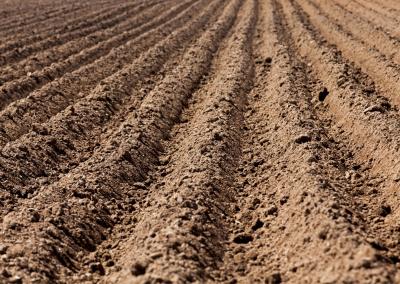
According to farmers, what the late frosts had only managed to damage, the rain has finished off – knocking off inflorescences, buds or already formed fruit or grain ears. Farmers fear more serious consequences if the rain continues, as the water will pool in the fields and furrows – causing rot to set in on root crops.
Too much rain, not enough warmth
According to Brigita Mosiejauskė, chair of the Lithuanian Organic Farmers’ Association, the plants are currently lacking warmth: “Precipitation and heat have been distributed very unevenly – there is too much rain and too little heat.”
“If it continues to rain like this for another week, the situation regarding the harvest of leguminous crops will be difficult; if it continues for another two weeks, the cereals will certainly suffer,” – B. Mosiejauskė explained to BNS.
According to her, work on organic farms is not proceeding on schedule this year, and this will affect the harvest, despite the prolonged rainy spell.
“The sowing of later-maturing crops, such as buckwheat, so the crops will be damaged, whilst winter crops are largely unaffected as they are already well-established. If anyone had sown legumes earlier – such as beans, peas or others – and they were already in flower, the heat had a negative effect on the inflorescences – they withered and fell off“, – said B. Mosiejauskė.
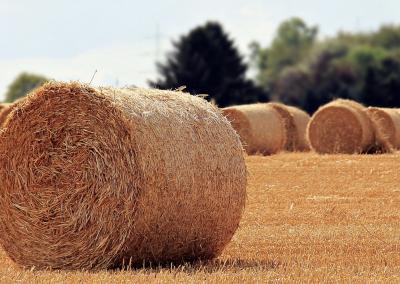
According to her, the rain has also halted fodder production: “You can’t drive into the meadows to mow, and where the grass has already been cut, you can’t remove the bales; the hay is spoiling, and it’s difficult to maintain the quality of that fodder because of the very heavy rain.”
There’ll be no blueberries, and the strawberries are going off
Vytautas Buivydas, Vice-Chairman of the Young Farmers’ and Youth Union, says that this year is not the best for farmers growing blueberries and strawberries.
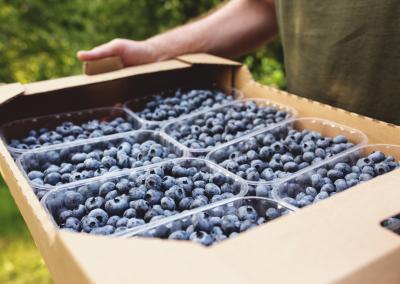
“We’re struggling. It looks as though there will be practically no blueberry harvest in Lithuania, because, from what I’ve heard from blueberry growers, all the blossoms have been frost-damaged. The frosts and heatwave were devastating for the berry bushes, and the current heavy rain has finished off the blueberry crop“ – he told BNS.
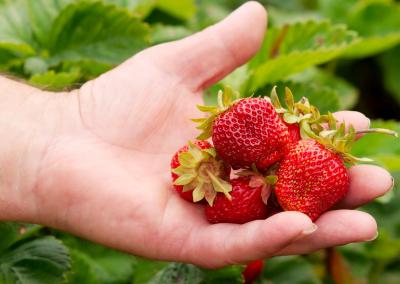
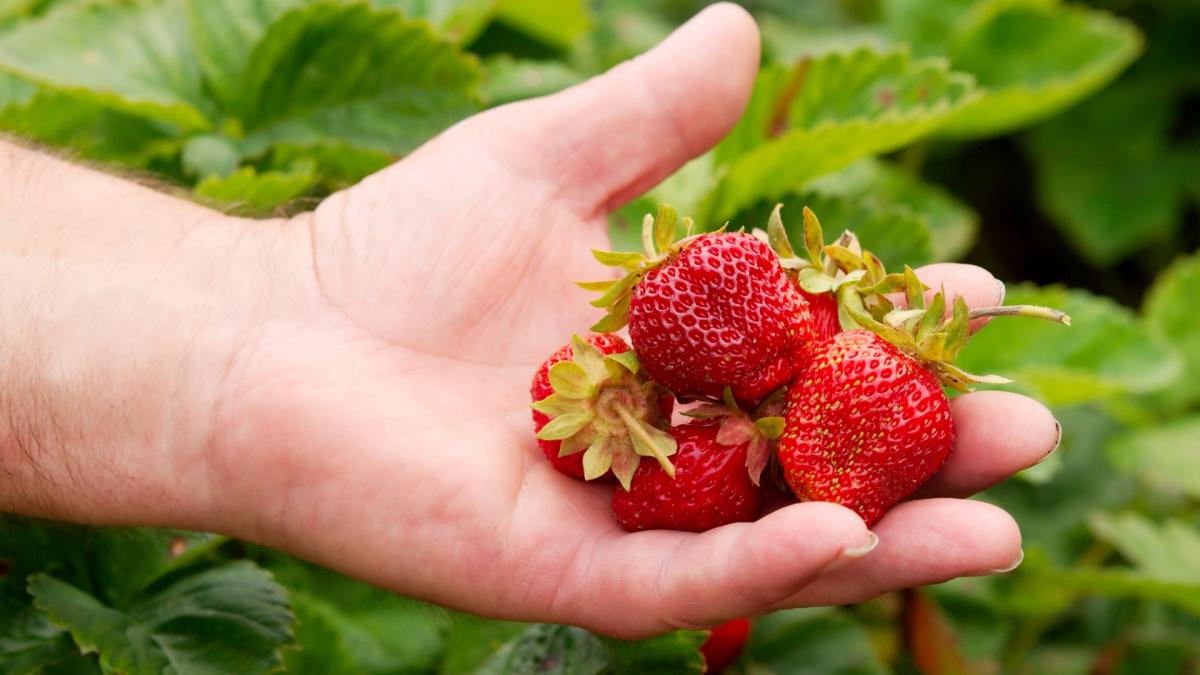
“Strawberry growers are now also complaining about berries rotting on a massive scale – after the first rains, spots began to appear, and now, as the rain continues, the strawberries are starting to rot – it’s heartbreaking to look at them: they’re lovely berries, but they’re already spotted, with signs of rot setting in, and the farmers are simply picking them – to prevent the fungus from spreading – they’re picking those berries and disposing of them“, – explained V. Buivydas.
According to him, grain farmers were worried during the heatwave – they even watered their fields: “If the weather had remained so dry and the heatwave had lasted longer, it would have ruined the grain harvest. There were even some larger farmers who had already started watering, as they feared losing 15–20 per cent of their harvest due to the heatwave.“
Now grain farmers fear that heavy rain and wind might flatten the crops: “One farmer who grows alfalfa says: ‘That heavy rain has already started to flatten the plants; it’s started to flatten the crops.’”
According to V. Buivydas, the currants, which had already been damaged by spring frosts, were further harmed by the drought: “The flower clusters that had started to form simply curled up and twisted, and the fruit itself failed to develop. The harvests won’t be large.”
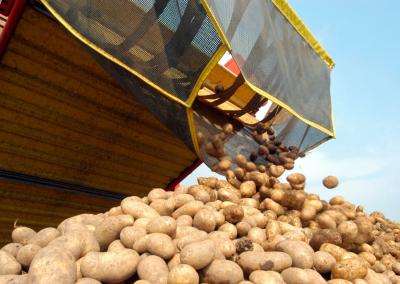
The vice-chairman of the Young Farmers’ and Youth Union also fears that if water remains in the fields and it continues to rain, the potato crop may suffer.
The rain has wiped out up to 40 per cent of the harvest
Paulius Preibys from the Klaipėda district, who owns 4.5 ha of strawberry fields, estimates that he will lose 30–40 per cent of his harvest due to the rain, but the losses could be even greater.
“The amount of rain is abnormal. Up to 40 millimetres of rain has fallen – that’s a month’s worth of rainfall, and here we’ve had it all in a single day. The water is pooling in the furrows, even though they’re raised and designed so that the strawberries don’t get flooded. It’s only a matter of time before the water simply overflows the ridges. The harvest isn’t even complete yet – we’re only halfway through the season – and I’m already talking about crop losses. The losses are significant – 30–40 per cent due to the rain,” the farmer told BNS.
According to him, the waterlogged berries also need to be picked so that any rot that has set in does not spread and damage the plant.
“You just have to throw them away. Or they’d need to be processed, but that costs money. I’m not yet on a large enough scale to be able to process them. I’d like to have somewhere to process them after heavy downpours like this, but at the moment it’s just not possible. Perhaps I’m not taking enough initiative myself in looking for someone to cooperate or work with, but you need a good partner for something like this if you want to succeed“,” said the strawberry grower.
According to P. Preibis, there haven’t yet been any years with such a bountiful harvest that he could invest his income in strawberry processing. Some years are better, whilst others result in losses. Last year, for example, 80 per cent of the strawberry field failed to produce a harvest: “The whole field was under water; we had to buy seedlings and replant some parts of the fields.”
Meanwhile, some other strawberry growers say they managed to avoid the effects of the heavy rain because they had managed to harvest the early berries.
Ritas Kvietkus, who grows nearly 2 ha of strawberries in the village of Adomiškiai, in the Šiauliai district, told BNS that this year’s harvest is not bad.
“Compared to other years, and to last year, this year looks good. Last year we hardly picked anything at all, because there were 10 days of low temperatures during the flowering period. The frosts destroyed everything last year, but there were no frosts this year; although there was one night when frost was evident, the damage was minimal compared to other years, and compared to last year, there’s no comparison,” – said R. Kvietkus.
“We’ve been growing them for 25 years, so we’ve come to terms with the fact that you won’t be able to harvest the entire crop – some freezes, some are damaged by slugs, snails damage it, and some is lost to the rain“,” added R. Kvietkus.
According to him, the rain no longer affects the early strawberries – they’ve already been picked – but it has caused some damage to the late-season berries.
“The berries remain in the water the whole time. We don’t pick them at all when it’s raining. If you do pick them, the skin gets squashed and the juice just runs out. We seize every opportunity to pick them. We don’t have many late-season strawberries,“ he said.
Audrius Giraitis, who has been growing strawberries on almost 1 ha of land in the village of Pypliai in the Kaunas district for 27 years, was also pleased to have managed to harvest almost the entire crop: “But I did end up with some rotten ones as well. I’ve definitely lost 10 per cent.”
“When you grow several varieties, one is resistant to one thing whilst another is more susceptible to something else, so the overall average is good. Last year was a bit better. There was no frost. And this year there was no frost either – I avoided those early frosts. It was just rot and the heat that caused a bit of damage to some varieties. One variety rots, another doesn’t. One year one variety does well, the next year another does. Last year was the best harvest; I haven’t counted this year’s yet, but as far as I can see, one variety has been slightly weaker this year,” the farmer told BNS.

Similar articles

Video