










































Drone warfare without transport: a plea for help from the hell of Zaporizhia
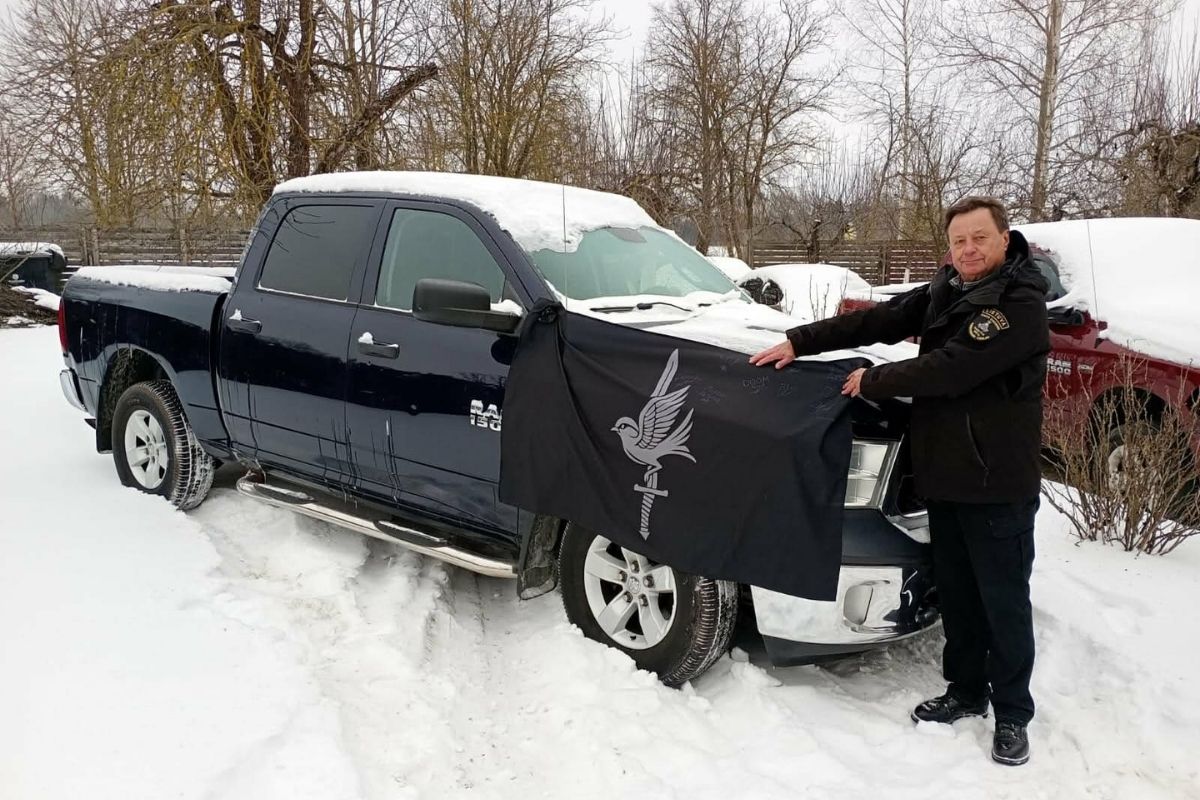
This drone squad is led by a young officer, Alexey, who covered a Ukrainian infantry battalion with his drone teams during the bloody battles on the Torek front. This battalion was withdrawn from the front in the summer for rest and regrouping – at that time, it had only about 50 soldiers left. When we arrived with support in July, we found only three drone operators... That was all that was left of the former squad," says Kliunka of the grim reality of Russia's aggression in Ukraine.
But within a few months the situation has changed dramatically. Thanks to intensive training and Alexey's own work, the small squad has grown into a full-fledged drone company, which today includes around 120 soldiers and four professional drone operator teams. Each of them needs its own logistics – transport to quickly redeploy people and equipment. Drone warfare today is not only a technology war, but also a logistics war. Without transport, even the most sophisticated technology is powerless," the Foundation's spokesperson stressed.In autumn, the brigade in which this company was formed was again moved to one of the most dangerous places – Zaporizhzhya. According to Kliunka, it is in this area that the enemy is massing reserves and planning decisive attacks. The Russians are preparing to throw the last of their forces here. Zaporizhzhya is a strategic target for them, and for the Ukrainians, it is another place where life and death issues are decided on a daily basis," he said.
Nowadays, the drone company led by Alexei destroys more than 40 enemy targets every week. In addition to FPV drones, it uses medium-range fixed-wing attack drones capable of operating up to 50 kilometres, as well as a heavy-class multi-rotor drone called the "Baba Yaga". These drones have become a real terror for the enemy. It is not just a strike tool. The Baba Jaga drones often have a logistical function as well – they carry food, explosives, new drones to the groups of operators who are the most hunted and often work in complete isolation“, – says A. Kliunka.
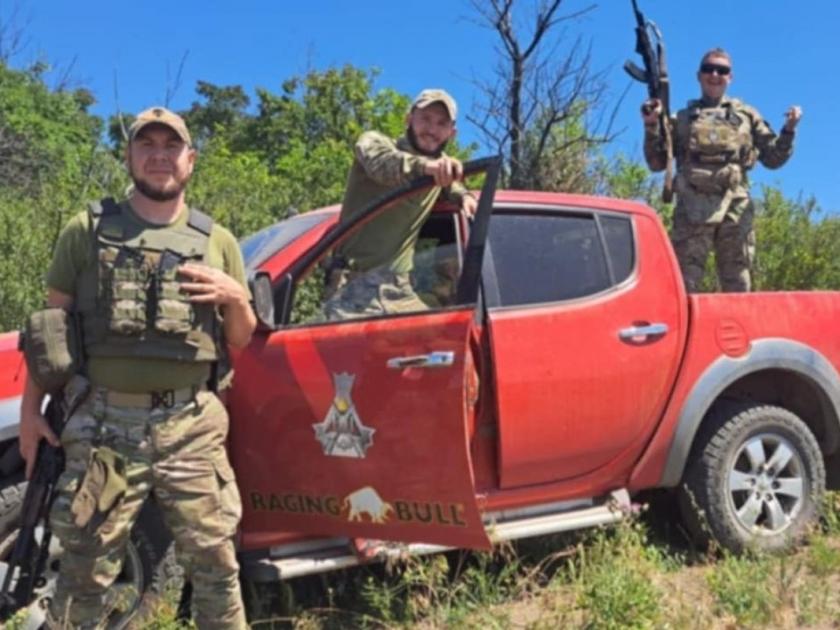
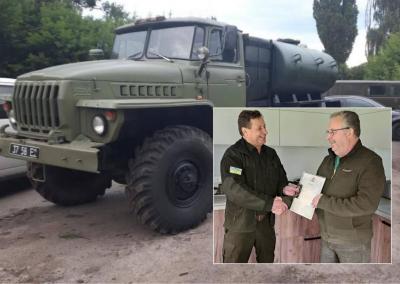
Transportation remains a major problem. The strike drones are bulky and have to be transported to the so-called „kill zone“, which starts about 20 kilometres from the notional front line. This requires pickup trucks with extremely roomy bodies that can accommodate not only the drone itself, but also the soldiers accompanying it. These men are not just going to defend themselves or their car. They are also defending a drone costing hundreds of thousands of euros, which is deadly to the enemy," he says.
That's why Alexei, the company commander, timidly asked if it would be possible to help him buy a bigger-bodied pickup truck, such as a "Dodge RAM". The volunteers of the mission „Kariai kariams“ responded immediately, according to Kliunka. The vehicle was found and reserved at a cost of €8,500.„This is not a huge amount of money on a national scale, but on the frontline it is the difference between being able to act and being helpless. That's why today we turn to those who have shown time and again what true community means – to Lithuanian grain growers“, – he says.
According to Mr. Kliunka, today the Ukrainian Armed Forces are extremely short of infantrymen, which puts a huge responsibility on the shoulders of drone operators. It is their sacrifice that determines how deeply the enemy can push into Ukrainian territory every day. They are among the most hunted soldiers, but at the same time – among the most effective, – he stresses.
Speaking about his trips to Ukraine, the head of „Soldiers for Soldiers“ does not hide his emotions. "Every time we go inland, we see cemeteries filled with Ukrainian flags. It is a sight that cannot be forgotten. The Ukrainians are paying a huge price to give us Lithuanians time to prepare for the inevitable clash with the barbarians from the East," says Antanas Kliunka.
He said that today, support for Ukrainian troops is not only a matter of solidarity, but also a question of Lithuania's security: „This is not a foreign war. It is a war that is being kept there today so that it does not come here tomorrow.“
Similar articles

Video