



























































Following the possible leak of a question – questions regarding the Ministry of Agriculture’s communication culture
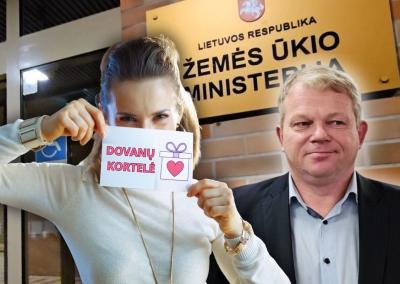
Last week, the Delfi website reported that, following a request submitted by the Ministry of Agriculture (MoA) regarding Živilė Pinskuvienė, the mayor of Širvintos district, and her husband, details of the request subsequently came to the attention of the politician herself. The situation raises many questions not only about this specific case, but also about the relationship between state institutions and the media in general. This is not the first time the Ministry of Agriculture has found itself in the spotlight for communication issues.
The Ministry spoke to staff who had seen the enquiry
The Ministry of Agriculture stated that, due to the possible disclosure of information regarding the enquiry to third parties, discussions had taken place with all staff members involved in examining this matter, including staff at the Agricultural Data Centre (ŽŪDC).
The Ministry informed “Agrobitė” that 11 staff members had access to the enquiry. When asked whether there are specific internal procedures governing the confidentiality of journalists’ enquiries, the Ministry stated that it adheres to general legal regulations and the principles of civil service conduct and professional ethics.
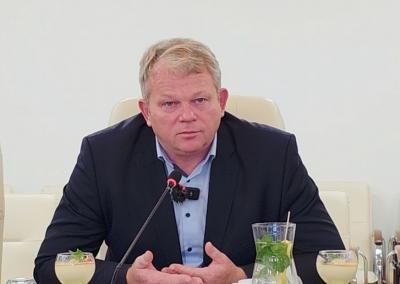
Furthermore, the Ministry of Agriculture confirmed that the Minister of Agriculture, Andrius Palionis, has been informed of the situation.
Meanwhile, the Centre for Agricultural Development (ŽŪDC), which was also mentioned in the public discussion, assured “Agrobitė” that the enquiry had been addressed to the Ministry, and that only one employee at the Centre had seen its contents.
Prime Minister’s adviser: such a situation would be viewed negatively
Ignas Algirdas Dobrovolskas, adviser to Prime Minister Inga Ruginienė, stated that if information regarding the journalist’s enquiry had indeed been disclosed before it was answered, this would be viewed negatively.
„If information about the journalist’s enquiry was disclosed before it was answered, this would be viewed negatively. However, only the Ministry of Agriculture itself can clarify the actual circumstances“, he said.
VTEK: mere membership of the same party does not constitute a conflict of interest
The Supreme Commission for Professional Ethics (VTEK) noted that the risk of a conflict of interest is generally assessed when there is a direct reporting relationship, personal or financial interests, or a specific stake in the outcome of a decision. The Commission emphasised that mere membership of the same political party does not in itself imply a conflict of interest.
According to VTEK, the fact that the Minister of Agriculture and the aforementioned individuals previously worked in the same political team does not constitute a sufficient risk of a conflict of interest.
“The VTEK decides whether to initiate an investigation in cases where there is sufficient evidence of a possible breach of the requirements for the reconciliation of public and private interests. Circumstances regarding past work in a political team, as reported in the public domain, without specific evidence of a current private connection, are generally not sufficient grounds to launch an investigation“ – the VTEK stated in a comment.
Journalists’ Union: this is primarily a matter of ethics
Audrys Antanaitis, chairman of the Lithuanian Journalists’ Union (LŽS), says that such situations primarily raise questions of professional ethics. According to him, although journalists’ enquiries are not state secrets, certain principles of confidentiality and professional ethics should apply within institutions.
“Disclosing questions or enquiries to third parties about whom information is being gathered is, at the very least, unethical. This is not a state secret, but there are certain principles of professional ethics and confidentiality that should be observed“ – said A. Antanaitis.
He emphasised that the Lithuanian Journalists’ Union usually gets involved in such cases when the editorial offices themselves seek to defend their rights. However, according to A. Antanaitis, such stories should not deter journalists from investigative work.
“On the contrary – they should encourage journalists to work even more tenaciously and seek answers to questions of importance to the public,” said the head of the LJU.
STT: this should first be assessed as a possible breach of official duties
The Special Investigation Service (STT) noted that situations of this nature would primarily be assessed not from a criminal law perspective, but in terms of disciplinary liability.
“The actions of Ministry of Agriculture staff, who may have passed on information about journalists’ enquiries to third parties, could be regarded as a failure to perform their duties properly,” stated the STT. The Service also notes that improper performance or failure to perform official duties is generally regarded as a disciplinary or administrative offence, unless the act is deemed sufficiently serious to give rise to criminal liability.
“The right to impose administrative or disciplinary sanctions and to decide on their validity is the exclusive competence of the employer,” the agency emphasised.
Questions regarding communication have arisen before
This is not the first time a discussion has arisen regarding the Ministry of Agriculture’s communication with the media. At the end of last year, “Agrobitė”, whilst preparing a publication and having submitted specific questions to the Ministry, received a press release prepared by the institution instead of answers.
In the editorial team’s view, some of the questions submitted remained unanswered. Although this case is not directly related to the story currently being discussed in public, it also draws attention to the communication culture of state institutions.
Journalists’ enquiries are not a formality – they are a means for the public to obtain information on matters of public interest. It is therefore important not only that institutions comply with legal requirements, but also that they adhere to the principles of professional ethics and open cooperation with the media.

Similar articles

Video