




























































Not the biggest, but the most profitable: what size of cow is the most successful on a dairy farm today?
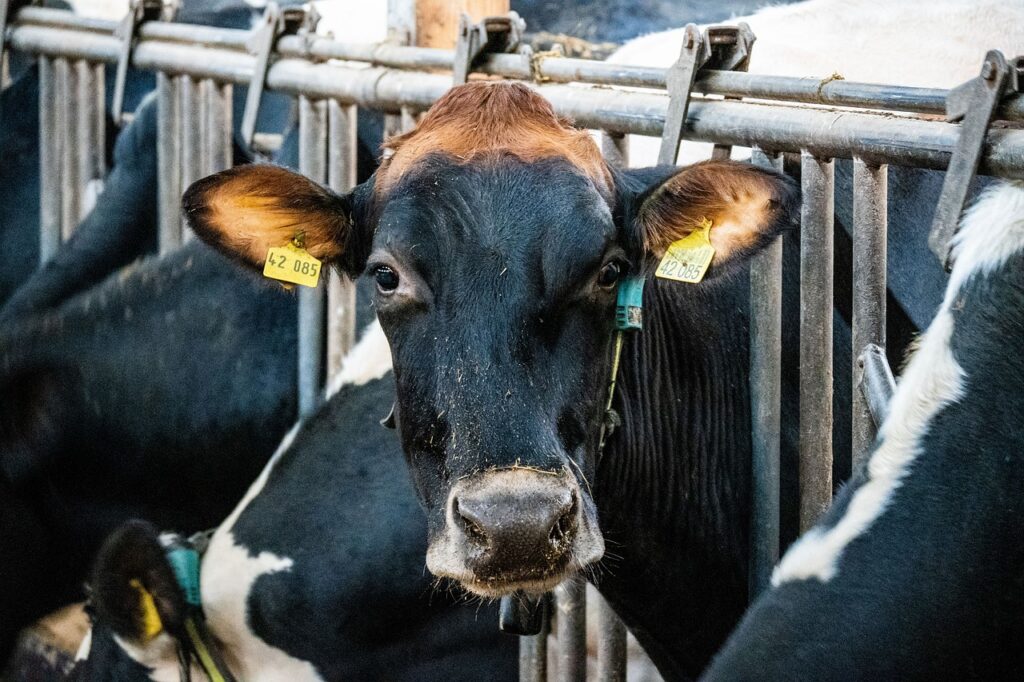
For a long time, a fairly simple logic prevailed in the dairy industry – the larger the cow, the more milk it produced, and therefore the better the outcome for the farm. A large body frame was associated with productivity, progress and strong genetics. However, today more and more data suggests that size alone is no longer the main indicator of success.
In modern dairy farming, what matters most is not how much a cow weighs, but how much value she generates relative to her size. In other words, it is not the largest cow that wins, but the most efficient one. This is precisely the conclusion drawn from the latest analysis of international research on the optimal size of a dairy cow. When assessing productivity, feed costs, health, technological suitability and lifetime profitability, the most rational choice on most farms is usually a medium-sized, well-balanced cow.
Why a larger cow does not always mean greater profit
At first glance, a larger cow seems attractive. She can often produce more kilograms of milk, particularly in early lactations. However, it is not just milk yield that matters to a farm.
Every additional kilogram of body weight also means additional costs. A larger cow requires more feed to sustain her body, more space in the barn, wider lying areas, more spacious passageways and a greater margin for comfort. She is more sensitive to feeding errors, the quality of the flooring, hoof problems or overcrowding in the barn. Consequently, the following situation is often observed in practice: the cow is larger, produces more milk, but the final financial outcome is no better.
Where is the optimum most often found?
The data summarised in the study show that in most intensive Holstein-type systems, the economic optimum usually lies around 600–700 kg of live weight for an adult cow. On most farms, the particularly efficient range is around 650–700 kg. Such a cow maintains high production potential, whilst her maintenance costs generally remain manageable.
When a herd consistently moves above the 750 kg mark, additional costs often begin to emerge: more feed, more space, greater strain on hooves, a higher risk of culling, and greater sensitivity to management errors. This does not mean that every large cow is a bad one. It means that size must pay off economically, and this is not always the case.
Today, it is not size that is valued, but efficiency
Modern dairy farms are increasingly looking at relative rather than absolute indicators.
Important:
- how much fat and protein a cow produces;
- how much feed she consumes to do so;
- how many lactations she maintains in the herd;
- how easily they conceive;
- how they move;
- how well they adapt to the milking system;
- how many problems they cause in day-to-day management.
That is why global selection indices are increasingly focusing on feed efficiency, health, longevity, fertility and functional balance, rather than just body conformation.
The barn often tells us more than genetics
The question of a cow’s size is very often decided not in the catalogue, but in the barn. If the herd grows faster than the infrastructure, problems arise quickly. Lying areas become too narrow; cows lie crookedly, spend more time standing and rest less effectively. Aisles become cramped. Robot flows slow down. Fewer animals can be accommodated in the same space.
Many a farm has experienced this when genetic progress outpaced the capacity of the building. That is why profitability today is assessed not only by the income per cow, but also by the income per space in the barn.
What does this mean for Lithuanian farms
Lithuanian farms vary greatly. Some operate in modern facilities, whilst others manage refurbished or older buildings. Some use robots, whilst others rely on traditional milking methods. Therefore, there is no one-size-fits-all answer. For farms with more sensitive infrastructure, a medium-sized cow is often the more sensible choice, as it fits easily into the system and does not require costly compromises.
In new, well-designed farms, it is possible to successfully keep larger cows, provided that high standards of feeding, comfort, reproduction and health are maintained. The most important thing is not to rear the largest possible cow, but one that generates profit specifically for your farm.
5 practical conclusions for the farmer
- Breeding objectives should be formulated not in terms of height or body depth, but in terms of fat, protein, fertility, longevity and feed efficiency.
- If the herd is growing in size each year, it is worth reassessing the lying areas, passageways, robot workload and the overall suitability of the barn.
- It is worth monitoring not only the kilograms of milk produced, but also the fat and protein content per kilogram of body weight.
- On robotic farms, a mobile, functional and easy-to-milk cow is often more valuable than a very large but slower one within the system.
- The greatest progress on a farm often comes not from larger cows, but from a better balance.
In conclusion
The dairy industry is gradually moving away from the old myth that bigger always means better. In most cases, the profitable cow of the future will not be the largest in the herd, but the one that produces consistently, has a longer lifespan, uses fewer resources and adapts better to the farm system. Today, it is not the largest cow that wins. It is the one that generates the most consistent returns.

Similar articles
Video