





































































How can you make the most of the shady areas of your garden? Ornamental and edible plants that thrive there
Many plots have shaded areas where the sun only shines for a few hours a day, or not at all. Such corners often remain empty, overgrown with weeds, and are a headache for gardeners.
However, with the right choice of plants, shade can be turned into an advantage: you can grow both ornamental and edible plants here that would fare less well in the sun. The most important thing is to understand what type of shade prevails and what conditions different species require.
How to distinguish between different types of shade
Before choosing plants, it is worth assessing how much light a particular spot receives and at what times of day. Take into account not only direct sunlight, but also the overall brightness, for example, between the sparse tree canopies.
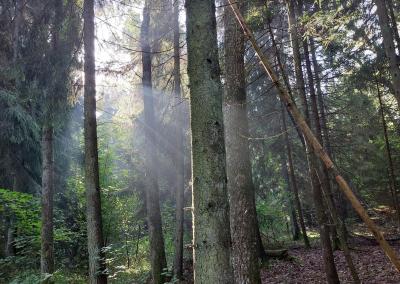
Partial shade means 3–5 hours of sun per day, usually in the morning or evening. Partial shade occurs when the sun filters through tree branches, whilst full shade is found on the north side of a house, beneath dense hedges or mature trees.
Preparing the soil for shaded areas
Under trees or buildings, the soil is often drier and poorer in nutrients than it appears at first glance. Tree roots absorb moisture intensively, whilst a roof or dense canopy diverts some of the rain elsewhere.
Before planting, it is worth mixing in some compost or well-rotted manure, and lightening heavy clay soil with sand or bark. This will create a loose, airy and well-drained environment in which the roots can spread more easily.
Flowers and ornamental plants for the shade
Shade is ideal for highlighting foliage, so plants with variegated or textured leaves look superb here. Popular choices include bluebells, which thrive in warmer periods, various ferns, heucheras, low-growing wintergreen and broad-leaved bergenias.
In partial shade, you can also grow perennials that flower in soft colours: astilbes, spirea, and plants such as orlocks or salvias that require very little sun. Plants that love full sun will struggle in such a spot, so it is better to reserve them for more open areas of the garden.
Edible plants that thrive in the shade
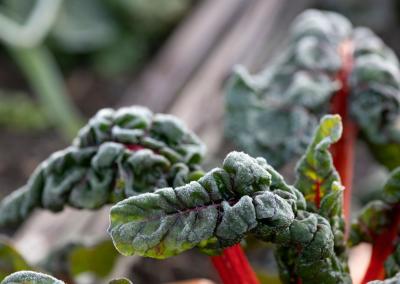
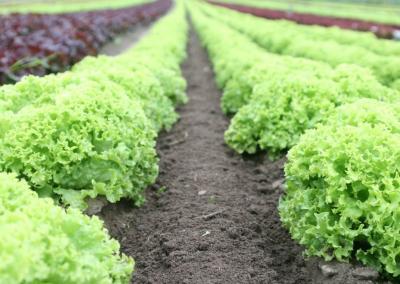
Although it is customary to plan a vegetable garden in the sunniest spot, full sun is not essential for some vegetables. Various lettuces, spinach, rocket, leaf cabbage and Swiss chard grow well in partial shade.
Shade is particularly beneficial for lettuces and leafy greens during the summer heat, as they are less likely to bolt and wilt more slowly. Parsley, coriander, dill and spring onions also thrive in such spots, provided they receive diffused light for at least part of the day.
Berries and fruit in a shady corner of the garden
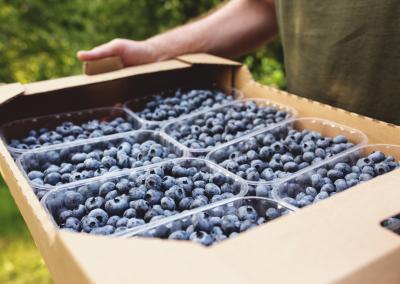
It is difficult to expect a bountiful berry harvest in full shade, but some berry bushes thrive quite well in partial shade. This is particularly true of blackcurrants and gooseberries, which do not need a full day’s sun.
Strawberries and some strawberry varieties can be planted under the canopy of trees, provided that light reaches them for at least a few hours a day and the soil is not completely dry. Yields are often lower in the shade, but the berries are less likely to suffer from the scorching sun.
Watering and mulching tips
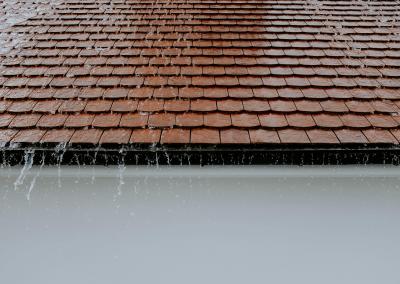
It is a common misconception that it is always damp in the shade. Under a roof, on balconies or beneath the dense ‘canopies’ of tree branches, rainwater does not reach the plants, so it can actually be drier here than in an open area.
Mulch helps retain moisture and inhibits weed growth, which is particularly important in the shade, where plants have to compete with tree roots. Shredded bark, compost, straw or grass clippings are all suitable for this purpose, although the latter should be spread in a thin layer.
How to combine colours and shapes in the shade
In shady spots, brightly coloured flowers often appear muted, so it is worth paying more attention to the colour and texture of the foliage here. Combinations in which variegated or light-coloured leaves contrast with a rich green background look particularly attractive.
A dark corner can be brightened up by white-flowering or light-green plants, which seem to ‘light up’ the shade. Layering plants of different heights and leaf shapes creates depth: ground-cover plants at the bottom, heucheras in the middle, and taller ferns or shrubs in the background.
What’s best to leave in sunny spots
Although some vegetables and flowers can be moved into the shade, there are plants that are best not planted there. Tomatoes, cucumbers, peppers, courgettes and most herbs will produce a poor yield and be more prone to disease without full sun.
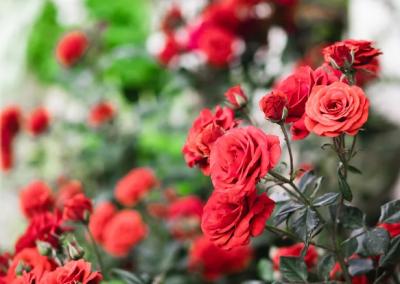
Most roses, lavender, feather grass and some summer flowers also require full sun. It is best to reserve open spaces for these plants, whilst leaving the shade to those that thrive there and create a neat, lively corner of the garden.

Similar articles

Video