































Former Minister for the Economy: We used to receive complaints from businesspeople about the Plant Production Service
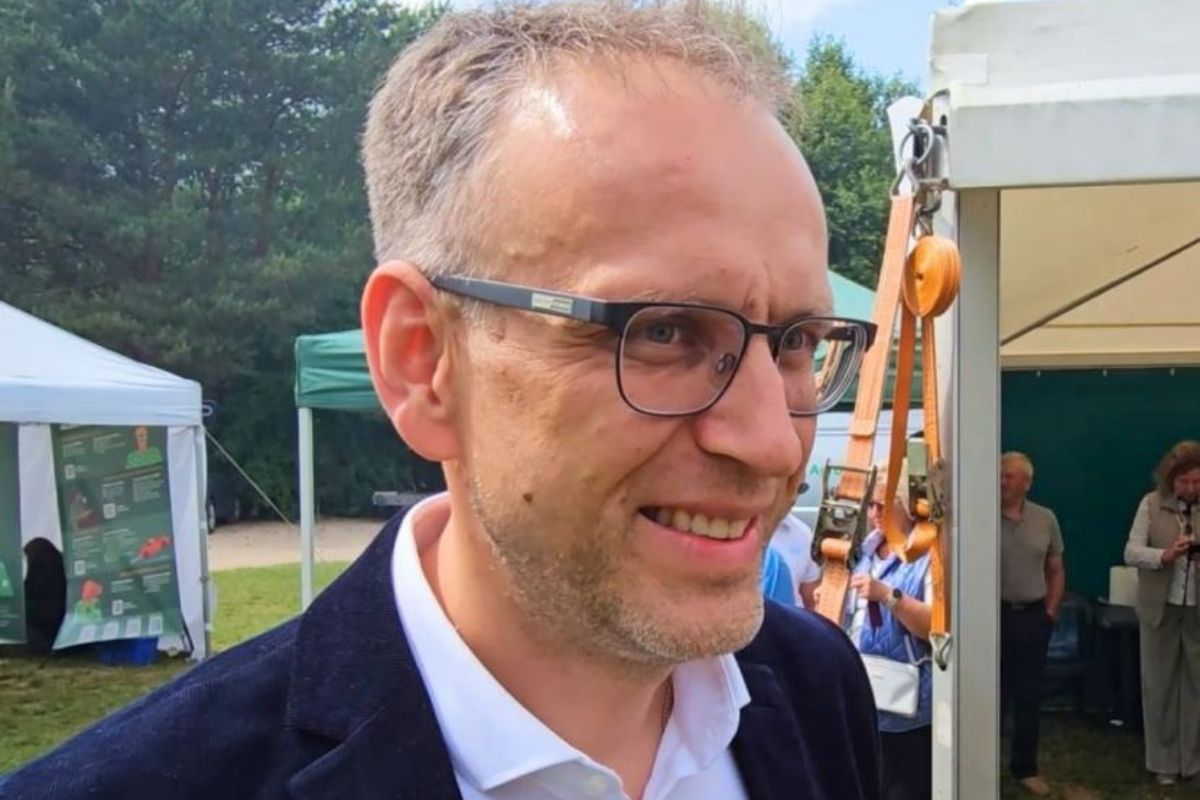
Aušrinė Armonaitė, the former Minister for the Economy and Innovation, said that she had received complaints from businesspeople regarding the State Plant Service (VAT), which is now at the centre of a large-scale corruption case. She also stated that she could not have imagined that such corruption was still possible in Lithuania.
Although many people only heard of an institution such as the VAT when the pre-trial investigation was made public, Ms Armonaitė said she was well aware of it.
“Because it is a business regulatory body, and in fact, businesspeople would sometimes complain to us about it. Admittedly, fibre hemp growers – those who produce raw materials or supplements, cosmetics, and the like. Perhaps our assessment was that they were simply acting disproportionately, as this was common practice amongst business supervisory authorities in general. But as for there being any criminal activity there – there were no such signs. At least not in the sector I was involved in,” said the politician, who served as Minister for the Economy and Innovation from 2020 to 2024, on the programme “ELTA kampas”.
According to her, at that time the Ministry of Economy and Innovation was receiving complaints regarding VAT audits, assessments and so on. As for the phytosanitary permits mentioned in the agency’s corruption investigation, the ministry reportedly received no reports from the business community at the time.
„When those stories came to light, you somehow remember the specific incident yourself, when you heard about it. But this wasn’t an isolated, so to speak, incident; the market as a whole reflected this,“ – she noted.
„Someone makes compromises with their conscience“
Kazys Starkevičius, who served as Minister of Agriculture in Ingrida Šimonytė’s government for several months, is implicated in the VAT corruption case. The long-standing member of the Conservative Party has admitted to accepting a bribe. The Prosecutor General’s Office has stated that former Prime Minister and Speaker of the Seimas Saulius Skvernelis is also suspected of accepting a bribe of 51,000 euros.
Furthermore, in May, charges of illicit enrichment were brought against the former Social Democratic Prime Minister, Gintautas Paluckas. Prosecutors suspect that the politician and his wife, Ilma Palucke, may have unlawfully acquired assets worth around 345,000 euros.
A. Armonaitė said she had thought there was very little corruption in Lithuania.
“I think perhaps I was very naïve. If someone had told me that something like this could happen, I would have said: „Come off it, that can’t be“ – something like that. I suppose that would have been my reaction. Now I don’t know. You can’t be sure of anything, except perhaps yourself,” she commented on the programme “ELTA kampas”.
“When I look, for example, at those same African countries where corruption is rife – and perhaps even on a different level – it always seemed to me that Lithuania was a very progressive country. But at the end of the day, it seems not quite yet. At the end of the day, it seems someone is making those compromises with their conscience,” added the former chair of the Freedom Party.
K. Starkevičius admitted to taking a bribe
Last December, whilst investigating a particularly large-scale corruption case at the VAT, officials detained a total of 13 people. The number of suspects later rose to 15.
According to law enforcement, based on evidence gathered during the investigation, representatives of companies transporting plants and plant products were systematically demanded and paid large bribes in exchange for phytosanitary certificates issued by the VAT to freight carriers.
Even at that stage, those named as suspects included the suspended VAT director Jurijus Kornijenko, his deputy Mantas Butas, adviser Agnė Silickienė – who had also worked with MP S. Skvernelis – Giedrius Urbelionis, head of the Alytus regional branch, and Dalia Šubonienė, acting head of the Kaunas regional branch.
During more than 100 searches, over 1.3 million euros in cash and 8 kilograms of gold, worth approximately 1 million euros, were seized, as well as 11,000 packets of cigarettes, 14,000 litres of alcohol, cocaine and explosives.
In February, searches were carried out at the homes and offices of MPs S. Skvernelis and K. Starkevičius. Charges were subsequently brought against them.
K. Starkevičius resigned from his seat in the Seimas and announced that he was suspending his membership of the TS-LKD party. He later admitted to the news portal “15min” that he had accepted a bribe of up to 20,000 euros.

Similar articles


Video