









































































Polish farmers will be allowed to use firearms to deter protected animal species
The amendments to the Nature Conservation Act adopted in Poland may prove to be one of the most interesting decisions of recent years in the field of human-wildlife conflict management. President Karolis Navrockis has signed amendments to the Act which, in certain cases, will allow for more effective deterrence of protected species, including wolves, brown bears and bison.
It is important to emphasise that this is not about hunting, nor is it about the possibility of killing these animals. The law does not alter their protected status. The change relates to the possibility of using more powerful deterrents, including smoothbore shotguns with non-penetrating ammunition, such as rubber bullets.
The aim of the amendments is not to cull the animals, but to prevent conflicts.
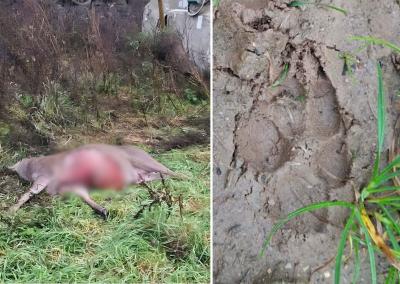
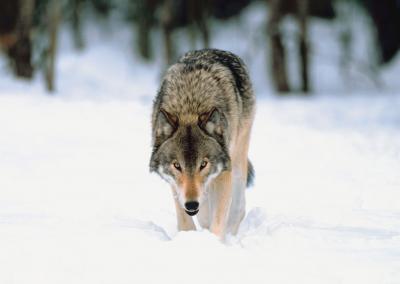
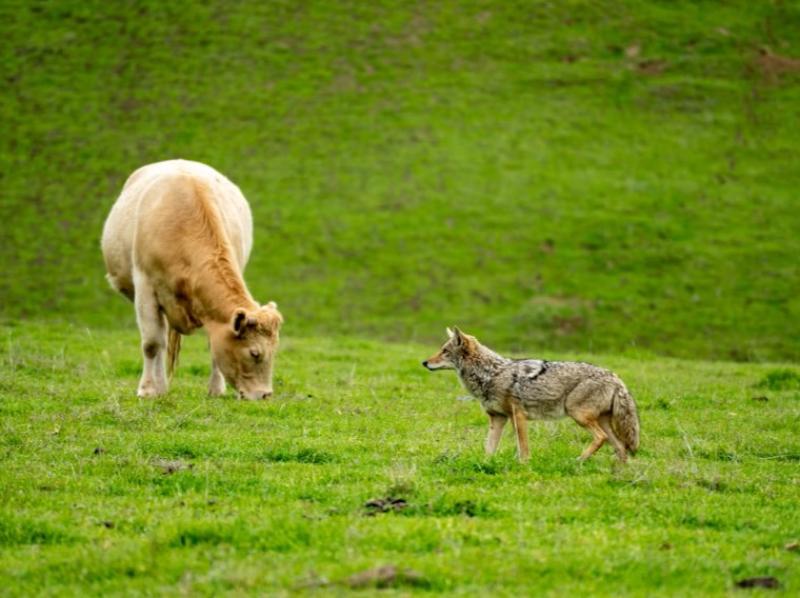
In recent years, there has been increasing talk in Poland of situations where wolves regularly visit farms, villages and pastures. In some regions, residents report sightings of predators appearing on the outskirts of settlements, moving along local roads and showing no aversion to human proximity. Farmers have repeatedly emphasised that the problem is not one-off attacks on livestock. Of far greater concern is the recurring presence of these animals near farmsteads and farms.
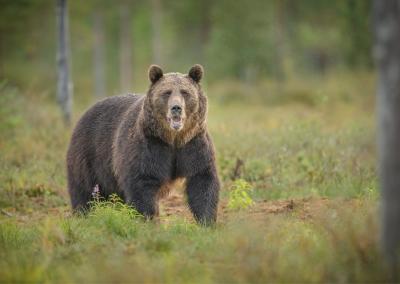
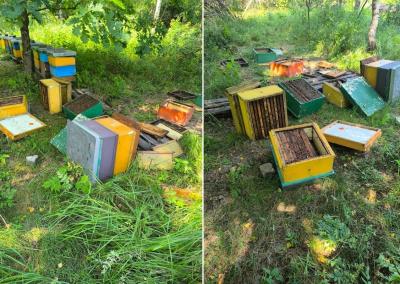
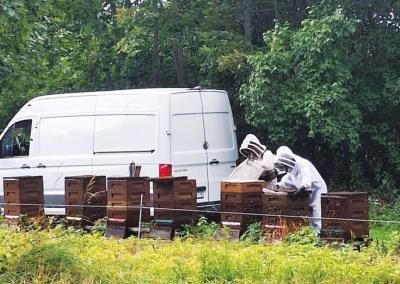
Situations in south-eastern Poland, the Bieszczady region and the Carpathian Foothills have sparked particularly heated debate, as brown bears are increasingly visiting settlements, apiaries, rubbish bins and farms. Similar problems have been reported in areas inhabited by European bison. Although the bison is not a predator, an encounter with an animal weighing several hundred kilograms can be dangerous for both humans and the animal itself.
The Polish authorities have acknowledged that the compensation system alone does not solve the problem. When a wolf kills a sheep or a bear destroys beehives, the losses can, in theory, be compensated. However, money does not eliminate the reason why the animal keeps returning to the same place.
Therefore, the new regulations place great emphasis on the problem of habituation. This refers to a wild animal becoming accustomed to humans and the environment created by humans. If a wolf, bear or bison regularly visits homes, farms or roads and suffers no negative consequences, it gradually loses its natural wariness.
It is precisely such situations that we seek to avoid. Non-lethal deterrents must present the animal with an unpleasant stimulus and restore its natural fear of humans. It is hoped that the animal will begin to avoid settlements, farms and other places where there is a risk of conflict.
The law does not allow for the unrestricted use of such measures. To deter protected animals using a firearm, a relevant permit will be required. Decisions will be taken by environmental protection authorities, primarily regional environmental protection directors, and in some cases the Director-General for Environmental Protection.
This means that the mere appearance of a wolf near a farm will not be sufficient. Each situation will have to be assessed on a case-by-case basis.
Polish farmers’ organisations have for many years been calling on the state to enable a faster response to the appearance of problem animals. According to them, current procedures are often too slow. Whilst paperwork is being processed, the predator may return to the livestock on more than one occasion.
Farmers also emphasise that the actual losses are often greater than the officially calculated damage. In addition to the value of the animals killed, one must also factor in the costs of veterinary treatment, reduced productivity, the loss of breeding stock and additional protective measures.
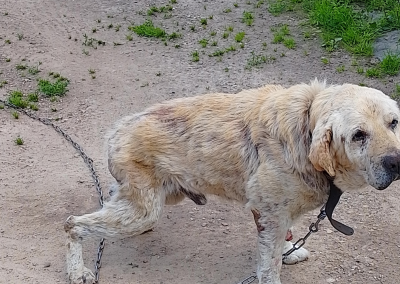
The new law does not remove the obligation to use preventive measures. Livestock farmers will still be required to use electric fences, protective netting, guard dogs and other protective measures. Deterrence is regarded as an additional tool that may be used when standard measures are no longer effective or the situation becomes contentious.
It is interesting to note that the law covers not only wolves, but also bears and bison. This shows that Poland views the problem in broader terms than simply the damage caused to agriculture. There is also increasing discussion about public safety and people’s relationship with protected species.
In recent years, there has been growing debate in Europe about how to reconcile the successful conservation of large carnivores with human interests. Wolf and bear populations are recovering in many regions, which inevitably leads to an increase in encounters between people and wild animals.
Poland’s approach stands out in that the state has officially recognised the problem itself. Conflicts between humans and protected species are no longer regarded as isolated incidents. They are viewed as a phenomenon requiring clear preventive measures.
On the other hand, the debate is only just beginning. If farmers are able to protect their livestock and property in certain cases, the question arises as to what options ordinary residents will have in the future in regions where the numbers of bears or other large wild animals are increasing. This issue is becoming increasingly relevant not only in Poland, but also in many European countries where populations of large predators continue to grow.

Similar articles





Video