













Nausėda on resumption of Belarusian fertiliser transit: as long as the reasons remain, the sanctions will remain
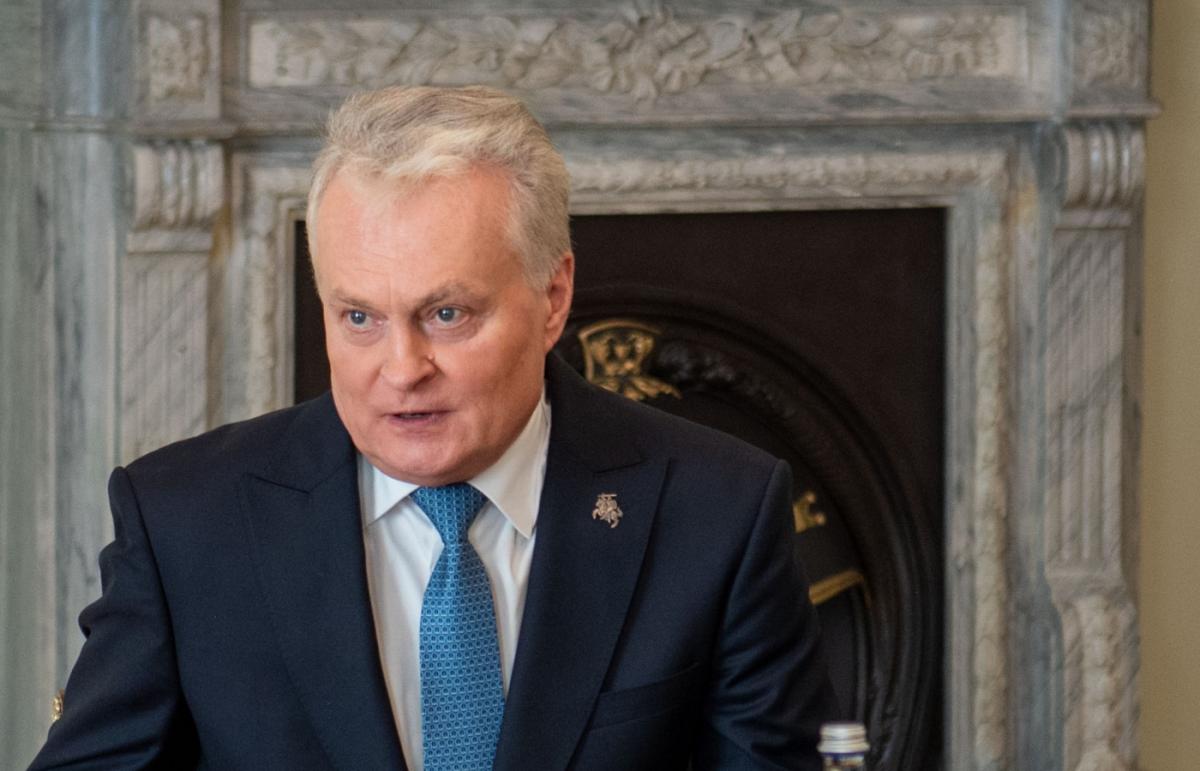
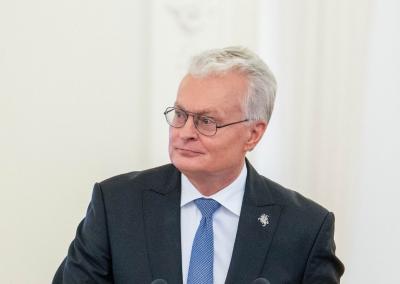
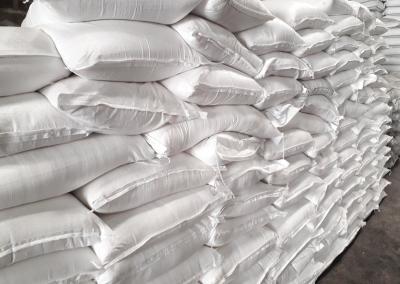
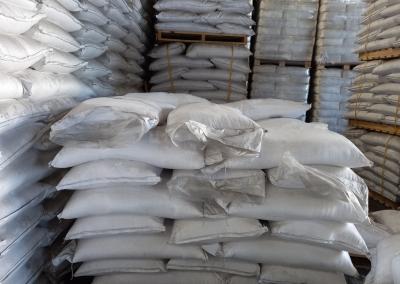
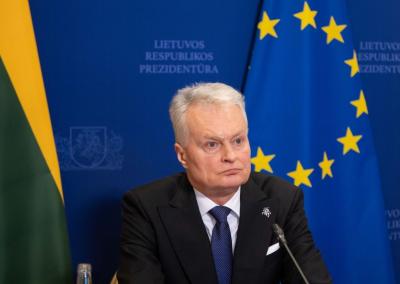
President Gitanas Nausėda points out that there are no discussions on resuming the transit of Belarusian fertilisers and that the European Union (EU) sanctions will remain in place until the Minsk regime changes its policy. Public speculation about possible negotiations with Belarus at a hypothetical level is irresponsible, he said.
„I have said many times before that this (smuggling balloons – ELTA) is far from the only sin of the Belarusian regime. (...) Perhaps the most important thing is that Belarus continues to arrest political prisoners. (...) Another very important aspect is that Belarus is simply a staging ground for Russia's operation against Ukraine," Nausėda told Žinių radios on Tuesday.
„That is why today I cannot really say that something so miraculous will happen that the Belarusian regime will suddenly become irredeemable. It remains, at its core, a very close ally of Russia. As long as this remains, as long as these fundamental reasons remain – I will point out – the sanctions of the European Union, not of Lithuania, but of the European Union, will remain and I will be among those who will be among those who will be pushing the hardest for the renewal of these sanctions, – he continued.The President points out that it is irresponsible to talk about negotiations with Belarus on a hypothetical level. He stresses that there are no discussions about lifting sanctions against the Minsk regime and there is no reason to believe that the regime's leader, Aliaksandr Lukashenko, would want to normalise relations with the West.
„There are no discussions behind closed doors. The United States of America has never asked us to ease sanctions under any pretext, not least for the reason I mentioned earlier, that these are not Lithuanian sanctions, these are European Union sanctions, which Lithuania had a significant influence on the adoption of, and I will not deny that," Nausėda said.
„The problem with commentators comes when they start commenting on hypothetical options. (...) Today, it is simply not very responsible to think about what if. (...) Moreover, I would point out that Poland is already experiencing the same weather balloon attacks. The phenomenon is only spreading and there is simply no reason to conclude that Lukashenko wants to somehow normalize relations with the Western community," he continued.In mid-December last year, the United States (US) Special Envoy to Belarus, John Coale, announced that the United States was lifting sanctions on Belarus' potash exports. He also noted that discussions on sanctions would continue.
President Nausėda said last week that the country's position on this issue is firm – as long as Belarus continues its hybrid attack on Lithuania, there can be no question of resuming the transit of fertilisers.
U.S. sanctions on Belarusian fertilisers came into force in 2021, one year after the Belarusian presidential elections, which were illegally won by Mr Lukashenko.
At that time, all US individuals and legal entities were required to complete transactions with Belarusian potash fertiliser producer „Belaruskalij“. In 2022, the European Union (EU) also imposed sanctions on Belarusian fertilisers.
Last week, a meeting between Lithuanian and Belarusian representatives at the vice-ministerial level was hypothetically mentioned by Remigijus Motuzas, the chairman of the Seimas Committee on Foreign Affairs, to the "Žinių radios" radio on Thursday. Later, he clarified his words by saying that no meeting was planned, and if such a thing was to be organised, it would require a clear agenda reflecting Lithuania's interests.

Similar articles


Video